
Advertisement


Sections
GST Council fixes 4-rate structure: All you need to know about the 'extremely complex' tax reform
India may have got more of what the country was trying to avoid - a complex tax system

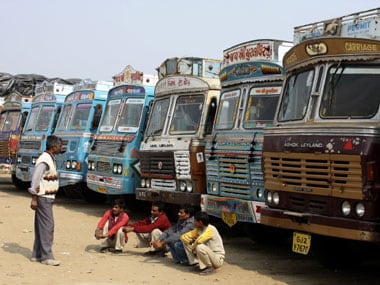
The country moved one step ahead in realising the GST dream when the GST Council on Thursday decided to fix a four-tier rate structure for the reform touted to be the biggest after the economic liberalisation of 1991.While the structure and decisions taken have been welcomed by a section of industry and experts, it has its share of criticisms.Here are the key facts to know about the decisions taken on Thursday:What are the key decisions?[caption id="attachment_3087800" align="alignleft" width="380"]![Reuters]() Reuters[/caption]1) The four bands of tax rates have been fixed at 5 percent, 12 percent, 18 percent and 28 percent. This apart, another category of tax between 40 percent and 65 percent will be imposed on luxury goods like high-end cars, pan masala, aerated drinks and tobacco products.2) Food grains will be zero-rated to insulate people from inflationary pressures.3) Most white goods, like washing machines, air conditioners, refrigerators, shampoo, shaving stuff and soap, will be taxed at 28 percent (with riders). The current levy varies between nil tax to 30-31 percent. The rider has been set as there are several items which are used by the lower middle class.4) A decision has also been taken to levy a cess in order to raise funds to compensate states for the revenue losses they will incur. The government estimates Rs 50,000 crore will be needed in the first year for compensation. "If we have to raise this by way of tax, we will need Rs 1,72,000 crore," Finance Minister Arun Jaitley said.However, he clarified that the cess, to be applicable on luxury cars, tobacco, aerated drinks etc, is not an additional levy, but an existing one and "there will not be an additional burden of even a rupee". A cess is not shared with the states.5) Demerit goods or sin goods such as luxury cars, pan masala, aerated drinks, and tobacco and tobacco products, will invite a tax of 28 percent plus the cess. The overall incidence with cess, thus, could vary between 40 per cent and 65 per cent.6) There has been no consensus yet on tax rate for gold.What is the industry reaction?India Inc has largely welcomed the rate structure. However, they are also worried that the multi-tier tax system may make the regime highly complex. It also suggested that most of the consumer goods should fall in the 18 percent tax slab."Model GST Law suggests multiple registrations in each state for supply of goods and services. This has the potential to result in huge burden of complexity," said Naushad Forbes, President, Confederation of Indian Industry (CII). Forbes wants the government to eventually converge to one or two rates.Harshvardhan Neotia, president, Federation of Indian Chambers of Commerce and Industry (FICCI) has complimented the GST Council for arriving at a consensus and finalising the four-tier rate structure under GST.However, it is not yet clear how the industry will fare.Harishanker Subramaniam, National Leader - Indirect Tax, EY India, says, “The classification in different rate baskets is what will determine how sectors will fair under GST in comparison with the existing regime,” says Harishanker Subramaniam, national leader - indirect tax, EY India.Will the rate structure increase inflation?Too early to say. The reason is it is not yet known what items will fall in each tax bracket. It is for the Committee of Secretaries to decide that. This is what the industry is also keenly awaiting.As India Ratings and Research Chief Economist Devendra Kumar Pant says, "The impact of GST on inflation and different sectors of the economy can be evaluated only after the committee of secretaries decide on GST rates for different products."However, presenting its proposal for a 6-26 percent four-tier rate structure at the earlier GST Council meeting, the Centre had estimated the inflation impact as follows: The overall impact on the consumer price index (-)0.6 percent. The break up: on health services 0.56 percent; fuel and lighting 0.05 percent; clothing 0.23 percent; transport (-)0.65 percent; education (-)0.08 percent; housing (-)0.09 percent.Given that the increase in the higher slab in the rate structure has been approved, some of these estimates are likely to change. Nonetheless, this could be a reference point.MS Mani, Senior Director, Deloitte Haskins & Sells LLP says the categorisation of goods in these slabs has to be accomplished quickly."It is also necessary to ensure that majority of manufactured products are kept at 18 percent and the temptation to push more products into the 28 percent slab should be resisted," he says.According to him, a decision on which products will fall in which category has to done considering present usage patterns. "This is due to the fact that products viewed as non essentials or luxury in the past are in many cases viewed as necessities now," he said.What are experts saying?Most of the tax experts have welcomed the earlier-than-expected resolution with regard to the most contentious issue with GST.Prashant Deshpande, Partner, Deloitte Haskins & Sells LLP, said the four-rate structure is on expected lines."The increase in maximum marginal rates to 28 percent coupled with the announcement that it will attract items which are currently taxed at rates in that range would mean that rate as a criteria would cease to play a role in evaluating benefits from GST for such products," he said.It would be interesting to know what the government deems as common use items that fall in the 5 percent bracket, he says.As far as the consumer essentials and other products are concerned, the first reaction to the slabs is a thumbs up, says Anil Talreja, Partner, Deloitte.What are the criticisms?There are many. Most important is that the new regime is creating a system which is very complex.This reaction from Twitter best explains this apprehension:Most of the experts had already raised this concern when the government proposed the four-tier structure at the last GST Council meeting. But the government has decided to go ahead with the structure with small tweaks.Former finance secretary and tax expert Vijay Kelkar had termed the four-tier structure as “disappointing”. According to him it “robs the GST of its efficiency enhancing potential”."One rate is a crucial part of the structure. It would enable the levy of a single low rate on a very broad and comprehensive base, eliminating litigation and rent-seeking on classification disputes, promoting voluntary compliance and ensuring simple and effective implementation," Kelkar, along with Satya Poddar and V Bhaskar, wrote in an article in the Mint.Moreover, there is no clarity over many things yet. "While the goods will have a multiple rate structure, no clarity is provided on rates applicable to services. Hopefully there will be a single rate structure," Deshpande of Deloitte Haskins & Sells LLP said.Abhishek Jain, Tax Partner, EY India, points out that there is no clarity yet on whether a nominal GST would be levied on the five petroleum products (ie crude, natural gas, petrol, diesel and ATF)."This was a specific task of the oil & gas industry as this would have enabled availability of inputs GST credits in relation to these products,” he says.Similarly, with real estate. Jain says there seems to be no clarity yet on abatement for land or the GST rate for under construction properties. "In the earlier GST Council meetings there were some indication that services which have abatement today may fall under the 12 percent bracket; however no further clarity emerged on that post the GST Council meeting on Thursday,” he said.Another issue is the uncertainty surrounding the rate on gold."Uncertainty rates for gold is not warranted as gold is a key determinant of the rate structure," Deshpande of Deloitte says.According to Jaitley, Kerala had suggested the rate on gold to be flexible."After the rest of the items are fitted into various slabs, depending on the revenue flexibility, the rate will be decided," Jaitley said at the press conference.All in all, as confusion abounds, the concern is that India may have got more of what the country was trying to avoid - a complex tax system.
Reuters[/caption]1) The four bands of tax rates have been fixed at 5 percent, 12 percent, 18 percent and 28 percent. This apart, another category of tax between 40 percent and 65 percent will be imposed on luxury goods like high-end cars, pan masala, aerated drinks and tobacco products.2) Food grains will be zero-rated to insulate people from inflationary pressures.3) Most white goods, like washing machines, air conditioners, refrigerators, shampoo, shaving stuff and soap, will be taxed at 28 percent (with riders). The current levy varies between nil tax to 30-31 percent. The rider has been set as there are several items which are used by the lower middle class.4) A decision has also been taken to levy a cess in order to raise funds to compensate states for the revenue losses they will incur. The government estimates Rs 50,000 crore will be needed in the first year for compensation. "If we have to raise this by way of tax, we will need Rs 1,72,000 crore," Finance Minister Arun Jaitley said.However, he clarified that the cess, to be applicable on luxury cars, tobacco, aerated drinks etc, is not an additional levy, but an existing one and "there will not be an additional burden of even a rupee". A cess is not shared with the states.5) Demerit goods or sin goods such as luxury cars, pan masala, aerated drinks, and tobacco and tobacco products, will invite a tax of 28 percent plus the cess. The overall incidence with cess, thus, could vary between 40 per cent and 65 per cent.6) There has been no consensus yet on tax rate for gold.What is the industry reaction?India Inc has largely welcomed the rate structure. However, they are also worried that the multi-tier tax system may make the regime highly complex. It also suggested that most of the consumer goods should fall in the 18 percent tax slab."Model GST Law suggests multiple registrations in each state for supply of goods and services. This has the potential to result in huge burden of complexity," said Naushad Forbes, President, Confederation of Indian Industry (CII). Forbes wants the government to eventually converge to one or two rates.Harshvardhan Neotia, president, Federation of Indian Chambers of Commerce and Industry (FICCI) has complimented the GST Council for arriving at a consensus and finalising the four-tier rate structure under GST.However, it is not yet clear how the industry will fare.Harishanker Subramaniam, National Leader - Indirect Tax, EY India, says, “The classification in different rate baskets is what will determine how sectors will fair under GST in comparison with the existing regime,” says Harishanker Subramaniam, national leader - indirect tax, EY India.Will the rate structure increase inflation?Too early to say. The reason is it is not yet known what items will fall in each tax bracket. It is for the Committee of Secretaries to decide that. This is what the industry is also keenly awaiting.As India Ratings and Research Chief Economist Devendra Kumar Pant says, "The impact of GST on inflation and different sectors of the economy can be evaluated only after the committee of secretaries decide on GST rates for different products."However, presenting its proposal for a 6-26 percent four-tier rate structure at the earlier GST Council meeting, the Centre had estimated the inflation impact as follows: The overall impact on the consumer price index (-)0.6 percent. The break up: on health services 0.56 percent; fuel and lighting 0.05 percent; clothing 0.23 percent; transport (-)0.65 percent; education (-)0.08 percent; housing (-)0.09 percent.Given that the increase in the higher slab in the rate structure has been approved, some of these estimates are likely to change. Nonetheless, this could be a reference point.MS Mani, Senior Director, Deloitte Haskins & Sells LLP says the categorisation of goods in these slabs has to be accomplished quickly."It is also necessary to ensure that majority of manufactured products are kept at 18 percent and the temptation to push more products into the 28 percent slab should be resisted," he says.According to him, a decision on which products will fall in which category has to done considering present usage patterns. "This is due to the fact that products viewed as non essentials or luxury in the past are in many cases viewed as necessities now," he said.What are experts saying?Most of the tax experts have welcomed the earlier-than-expected resolution with regard to the most contentious issue with GST.Prashant Deshpande, Partner, Deloitte Haskins & Sells LLP, said the four-rate structure is on expected lines."The increase in maximum marginal rates to 28 percent coupled with the announcement that it will attract items which are currently taxed at rates in that range would mean that rate as a criteria would cease to play a role in evaluating benefits from GST for such products," he said.It would be interesting to know what the government deems as common use items that fall in the 5 percent bracket, he says.As far as the consumer essentials and other products are concerned, the first reaction to the slabs is a thumbs up, says Anil Talreja, Partner, Deloitte.What are the criticisms?There are many. Most important is that the new regime is creating a system which is very complex.This reaction from Twitter best explains this apprehension:Most of the experts had already raised this concern when the government proposed the four-tier structure at the last GST Council meeting. But the government has decided to go ahead with the structure with small tweaks.Former finance secretary and tax expert Vijay Kelkar had termed the four-tier structure as “disappointing”. According to him it “robs the GST of its efficiency enhancing potential”."One rate is a crucial part of the structure. It would enable the levy of a single low rate on a very broad and comprehensive base, eliminating litigation and rent-seeking on classification disputes, promoting voluntary compliance and ensuring simple and effective implementation," Kelkar, along with Satya Poddar and V Bhaskar, wrote in an article in the Mint.Moreover, there is no clarity over many things yet. "While the goods will have a multiple rate structure, no clarity is provided on rates applicable to services. Hopefully there will be a single rate structure," Deshpande of Deloitte Haskins & Sells LLP said.Abhishek Jain, Tax Partner, EY India, points out that there is no clarity yet on whether a nominal GST would be levied on the five petroleum products (ie crude, natural gas, petrol, diesel and ATF)."This was a specific task of the oil & gas industry as this would have enabled availability of inputs GST credits in relation to these products,” he says.Similarly, with real estate. Jain says there seems to be no clarity yet on abatement for land or the GST rate for under construction properties. "In the earlier GST Council meetings there were some indication that services which have abatement today may fall under the 12 percent bracket; however no further clarity emerged on that post the GST Council meeting on Thursday,” he said.Another issue is the uncertainty surrounding the rate on gold."Uncertainty rates for gold is not warranted as gold is a key determinant of the rate structure," Deshpande of Deloitte says.According to Jaitley, Kerala had suggested the rate on gold to be flexible."After the rest of the items are fitted into various slabs, depending on the revenue flexibility, the rate will be decided," Jaitley said at the press conference.All in all, as confusion abounds, the concern is that India may have got more of what the country was trying to avoid - a complex tax system.
 Reuters[/caption]1) The four bands of tax rates have been fixed at 5 percent, 12 percent, 18 percent and 28 percent. This apart, another category of tax between 40 percent and 65 percent will be imposed on luxury goods like high-end cars, pan masala, aerated drinks and tobacco products.2) Food grains will be zero-rated to insulate people from inflationary pressures.3) Most white goods, like washing machines, air conditioners, refrigerators, shampoo, shaving stuff and soap, will be taxed at 28 percent (with riders). The current levy varies between nil tax to 30-31 percent. The rider has been set as there are several items which are used by the lower middle class.4) A decision has also been taken to levy a cess in order to raise funds to compensate states for the revenue losses they will incur. The government estimates Rs 50,000 crore will be needed in the first year for compensation. "If we have to raise this by way of tax, we will need Rs 1,72,000 crore," Finance Minister Arun Jaitley said.However, he clarified that the cess, to be applicable on luxury cars, tobacco, aerated drinks etc, is not an additional levy, but an existing one and "there will not be an additional burden of even a rupee". A cess is not shared with the states.5) Demerit goods or sin goods such as luxury cars, pan masala, aerated drinks, and tobacco and tobacco products, will invite a tax of 28 percent plus the cess. The overall incidence with cess, thus, could vary between 40 per cent and 65 per cent.6) There has been no consensus yet on tax rate for gold.What is the industry reaction?India Inc has largely welcomed the rate structure. However, they are also worried that the multi-tier tax system may make the regime highly complex. It also suggested that most of the consumer goods should fall in the 18 percent tax slab."Model GST Law suggests multiple registrations in each state for supply of goods and services. This has the potential to result in huge burden of complexity," said Naushad Forbes, President, Confederation of Indian Industry (CII). Forbes wants the government to eventually converge to one or two rates.Harshvardhan Neotia, president, Federation of Indian Chambers of Commerce and Industry (FICCI) has complimented the GST Council for arriving at a consensus and finalising the four-tier rate structure under GST.However, it is not yet clear how the industry will fare.Harishanker Subramaniam, National Leader - Indirect Tax, EY India, says, “The classification in different rate baskets is what will determine how sectors will fair under GST in comparison with the existing regime,” says Harishanker Subramaniam, national leader - indirect tax, EY India.Will the rate structure increase inflation?Too early to say. The reason is it is not yet known what items will fall in each tax bracket. It is for the Committee of Secretaries to decide that. This is what the industry is also keenly awaiting.As India Ratings and Research Chief Economist Devendra Kumar Pant says, "The impact of GST on inflation and different sectors of the economy can be evaluated only after the committee of secretaries decide on GST rates for different products."However, presenting its proposal for a 6-26 percent four-tier rate structure at the earlier GST Council meeting, the Centre had estimated the inflation impact as follows: The overall impact on the consumer price index (-)0.6 percent. The break up: on health services 0.56 percent; fuel and lighting 0.05 percent; clothing 0.23 percent; transport (-)0.65 percent; education (-)0.08 percent; housing (-)0.09 percent.Given that the increase in the higher slab in the rate structure has been approved, some of these estimates are likely to change. Nonetheless, this could be a reference point.MS Mani, Senior Director, Deloitte Haskins & Sells LLP says the categorisation of goods in these slabs has to be accomplished quickly."It is also necessary to ensure that majority of manufactured products are kept at 18 percent and the temptation to push more products into the 28 percent slab should be resisted," he says.According to him, a decision on which products will fall in which category has to done considering present usage patterns. "This is due to the fact that products viewed as non essentials or luxury in the past are in many cases viewed as necessities now," he said.What are experts saying?Most of the tax experts have welcomed the earlier-than-expected resolution with regard to the most contentious issue with GST.Prashant Deshpande, Partner, Deloitte Haskins & Sells LLP, said the four-rate structure is on expected lines."The increase in maximum marginal rates to 28 percent coupled with the announcement that it will attract items which are currently taxed at rates in that range would mean that rate as a criteria would cease to play a role in evaluating benefits from GST for such products," he said.It would be interesting to know what the government deems as common use items that fall in the 5 percent bracket, he says.As far as the consumer essentials and other products are concerned, the first reaction to the slabs is a thumbs up, says Anil Talreja, Partner, Deloitte.What are the criticisms?There are many. Most important is that the new regime is creating a system which is very complex.This reaction from Twitter best explains this apprehension:Most of the experts had already raised this concern when the government proposed the four-tier structure at the last GST Council meeting. But the government has decided to go ahead with the structure with small tweaks.Former finance secretary and tax expert Vijay Kelkar had termed the four-tier structure as “disappointing”. According to him it “robs the GST of its efficiency enhancing potential”."One rate is a crucial part of the structure. It would enable the levy of a single low rate on a very broad and comprehensive base, eliminating litigation and rent-seeking on classification disputes, promoting voluntary compliance and ensuring simple and effective implementation," Kelkar, along with Satya Poddar and V Bhaskar, wrote in an article in the Mint.Moreover, there is no clarity over many things yet. "While the goods will have a multiple rate structure, no clarity is provided on rates applicable to services. Hopefully there will be a single rate structure," Deshpande of Deloitte Haskins & Sells LLP said.Abhishek Jain, Tax Partner, EY India, points out that there is no clarity yet on whether a nominal GST would be levied on the five petroleum products (ie crude, natural gas, petrol, diesel and ATF)."This was a specific task of the oil & gas industry as this would have enabled availability of inputs GST credits in relation to these products,” he says.Similarly, with real estate. Jain says there seems to be no clarity yet on abatement for land or the GST rate for under construction properties. "In the earlier GST Council meetings there were some indication that services which have abatement today may fall under the 12 percent bracket; however no further clarity emerged on that post the GST Council meeting on Thursday,” he said.Another issue is the uncertainty surrounding the rate on gold."Uncertainty rates for gold is not warranted as gold is a key determinant of the rate structure," Deshpande of Deloitte says.According to Jaitley, Kerala had suggested the rate on gold to be flexible."After the rest of the items are fitted into various slabs, depending on the revenue flexibility, the rate will be decided," Jaitley said at the press conference.All in all, as confusion abounds, the concern is that India may have got more of what the country was trying to avoid - a complex tax system.
First Published:Nov 04, 2016, 08:53:23 IST
Advertisement
Advertisement

Rahul Gandhi, Kharge lead protest near PM residence; Centre says Parliament discussion was offered
The developments come amid the continuing CJP-led agitation at Jantar Mantar, where protesters have vowed to continue their sit-in despite recent clashes with Delhi Police
2 min read
Parliament's Monsoon Session from July 20: Key bills, numbers game to dominate agenda
The Monsoon Session of Parliament will begin on July 20 and continue till August 13, with the government expected to push several key legislations, including constitutional amendment bills
2 min read
Major blow to Uddhav Thackeray as six Lok Sabha MPs join Shinde camp
In a major political setback for Shiv Sena (UBT) chief Uddhav Thackeray, six of the party's nine Lok Sabha MPs joined the Eknath Shinde-led Shiv Sena in Mumbai on Monday
2 min read
12 years and counting: NDA leaders felicitate PM Modi as he trumps Nehru's tenure record
Leaders of the National Democratic Alliance (NDA) on Wednesday felicitated Prime Minister Narendra Modi on completing 12 years in office and becoming India's longest-serving continuously elected Prime Minister
3 min read
‘Trust, progress and welfare’: PM Modi celebrates 12 years in office, highlights big policy moves
Prime Minister Narendra Modi on Tuesday marked 12 years in office. He described the period as one dedicated to "trust, development and public welfare" while highlighting key achievements of his government
3 min read
Advertisement
Advertisement