


Can crisis manager Pranab Mukherjee rescue reforms post-UP?
Elections over, the finance minister still has a big chance to prove naysayers wrong by pushing through a reformist Budget.

The verdict is out. The Congress’s defeat in the Uttar Pradesh elections – where Rahul Gandhi had put his personal image at stake – has the potential to turn into a big obstacle for the economic reform momentum in the country, at a time when the Prime Minister’s Office and the government had begun to get back into action mode and the market were starting to bet big on that.A cross-section of views across India Inc appears to suggest that the long list of pending reforms will now be pushed to the backburner, as the government will have to consider playing populist to recover lost ground.The defeat in UP, which sends 80 seats to the Lok Sabha, could not have come at a worse time for finance minister P ranab Mukherjee, who India Inc has been hoping will present a big-bang Budget this time to push a sputtering economy back on the path to sustainable growth.At last count, the GDP growth figure came in at a modest 6.1 per cent, a three-year low, with all three sectors – agriculture, industry and services slowing down. The time was right for Pranab Mukherjee to announce serious moves to get investment activity back on track.[caption id="attachment_238306" align="alignleft" width="380" caption="The defeat in UP could not have come at a worse time for the finance minister, who India Inc has been hoping will present a big-bang Budget to push a sputtering economy back on the growth path."]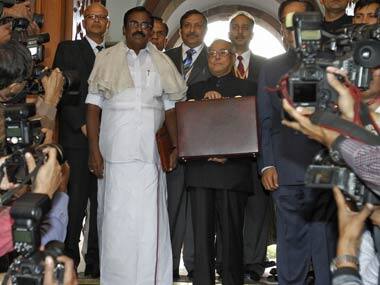 [/caption]All these calculations seem to have gone awry now, with Congress’s poor showing in UP and the newly energised Samajwadi Party (thanks, ironically, to another scion, Akhilesh Yadav) comfortably crossing the half-way mark on its own. That means the SP will not need any help from Congress to form a government in UP and so, Congress’s bargaining power at the Centre gets weakened as a result. Add the fact that Congress will have to continue to depend on the whimsical Mamata Banerjee for political support, and you have a situation where serious reforms look a bleak possibility.In its lead story on Wednesday, Mint newspaper echoed pretty much the same sentiment, saying the United Progressive Alliance (UPA) government’s ability to take ‘decisive policy action’ will be diminished after the UP results. In fact, the SP-Congress factor was amply evident even on the day of the results, with the 30-share BSE Sensex first climbing sharply on hopes that the SP might need Congress help to form a government, and then tumbling as it became clear that the SP would be able to do it all by itself.The net result: the index fell a sharp 500 points from its day’s peak and closed 1.09 percent lower than the previous close. Even the next day, the markets have been jittery on the prospects of the reform agenda being derailed.Importantly, the UPA does not even have a majority in the Rajya Sabha.The Economic Times also predicts that most reform bills will be dead, and moves like FDI in the retail sector are now a distant dream. The list of pending bills – land acquisition, pension, insurance, mining – are all uncertain now, says ET. Worse, the introduction of the much-awaited Goods and Services Tax (GST) will also get tougher, says the newspaper.So is it all over for UPA’s reform agenda now? Not quite. Another scenario is possible. Having put the elections behind it for now, the Congress-led UPA cold go ahead with reforms more forcefully, given that electoral dividends are not the key any more.Handing out more populist sops would cause major problems for an already overburdened fiscal position and create macroeconomic chaos, a problem the Reserve Bank of India has already warned about in no uncertain terms. So, a battered UPA could, instead, opt for pushing ahead with the reform agenda and put forward a Budget that addresses some serious macro concerns.A report by Citi India does not discount that possibility. “The Congress could well be much more forceful with reform given that back peddling on them does not seem to be paying electoral dividends for now," it said in a note after the elections. However, it is quick to add that the odds favour more defensive, rather than offensive, economic management from here on.What does this mean for the markets? In effect, the economic revival gains that the market has started factoring in – could be challenged. If so, sectors most impacted will be financials, capital goods rate and other investment/rate cyclicals; and defensives will be back on top of investment lists, Citi says.However, if the government uses this opportunity to change its agenda into a more reforms-minded one, then the leaders of the current rally -- financials, cap goods and other investment-driven themes -- will continue their current form.Which way the government, and therefore the markets, will go depends now on Pranab Mukherjee’s speech on 16 March. It will be yet another occasion when the markets will be looking to the government’s most dependable crisis manager for direction.
Sourav Majumdar has been a financial journalist for over 18 years. He has worked with leading business newspapers and covered the corporate sector and financial markets. He is based in Mumbai.

Rahul Gandhi, Kharge lead protest near PM residence; Centre says Parliament discussion was offered
Parliament's Monsoon Session from July 20: Key bills, numbers game to dominate agenda
Major blow to Uddhav Thackeray as six Lok Sabha MPs join Shinde camp
12 years and counting: NDA leaders felicitate PM Modi as he trumps Nehru's tenure record
‘Trust, progress and welfare’: PM Modi celebrates 12 years in office, highlights big policy moves