


Pramit Pal Chaudhuri: US transactionalism on India not a problem, I’m actually happy Landau made that statement
Corporate America has stuck with India, and even on immigration I’d argue the India story continues without too much trouble, says Pal Chaudhuri of Eurasia Group

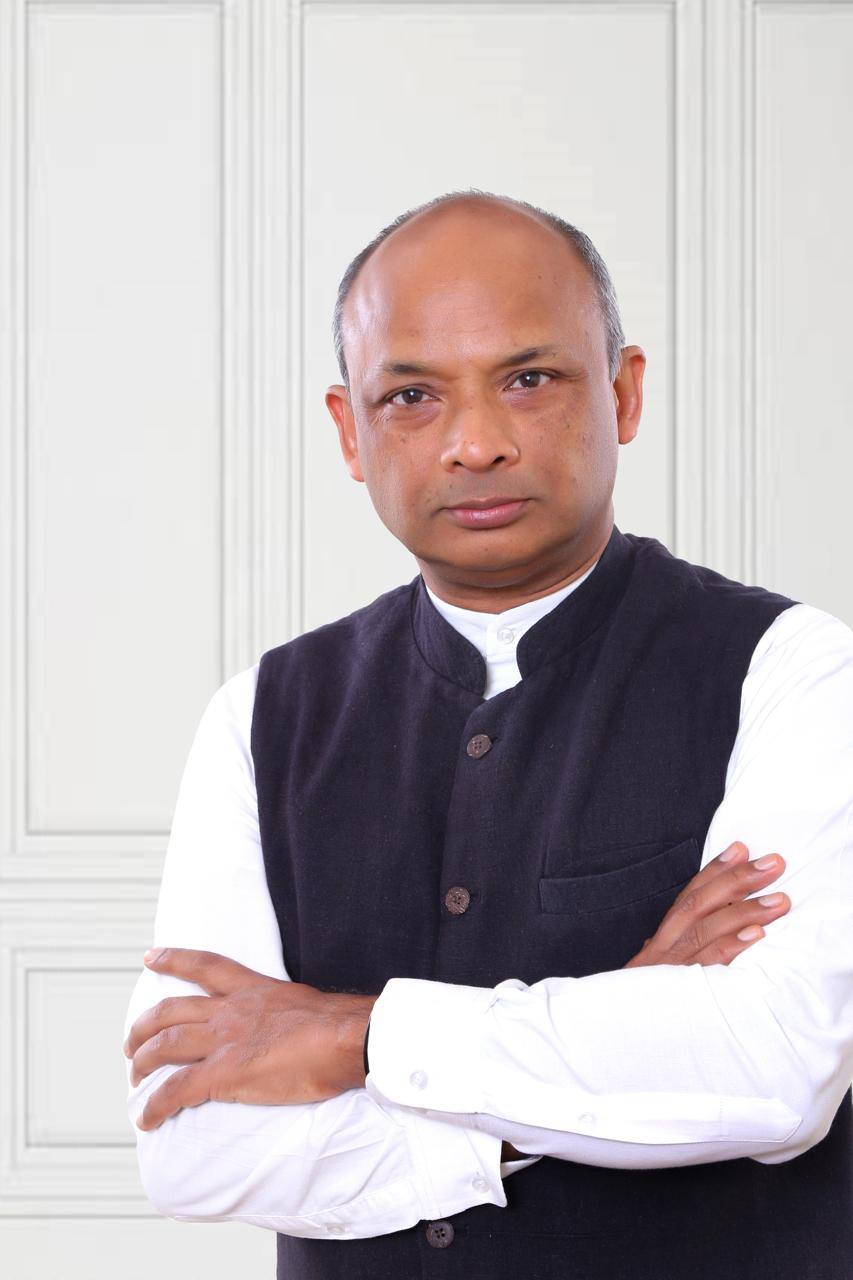
In an unpredictable, volatile world ridden with conflicts in multiple theatres, it is important to make sense of the events around us. There’s hardly a better voice than Pramit Pal Chaudhuri, the head for South Asia in Eurasia Group, a global political risk research and consulting firm, to unpack it for us. Pal Chaudhuri, a former journalist, has served on the National Security Advisory Board of two Indian prime ministers. He is an advisor to several New Delhi-based think tanks and remains active in Track-II diplomacy between India and the US, Japan, China, and Israel.
Firstpost got the chance recently to have an extensive conversation with Pal Chaudhuri, who brings his signature sangfroid, sagacity and intelligence into discussions, on a range of issues of topical interest. This is the first part of the conversation. It has been lightly edited for fluidity.
Excerpts:
Q: Let’s start with US-India relations. The US Deputy Secretary of State, Christopher Landau, recently commented that the Americans committed a mistake in aiding China’s rise, and they’re not going to commit that mistake again and aid India’s rise. What’s your take?
 More from Opinion
Pramit: This essentially ends, if you wish, a period which I jokingly call the ‘Zelikow Doctrine’ of America. During the George Bush Jr. administration… the year was probably 2005… when Phil Zelikow, the advisor to then US Secretary of State Condoleezza Rice, in a press conference, said -- I paraphrase-- America has concluded that the rise of India is in its strategic interest. And we understand the economic and strategic fallout or requirements of that. Effectively, for the first time since the late Eisenhower-Kennedy period, America said ‘we want to make India a great power’. The Indo-US nuclear deal, which is more about dual-use technology… building a certain confidence between the two systems… really comes from that.
So roughly from that period you have seen a broad consistency in American policy that it is in our strategic interest to build up India. Until we’ve come now to the second Trump administration. Trump is a Taftian (Robert Taft, a conservative, who unsuccessfully ran for the Republican nomination in 1940, 1948 and 1952). He’s from the past, a pre-World War One isolationist America. He fundamentally believes America has lost out because of its international relationships, and on the trade front, alliance front, these countries have bled America dry. There is a certain element of truth in that.
Landau is saying that it is no longer in our strategic interest to invest American resources to build up other countries, as they did with post-war Japan, post-war Germany, and China. India had a good run, if you wish, for almost 20 years. But that run has come to an end. It doesn’t mean America will pull us down, but America will now be purely transactional. You will receive the benefits of trading. Landau is indicating that we’re not going to stop Indian American companies from investing. We don’t see you as a threat, but America is not going to go out of its way for you anymore.
I don’t think that is a problem. One, it’s important for India in many ways to do this on its own or play its cards in a much more diversified manner. Second, we are now a lot bigger. When we began our economic reforms in 1991, our GDP was about $270 billion in nominal USD terms, right? And now we’re close to $4 trillion (projected to be $4.3 trillion in 2026). That’s a staggering 16-fold difference. So, we should now be able to do this on our own. And I think our response is that, fine, America will be transactional, but it is still our single largest source of FDI, our single largest source of FII (foreign institutional investment), our single largest source of remittances, our biggest source of technology. We are now winding down a little bit on the defense side. We’re diversifying. But remember, all of the other countries we are diversifying to -- the Japanese, the Europeans, the UAE, Israel, Canada, are American allies as well. So, in effect, we’re saying, all right, we’ll diversify from an America policy to one that is effectively the West with a few other add-on countries. That’s where we are right now. I was happy that Landau made that statement because in effect, he puts a bookmark. An actual policy statement that ‘this is what America believes’. He’s not saying we’re going to pull you down, but now you’re basically going to be treated just like any other country, but not the country that America will strategically invest in. Your rise now is really up to you.
Q: That’s fine. But during even Trump 1, or Biden administration, and maybe even earlier than that, we frequently used to hear that a ‘strong India is in America’s interest’. It would imply that sometimes America would take the long view on certain issues. So, is there a clean break from that policy?
Pramit: See, Trump 1.0 was less about Trump. He was as surprised as anybody else that he became the President, so he basically absorbed people from the Washington establishment into his administration because he didn’t have anybody. As is well known, Trump launched his presidency as a real estate developer. His job was only to sell the Trump brand, make people buy his apartments and go to his hotels. Suddenly he won, and he wasn’t ready. So, he brought in people who belong to the Washington consensus. They told him, ‘this is how you do it… And this is why we want to do India.’
So Tillerson, Mattis… all of these people were part of that Washington consensus on India. It wasn’t a real Trump presidency. Trump was, of course, very frustrated by the end of it, which is why when he ran for a second time, he carefully went outside of Washington and chose a group of people who come from all over middle America, people nobody had ever heard of in their life, and who often don’t have any concept of strategic thinking.
If you look at what Trump has done… he has virtually shut down the Office of Net Assessment (ONA, Department of Defense’s internal ‘think tank’, created in 1973 to provide long-term strategic foresight). The Chinese used to see the ONA under Andrew Marshall as the ultimate strategic thinking body in the world. They tried to recreate the ONA as much as they could.
Trump guys come in. They say, ‘this is a long-term strategic thinking body. We don’t need it. Shut it down.’ And slowly they’ve been going around doing exactly that. Their view is, all these ‘strategic thinking’ is what led America into these entangling alliances and so on… So we cut this down.
And we’re already starting to see shifts in the way they spend their defense money. Golden Dome… air defense... Isolate yourself, build a defense against the rest of the world, have some long-term strike capacity against an enemy that may pop up in the distant planet. But why do we need aircraft carriers? You can see the budget, for example, for the next carrier fighter aircraft is being cut every year, bit by bit, because they don’t want to have one. They don’t see the point. Carriers for them may be useful now, but they are fundamentally about an America that is projecting power around the world, and it should not be doing that money should be spent at home.
Q: The Trump administration has said it’s going to “allow India” to buy Russian oil for another 30 days. Now, does that mean that an ‘America first’ policy is clashing with India’s strategic autonomy? And if so, how is New Delhi managing it?
Pramit: Anything that is America first, Russia first, Europe first, will automatically clash. That is fine. That’s exactly what you would expect in the present situation. People have focused on Mark Carney’s speech in Davos about middle powers coming together. But if you look at our foreign minister Jaishankar’s speech in January, the Nani Palkhivala Memorial lecture, he said exactly the same thing. And he actually says (roughly) the two superpowers are not underwriting the international system. They’re weaponizing bits and pieces of it for very narrow-minded interest. So, what will be the response? And he says, we will embrace other middle powers to find a way, not to decouple from the superpowers… you can’t do that… but to find a means to balance or hedge against them.
In another interview he gave… and I can’t remember where it was… He (Jaishankar) said the so-called alliance culture of the past, where you would have an ally in which you would basically support wrong or right, that’s over. You’re going to have a world of frenemies. Sometimes we’ll agree with you on points 1 through 6. We will be neutral on points 7 through 9. And at number 10, we will disagree with you, and we will oppose your policies. That’s what governments now have to get used to. But to this day right now, we are still closer to America than we are to China, which is very much of the view that far from being transactional with India, making sure India does not rise is in their national interest.
Q: Are you surprised at the way that ties between US and India, which we were told was a matter of bipartisan consensus in the US, were allowed to decay with no pushback from any quarters? Is there no constituency in the U.S., political or otherwise, that would arrest the fall of the relationship to the extent that it has now?
Pramit: On the trade issues specifically, the US has always had grouse. India is a protectionist country. We have incredibly high tariffs. There’s a mismatch there. America is not a major industrial power. Europe has a bigger industrial base, for example, than the United States does. It sells airplanes. It does manufacture more than we do. But compared to China or even Europe, America exports less manufactured goods than even Germany, a much smaller economy. It’s noticeable that the single largest economic relationship we have in America, which is service exports, hasn’t been touched. So, I would argue, you actually do have a big constituency, mainly Silicon Valley and big American companies, who say “don’t touch the service relationship”. And in particular, the new one we have, which is the Global Capability Center (GCC), which is driving our service exports. We’ve now gone from 2 to 6 per cent of global services export, and most of that is driven by our American relationship.
But on the goods, and American agricultural products, we’ve been extremely protectionist. It clashes with our domestic agriculture sector. But in my view, we’ve declined to adopt technologies that improve our agricultural output… We have the lowest productivity in dairy. And our soya productivity is almost 1/3 of the rest of the world.
Ironically, though, we imported the germplasm from America in the 1970s. So, there’s a clash there. And the Democrats are as much on this side… But over time, what has happened? Today India imports around 80% of almonds from California. We are the third largest importer of Washington apples. So, despite protectionism, just because our demand has been so massive and our domestic production has been so pathetic, we are importing anyway.
To some degree, what we’ve done in the trade framework is institutionalize a lot of them. We will give you lower almond tariff, but we already buy from you anyway. We are going to give you lower apple tariff, but buy from you anyway. We’ll give you less soybean oil tariff, but we are the world’s largest importer of soybean in the world because we don’t produce enough. And we don’t even have a single large-scale soybean refinery in the country. We can’t even make it. Where do we import it from? Traditionally, Argentina. Now we’ll buy it from America.
So yes, there is on the trade front, no serious constituency (that’ll bat for India). But keep in mind that American corporations continue to invest… $67 billion in digital infrastructure have been announced even while we were fighting about the FTA. Meta, Apple, Google, Microsoft didn’t care. Apple makes the single-largest manufacturing gamble, if you wish, on India. If you look at our trade figures, Apple has actually transformed our basket of exports. Now electronics is our single largest export. And as a result, the ecosystem that’s coming in… over 200 Taiwanese companies have now moved to India, riding on Apple. And Samsung.
(Interjection) Despite China not allowing its technicians to come to India…
It’s interesting that initially Apple (when it set up manufacturing in India)… China laughed at this, didn’t take it seriously. Then in the past year, Beijing is deliberately trying to ensure that it does not take off. In my view, China has been a bit surprised at how successfully this has worked out in the end. So, you saw it all happening even while Trump actually denounced Apple for this. And Apple said, “we don’t care.”
Tim Cook announced a $60 billion in AI server investment in America (which he was planning to do anyway). So, it didn’t really make any difference. Ultimately, Apple is a perfect example. A company big enough, so massive, I mean, Apple’s cash reserves are the size of a GDP of a medium-sized country, saying, we’re not backing down on this.
So, I would say corporate America has stuck with India. They don’t make a public fight with the President… That doesn’t make sense… Even to some degree, I would argue on the immigration side, the Indian story continues, really, without too much trouble. Indians have been terrified, the students have dropped off, but actually the number of students, number of immigrant visas and so on hasn’t really fallen all that much, especially family reunion continues.
I would put it this way, America still remains the single-largest immigrant destination for Indians. There’s an anti-immigrant sentiment across the West everywhere, but it really continues reasonably strongly in America.
So, there are constituencies, I think, that are fighting. But with Trump controlling both houses of Congress and having a popular mandate for his policies… you are not going to get much pushback. Which is why everybody is waiting for November. And that’s where you’re going to start to see the American things swing in the other direction.
(Note: This is Part 1 of a two-part interview with Pramit Pal Chaudhuri. Part 2 will be published soon.)

The Russia-Ukraine war: Why peace remains so elusive
Head-on | Why President Trump is targeting India
When Manila and Tokyo draw a line, Beijing draws a red line
Bangladesh gets a new envoy to reset its India ties
Escalation trap to an exit strategy: How can the Iran war end?