


Opinion | Narendra Modi, Naya Bharat and a war of narratives
A new book that analyses and explains Modi’s India without falling into the trap of Lutyens’ Delhi

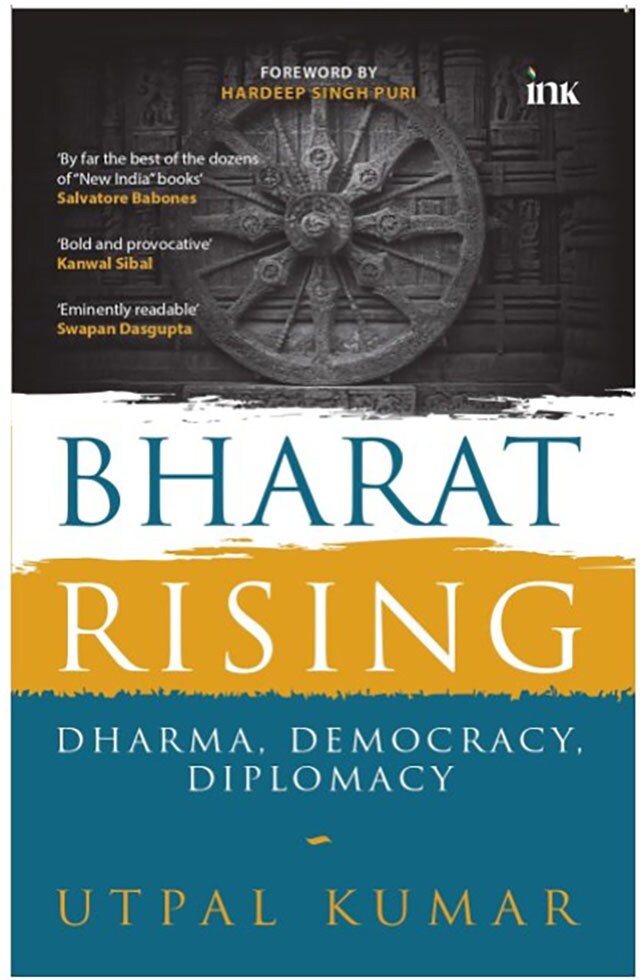
Screenshot from Amazon.co.in[/caption]Speaking at the launch of the book, Bibek Debroy, the Chairman to the Economic Advisory Committee to the Prime Minister, mentioned that the Narendra Modi regime would be judged by history but for sure it did unseat the deeply entrenched thoughts and ideas in post-colonial India. There is no disagreement on this, however, the problem that Modi would pose for future historians is the lack of quality work to justify his acceptance as a mass leader, who changed the grammar of Indian politics for good.To Utpal Kumar’s own confession, he is no Nehru-baiter for the sake of being part of a nationalist jingoism. In fact, he says that there are no doubts about first prime minister Jawaharlal Nehru being a patriot, who wanted his country to do well. He, however, says that his policies cannot be held in the same high esteem as they were flawed and reflective of the mindset which resisted taking pride in our civilisational roots.The author, through the 12 diverse essays, tries to establish the viewpoint that Nehruvian influence on Indian polity, culture and economy have been the biggest impediments in the rise of a new post-colonial India. This he does as a virtuoso of a seasoned researcher. His arguments are pegged on convincing facts, which somebody disagreeing with this line could find difficult to demolish intellectually.His most lucid remark on Nehru’s policies is captured on page 103: “Nehru could not always run with the hare and hunt with the hounds.” This imaging of Nehruvian policies can be seen in many governance initiatives of post-colonial India. Utpal Kumar’s arguments can be likened to those of the best legal minds. Like on pages 165-166, he deflates the British Broadcasting Corporation’s claims of journalistic autonomy by pitching the Modi documentary issue of 2023 to the sacking of their highest-paid anchor Gary Linekar two months later in March.The book is full with each argument having a counter-argument. At a time when debates on television have been reduced to very medieval blood and gore duels, such arguments and counterarguments are very refreshing. It helps one to understand the philosophic grounding of many policies of the Narendra Modi regime.The author is very critical of Lutyens’ elite which he doesn’t consider any less vicious than a cabal, “fiercely defending entry” and the elite prospering on the patronage of the Nehru-Gandhi dynasty. The author, however, fails to suggest how ‘Moditva’ was going to guard against the emergence of a similar clique under the present establishment.He quotes from Raj and Romesh Thapar’s, ‘Äll These Years’, “PN Haksar looked after the Left intellectuals and academia; Inder Kumar Gujral managed the media; and Pupul Jaykar looked after the ‘needs’ of the art world.” But can he contest that this role has now been passed on to certain apparatchiks of a different hue, who have been as unfairly benevolent to their own favourites as were their predecessors in the Lutyens’ cabal?A book would have its shortcomings; in fact, what’s a book without shortcomings? It’s also true that the more rigorous the work of scholarship, the more rigorous the evaluation is. The look becomes harder if the book advocates the thoughts and philosophies of the establishment. There are several arguments which can be effectively countered but for sure not dismissed.The essays in ‘Bharat Rising: Dharma, Democracy, Diplomacy’ are advised as compulsive reading for those averse to the Moditva especially the Left-‘liberals’ for several reasons. First being the emergence of a scholar like Utpal Kumar on the Right, and second being the presence of several students at his book launch despite the winter chill at the prestigious Shri Ram College of Commerce of Delhi University.New establishment throws up pretenders, their books sell well with the official patronage but they do not invite scholastic respect beyond the regime. Regimes come and go, books live beyond them. The post-independence discourse is finding a new passage which for sure is through belief in India’s civilisational roots. This may not be getting effective and appreciative replications in the official organs and publications of the establishment but certainly, it reflects brightly in the books like the one under review.Utpal Kumar, it can be safely said, is among few solid scholars on the ‘Right’ and he has done the right thing by bringing out this collection of highly provocative essays. In the decades to come, it will be a great source of information for those taking to studying Narendra Modi and New India.The writer is an author and president, Centre for Reforms, Development & Justice. Views expressed in the above piece are personal and solely that of the author. They do not necessarily reflect Firstpost’s views.Read all the Latest News, Trending News, Cricket News, Bollywood News,India News and Entertainment News here. Follow us on Facebook, Twitter and Instagram.

The Russia-Ukraine war: Why peace remains so elusive
Head-on | Why President Trump is targeting India
When Manila and Tokyo draw a line, Beijing draws a red line
Bangladesh gets a new envoy to reset its India ties
Escalation trap to an exit strategy: How can the Iran war end?