


Multan’s lost Prahladpuri temple: Tracing Holi’s origins and a city’s Hindu past
Once the sacred site linked to the legend of Prahlad and the origins of Holi, Multan’s Prahladpuri Temple today stands as a forgotten reminder of the city’s erased Hindu past

Whenever a person searches for the city of 'Multan', the default image that appears is of a tomb, that of a 14th-century Sufi called Shah Rukn-e-Alam. This is an elegant Tughlak-era structure, but the entire image of this tomb is merely a façade obscuring the ancient past of a city that was once a bastion of the Sanatana dharma.
The Multan of today was once called 'Moolasthana', and long before it became Multan, it was besieged by Alexander. Centuries later, it was captured by Muhammad bin Qasim in the first Islamic foray into the subcontinent. From Ghaznavid rule to the Delhi Sultanate to the Mughals, the identity of Moolasthana was obliterated entirely, and Multan came into being. By the reign of Iltutmish, in the early 13th century, Hindu rule had been reduced to a memory, and the city’s demographics were changing. With political and military power firmly in Islamic hands, the ancient Sun Temple of Multan was desecrated and eventually destroyed to a point where even its exact location is debatable.
 More from Opinion
But one temple and its legends endured. The Prahladpuri Temple was dedicated to Narasimha, the man-lion avatar of Vishnu. As per Hindu lore, Prahlad was the son of the demon king Hiranyakashipu. When Prahlad refused to abandon his devotion to Vishnu, his father subjected him to severe persecution. With his devotee under threat, Lord Vishnu stepped out of a pillar in his man-lion incarnation and destroyed the demon king. This legend is associated with the ritual of Holika Dahan, which takes place on the eve of Holi. The Prahladpuri Temple commemorated this event.
While the exact origin of this shrine is shrouded in obscurity, what is known is that it was destroyed in the wave of invasions and then rebuilt, and this took place more than once. In 1810, despite the city being under Afghan rule, the growing influence and power of Maharaja Ranjit Singh in Punjab emboldened Multan’s Hindus to raise the height of the Prahladpuri Temple. This led to communal tensions rising again in the city.
On his seventh attempt, in 1818, Maharaja Ranjit Singh’s army captured Multan, bringing the city out of Islamic rule for the first time in centuries. A period of tranquillity remained till 1848. With the Sikh empire at an end, forces of the British East India Company laid siege to Multan Fort. It was a long siege, lasting almost nine months.
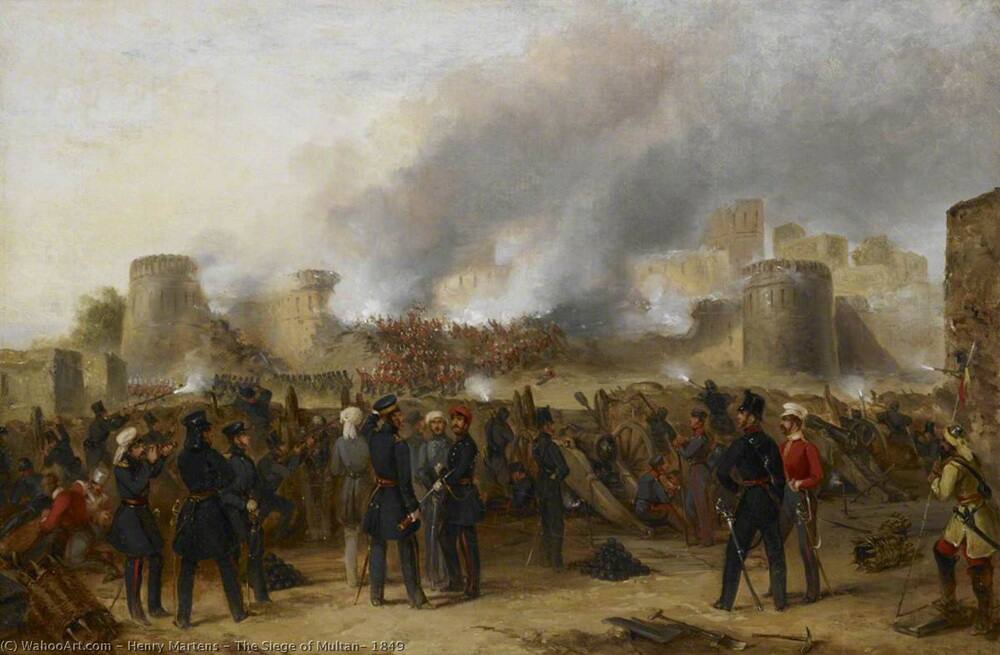
Eventually, the British brought in heavy artillery. On December 30, 1848, the main gunpowder-storage magazine of the fort was hit. The resultant explosion is said to have been one of the largest non-nuclear explosions in history, also damaging the Prahladpuri shrine. Casualties among the defenders were significant, but they continued resistance for a few weeks more. The following August, heavy rains and rising rivers swept away the rubble of the fort.
Despite the protection of the Sikhs having been lost, it appears that the incredible believers of Multan rebuilt a shrine at the old site. This is despite being surrounded and heavily outnumbered by a majority community that was hostile to the temple’s existence. The scenario continued until 1947, when Partition ensured that whatever remained of the Hindu population also departed. And with them went the principal idol of Narasimha.
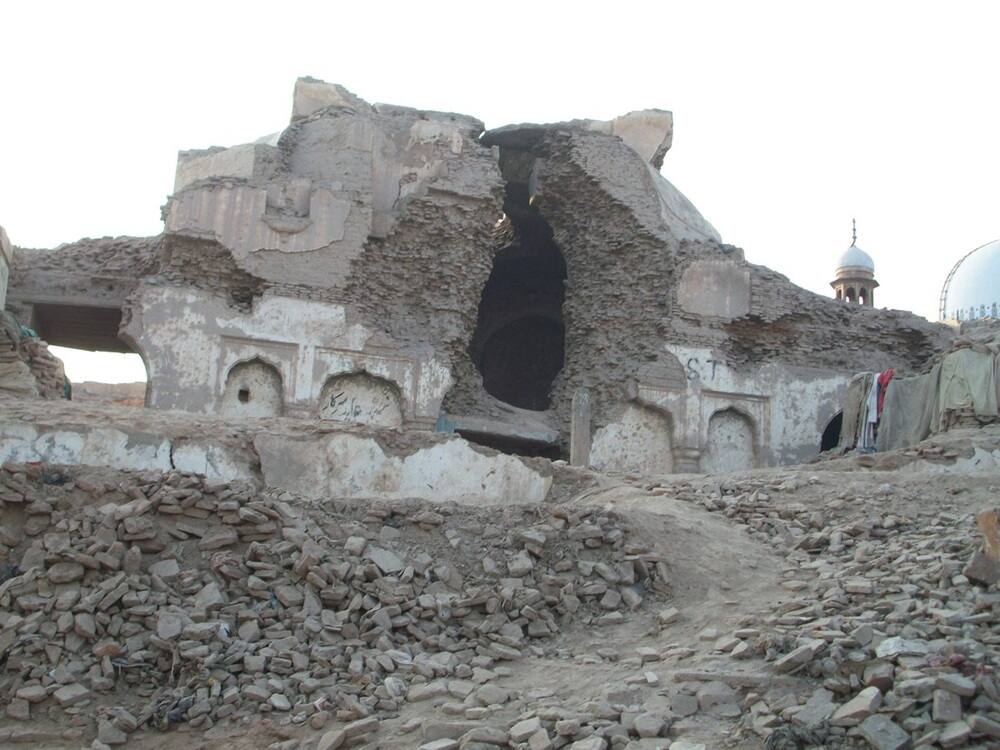
Brought to independent India, it found sacred space in a Haridwar shrine where it remains to this date. The building of the shrine stayed where it was built. Until December 1992! After the fall of the Babri Masjid at Ayodhya, reciprocal assaults on temples followed, and Multan witnessed the final fall of the Prahladpuri Temple. The place lies in ruins today, and the city’s current population retains no memory of its past. The site which may have given birth to the festival of Holi is now sans any colour.
To those who think Multan is an isolated case, there are numerous such places in the subcontinent that have witnessed a systematic erasure of their Hindu, Jain and Buddhist heritage. And not all these places lie in other countries now. Such examples abound in Kashmir. Here, the exodus of Pandits in 1990 was not an isolated event but the latest in a series of forced exits seen over centuries. And the thinning out of their population allowed the other community to pretend that the Pandits never existed. As a result, the Shankaracharya Hill, home to a 9th-century Hindu temple, was renamed Takht-i-Sulaiman. The Hari Parbat began to be called Koh-i-Maran, meaning ‘Hill of Serpents’. Anantnag, which translates into ‘Land of countless springs', was renamed ‘Islamabad’ by a 17th-century Mughal governor, and this made-up name is popular among the current locals. ‘Varahamula’ became Baramulla.
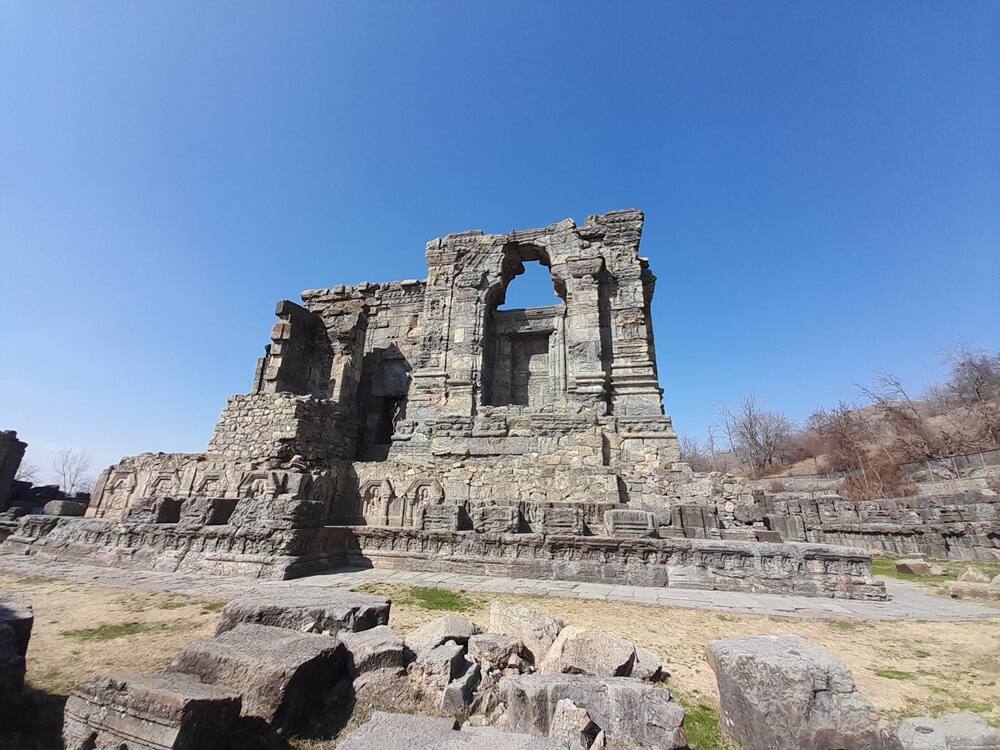
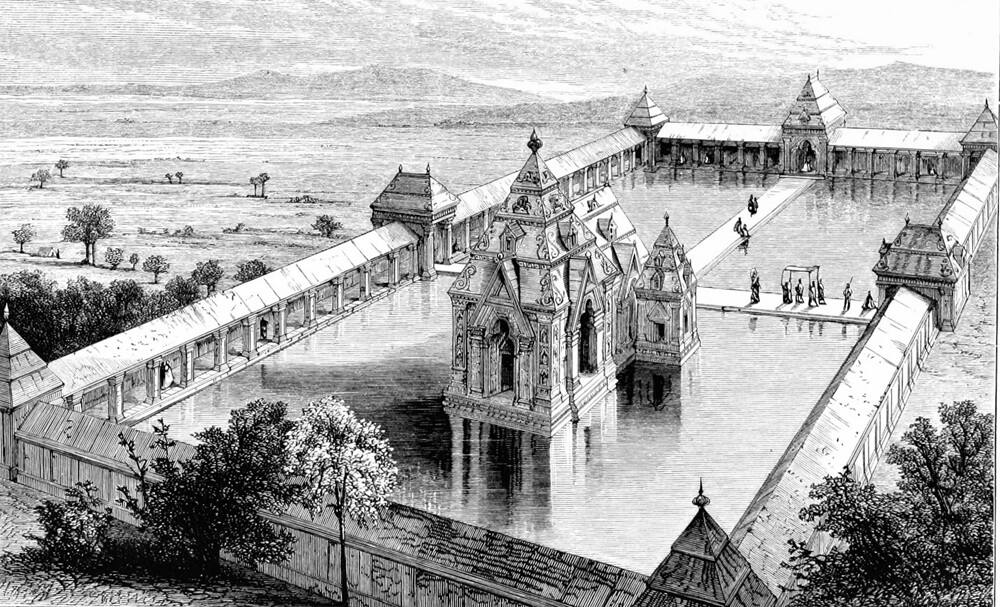
The same pattern of erasing history is seen at the Sun Temple at Martand, which was built in the 8th century CE by Kashmir’s legendary ruler Lalitaditya. Destroyed by the Islamic ruler Sikander Shah Miri (reign 1389-1413), the site began to be called 'Shaitan-ki-gufa', meaning a dwelling place of evil spirits. No surprise that local Muslims regard the place with total disrespect now. It is to the eternal shame of successive Indian governments that none have shown the will to rebuild the shrine. If we are unwilling and incapable of reconstructing such places even on Indian soil, the idea of reviving sites in Pakistan is a laughable one.
The rationale for the destruction of temples goes beyond religion. In ancient times, temples were the focal point of a community. They were a source of education, tradition and culture, and the grandest shrines were usually associated with the ruling class of a city or kingdom. Destroying them was a blow to the fabric of the community, breaking their morale and paving the way for either forcing a chunk of the population out or converting them. Seeing what has happened at Multan and Kashmir, the strategy has succeeded.
The lost Hindu heritage of Multan is therefore not merely about vanished structures but about memory, faith and the enduring imprint of ancient traditions on a city whose spiritual landscape has been forcibly altered over time. Can it change for the better once more? It will need conflict and political will to ensure that the Prahladpuri Temple celebrates Holi once more.
(The author is a heritage explorer with a penchant for seeking obscure sites. A brand consultant by profession, he tweets @HiddenHeritage. Views expressed in the above piece are personal and solely those of the author. They do not necessarily reflect Firstpost’s views.)

The Russia-Ukraine war: Why peace remains so elusive
Head-on | Why President Trump is targeting India
When Manila and Tokyo draw a line, Beijing draws a red line
Bangladesh gets a new envoy to reset its India ties
Escalation trap to an exit strategy: How can the Iran war end?