


How Hormuz crisis exposes global complacency on maritime chokepoints
Energy crises often spark talk of diversification and strategic reserves, but prices eventually stabilise and supply routes resume. Markets call this risk, history calls it a habit

In the spring of 1984, Iraqi aircraft began attacking tankers loading Iranian oil at Kharg Island. Iran retaliated by striking vessels carrying oil from Kuwait and Saudi Arabia. Over the next four years, more than 400 ships were hit in what history records as the tanker war. Insurance premiums climbed. Nations re-flagged vessels under the American flag for protection.
The United States Navy found itself escorting Kuwaiti tankers through the Gulf. Crude prices in those years, adjusted for inflation, were modest compared to today’s, but the disruption to the psychology of oil markets was lasting. The world learned, or should have learned, that the Strait of Hormuz is a vulnerability with a twenty-one-mile throat.
 More from Opinion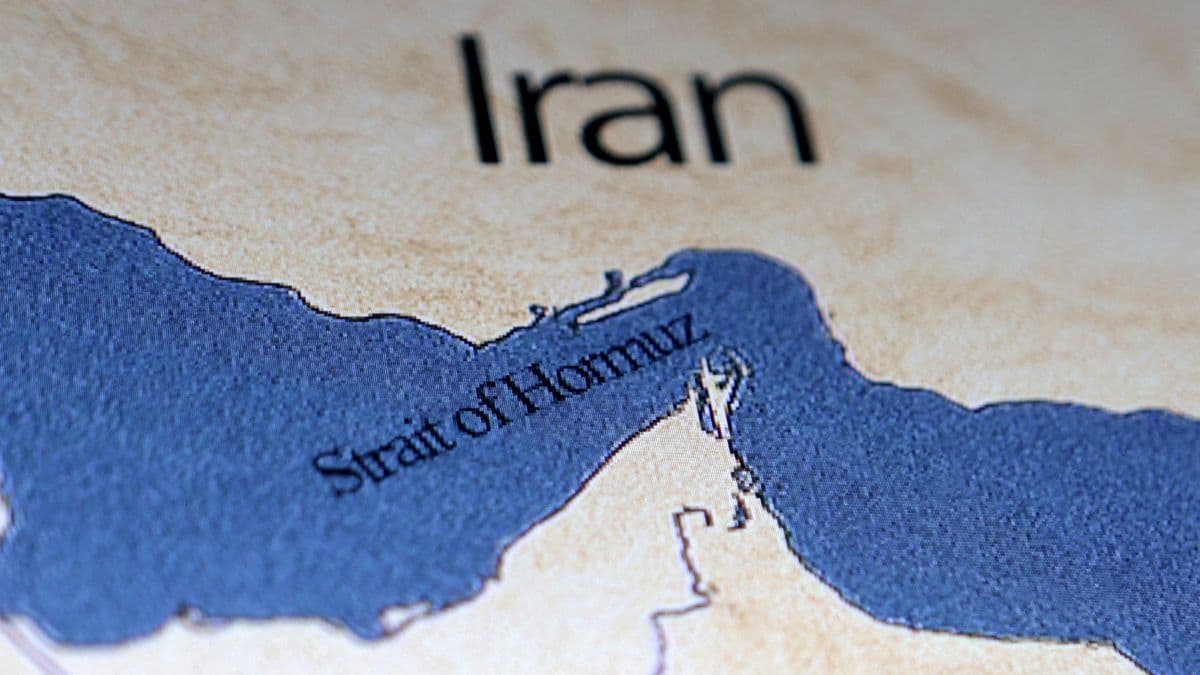
History does not repeat itself. It rhymes, often at inconvenient times.
We are now thirteen days into a direct confrontation that began when the United States and Israel launched joint air strikes on Iran on February 28. The International Energy Agency, in its Oil Market Report published this morning, calls what has followed “the largest supply disruption in the history of the global oil market.” Before the war, roughly 20 million barrels per day of crude and oil products flowed through the Strait of Hormuz.
That figure has fallen to a trickle. Gulf producers (Iraq, Kuwait, Qatar, the UAE, and Saudi Arabia) have cut total oil production by at least 10 million barrels per day as storage tanks fill and tanker crews decline to enter contested waters. Global supply is projected to plunge by 8 million barrels per day in March alone, more than seven per cent of February’s output. The International Energy Agency (IEA) has revised its 2026 global supply growth forecast from 2.4 million barrels per day to 1.1 million. When the IEA uses the word 'history' in a sentence about supply disruption, it is worth reading that sentence twice.
Brent crude soared to just under $120 a barrel before retreating, then crossed $100 again on Thursday morning as Iran intensified its strikes. Two tankers were set ablaze in Iraqi waters, a container ship was struck north of Dubai, and Bahrain reported attacks on its oil facilities.
A report from Iran’s semi-official Fars News Agency suggested that Iran-backed groups could move to close the crossing that controls access to the Suez Canal via the Red Sea, meaning a second chokepoint, alongside Hormuz, is now on the table.
IEA member countries responded on March 11 with an unprecedented 400-million-barrel emergency reserve release. The agency described this as “a significant and welcome buffer” and then added, in the same paragraph, that it “remains a stop-gap measure”. The qualification deserves more attention than the headline.
What comes next can be framed, with some simplification, in three scenarios.
The optimistic one requires a ceasefire within four to six weeks. Tanker traffic resumes. The 400-million-barrel release bridges the gap. Saudi Arabia and the UAE, which have rerouted with impressive speed. Saudi Arabia was loading a record 5.9 million barrels per day through its western ports on March 9, up from 1.7 million in 2025.
Global observed inventories stood at 8.2 billion barrels in January, their highest since February 2025; this buffer provides genuine cushion. Brent retreats to an eighty-five to ninety-five dollar range by mid-year. The damage is real but finite. One London trader this week put the resolution timeline at “at least six weeks to two months, even if it all stops today.”
The base case is messier and, if markets are honest, closer to consensus. Deutsche Bank analysts said on Thursday that investors are “increasingly pricing in a more protracted conflict that causes extensive economic damage,” and that the risk of a “broader stagflationary shock” is live. Stagflation is precisely the combination that makes central bankers lose sleep and governments lose elections. In this scenario, Hormuz remains unreliable for three to six months. The disruption spreads beyond upstream crude.
The IEA notes that over 4 million barrels per day of Gulf refining capacity are at risk and that diesel and jet fuel markets are “particularly vulnerable”. Brent oscillates between ninety-five and one hundred and fifteen dollars. The ten-year German Bund yield, already at its highest in two and a half years, and the US Treasury yield above 4.2 per cent signal that bond markets have begun pricing in what equity markets have not fully accepted.
Goldman Sachs has revised its eurozone inflation forecast to peak at 2.9 per cent in the second quarter; the European Central Bank, which has so far held its hand, may find itself hiking rates, an odd response to a supply-side shock, but one that the logic of inflation expectations may compel.
The pessimistic scenario has now acquired a more precise coordinate. One hundred and fifty dollars a barrel is where demand destruction begins to outweigh inflation fears for central banks. Goldman Sachs models a “very adverse” case, a sixty-day Hormuz closure, with oil at $150, declining only slowly, under which eurozone inflation reaches 4.4 per cent. Add to this the Bab-el-Mandeb threat now emerging, and the pessimistic scenario becomes one of two simultaneous chokepoints disrupted, not one.
For India, the arithmetic is uncomfortable at every price point, differing only in degree. The country imports approximately 88 per cent of its crude oil requirements, a substantial share from the Gulf. Each ten-dollar increase in Brent costs India an additional twelve to fifteen billion dollars annually.
The IEA has specifically flagged that Liquefied Petroleum Gas (LPG) for “cooking and heating, especially in India,” is at risk. The current account widens, the rupee comes under pressure, and the Reserve Bank of India faces the same impossible arithmetic as the European Central Bank, ie, whether to hold rates and protect growth or tighten and contain inflation, when the shock is arriving from supply rather than demand. India’s Strategic Petroleum Reserve holds sufficient oil. China’s is estimated at ninety days. (The IEA’s record global emergency release covers roughly five days of the current disruption. The numbers accumulate in a direction that does not comfort.)
An analysis by Sajjid Chinoy suggests that sustained increases in crude oil prices could materially dent India’s growth trajectory. If crude averages around $80 per barrel, India’s GDP growth could decline by about 0.5 percentage points. At $100, the impact deepens to roughly 0.9 percentage points, and if prices rise to $120, the drag on growth could widen to around 1.3 percentage points.
Energy crises rarely end with the lesson they appear to teach. Every disruption briefly revives talk of diversification, strategic reserves, alternative supply routes and energy transitions. Then prices stabilise, tankers resume their routes, and the world quietly returns to the same geography that produced the shock in the first place. Hormuz has been a vulnerability for four decades. It remains one because the global economy has chosen efficiency over redundancy. The result is a system in which a strait twenty-one miles wide can still interrupt the energy supply of half the planet. Markets call this risk. History calls it a habit.
(Aditya Sinha [X: @adityasinha004] writes on macroeconomics and geopolitics. Views expressed in the above piece are personal and solely those of the author. They do not necessarily reflect Firstpost’s views.)

The Russia-Ukraine war: Why peace remains so elusive
Head-on | Why President Trump is targeting India
When Manila and Tokyo draw a line, Beijing draws a red line
Bangladesh gets a new envoy to reset its India ties
Escalation trap to an exit strategy: How can the Iran war end?