
Advertisement


Sections
The hell-pit that is caste
In this 11th edition of Bards of Resistance, meet Urdu poet Jayant Parmar from Ahmedabad

 At an age when they should be flying kites, the children of my community begin earning their daily bread. I too have suffered the acid burns of a caste system that is thousands of years old. The pain of the anti-reservation movement in Gujarat as well as elsewhere, has accumulated within me and reveals itself as poetry. They are not mere descriptions of events or analysis or just passing things. They are a search for roots, too.I cannot write anything that has emerged only from the world of dreams and is far from the truth of life. All epics that deny the existence of human beings should be thrown away in ocean. True poetry is that which inspires and heartens human beings in their struggles through life.Though Gujarati is my mother-tongue, I taught myself the Urdu script and language as my neighbourhood was predominantly Muslim. Painting was a hobby since my childhood days. In Urdu titles on movie screens and in the aayats inscribed on mosque walls, I saw paintings. This is why (after learning Urdu) I am fond of calligraphy.[imgcenter]
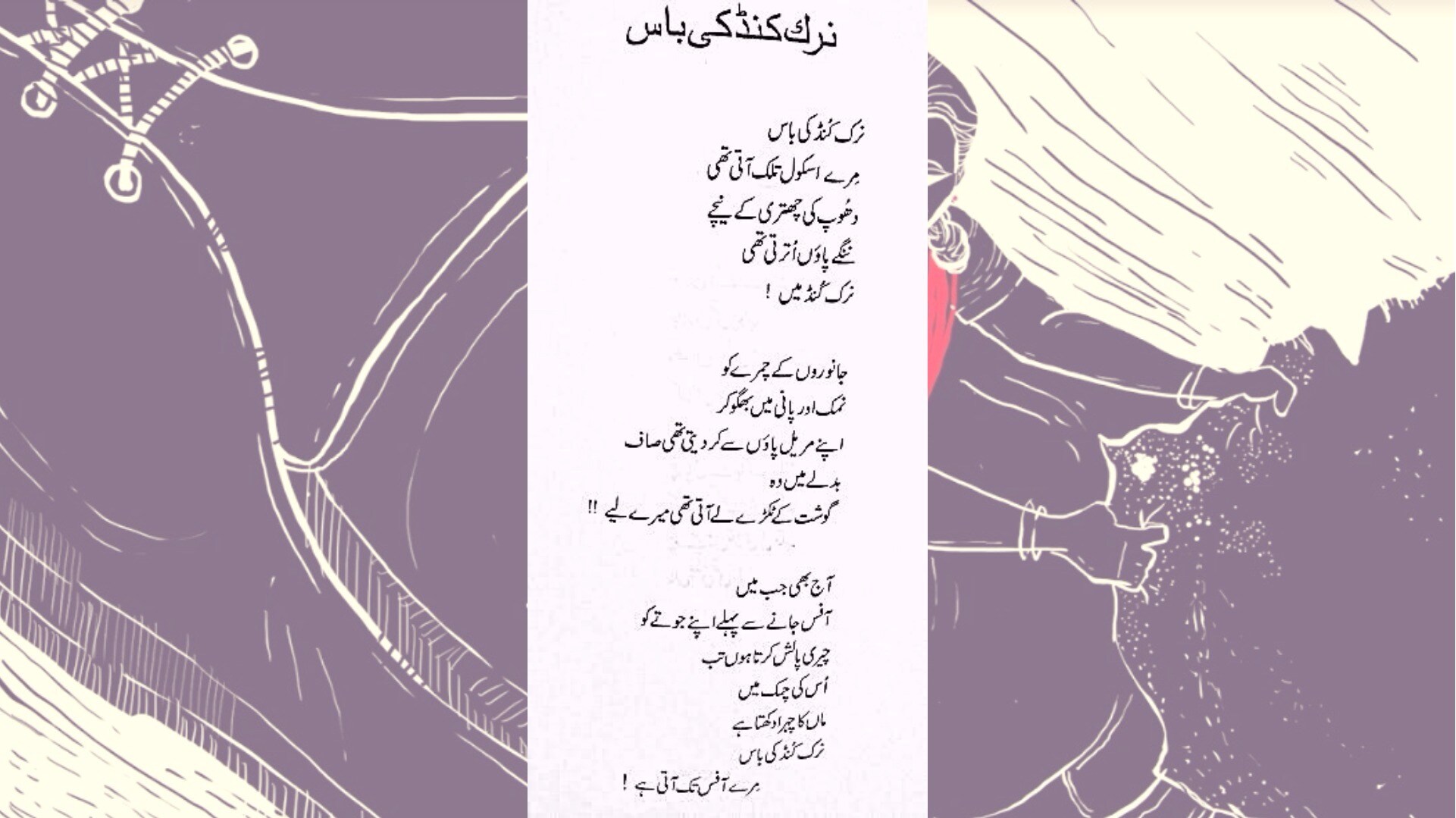 [/imgcenter]नरककुंडकी बासनरककुंडकी बासमेरे स्कूल तक आती थीधूपकी छतरीके नीचेनंगे पाँव उतरती थीनरककुंडमें !.जानवरोंके चमड़ेकोनमक और पानीमें भिगोकरअपने मरियल पाँवोंसेकर देती ठी साफ़.बदलेमें वहगोष्तके टुकड़े ले आती थी मेरे लिये!!आज भी मैंआफिस जानेसे पहलेअपने जूतेकोचेरी पालिश करता हूँ तब उसकी चमकमेंमाँका चेहरा दिखता है.नरककुंडकी बासमेरे आफिस तक आती है ![imgcenter]
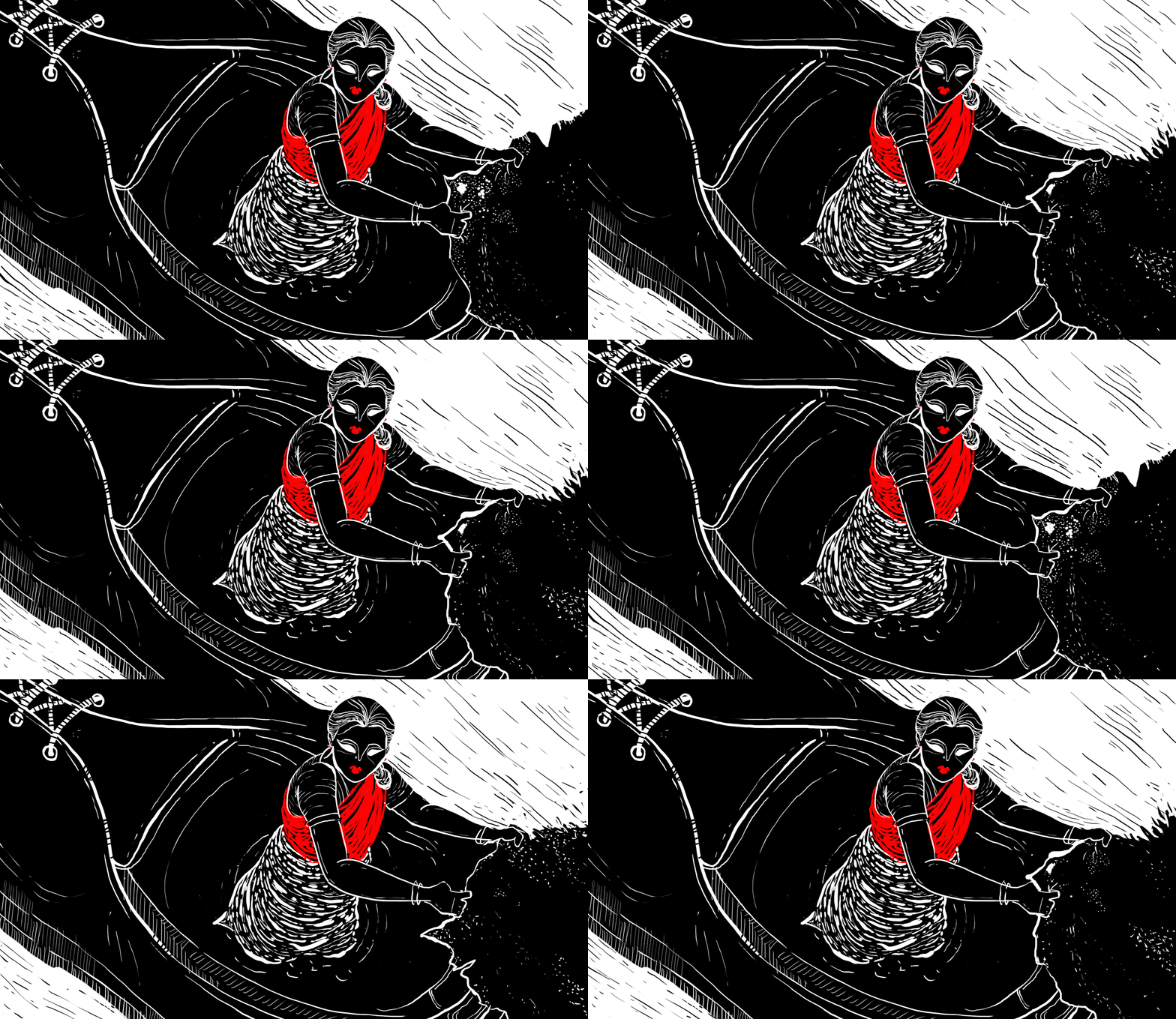 [/imgcenter]The stink of hell-pitThe smell of hell-pitused to dog meright up to my school.Under the canopy of a scorching sunshe would descendbarefootin the hell-pit.She wouldsoakstinking animal hidein salt and waterand cleanse itwith her numb feetIn return,she would bringfor mea few pieces of meat.Even todaywhen I polish my shoeswith cherry blossombefore leaving for officein their glowI see my mother’s face.The smell of hell-pitdogs meright into my office!
From ‘Pencil aur doosri nazmein’Dr GK Vankar has translated this poem from the original. He is a Professor of Psychiatry. He has translated Gujarati Dalit literary works in English as well as Hindi. He has also translated Jayant Parmar’s Urdu poetry, ‘Inkpot and other poems’, and BN Vankar’s Gujarati Dalit poetry, ‘Overbridge’. His translations have appeared in literary journals such as ‘Indian Literature’ and ‘Muse India’, and ‘Shared Mirror’. He has created several blogs on selections and translations of Dalit poetry from Gujarati and Marathi languages. He was the editor of biomedical professional journal, ‘Archives of Indian Psychiatry’ of Indian Psychiatric Society.
First Published:Aug 06, 2017, 10:23:33 IST
Advertisement
Advertisement

Off-centre | Vande Mataram: The mother that we adore
A meditation on the meaning of India as the country celebrates 77th independence Day
Of nature, culture and alcohol: A glimpse into Sikkim’s age-old brewing traditions
Most rural households across Sikkim have their own breweries, which are an integral part of the local culture.
Revisiting the Bollywood dream sequence: A tour of the world, and within
The Bollywood dream sequence helped stretch my imagination in a way that I believed the whole world was within me. This self-sufficiency helped me get through the physical setting I was in, from awkward social gatherings to the confines of my home during the pandemic.
Trams, part of Kolkata heritage, are little more than a nostalgia ride today
In recent years, hit by natural disasters and official neglect, the city’s tram system has become little more than a nostalgia ride, its passengers more often looking for a lark than an efficient trip home.
Online exhibition archives oral histories of the Kolis, degradation of Mumbai's coastal ecology
The online exhibition Through the Eyes of the Kolis uses their photos to highlights how Mumbai's ecology has been disturbed and how the fishermen community are adapting.
Advertisement
Advertisement