
Advertisement


Sections
It’s not a turban, it’s a crown
Waking up and choosing to wear a turban every morning is a tremendous act of faith and political courage.

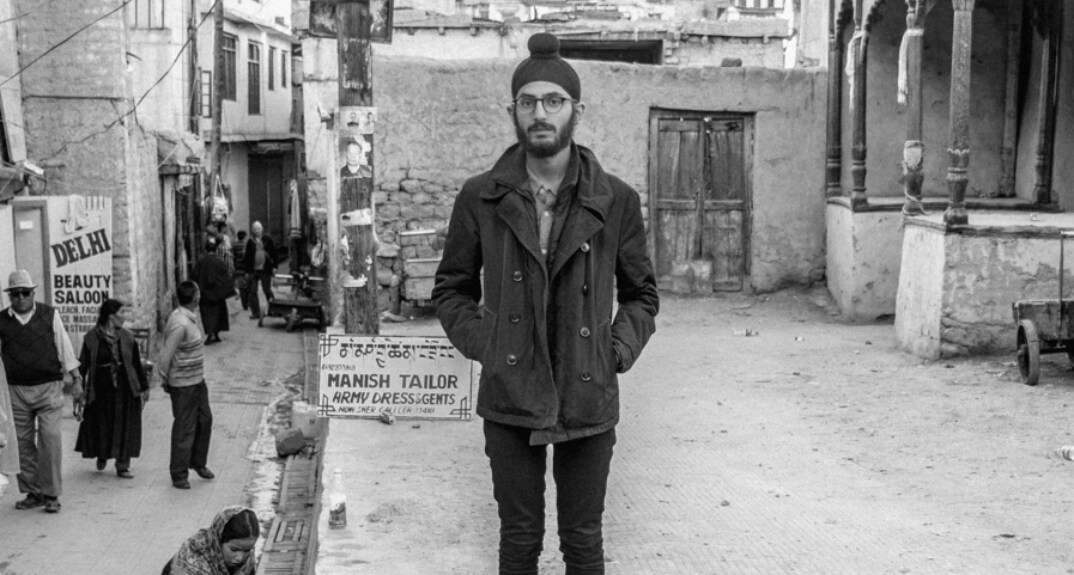 After approaching a police officer, he was told just to go back to his building. According to the officer, in a city of millions, he should feel safe. When he asked about filing a report, the officer responded by telling him that she was off duty.“I kept seeing the guy, for the next year,” Singh said. “Every time I saw him, I froze where I was. It literally took me about a year to a year and a half to make sense of a lot of things.”After classes ended for the day, Singh went home and shuttered himself in. He stayed home for some of the following week. When he eventually did go back to class, a professor noticed that something was not right. Only then was an official report filed. Singh described the fear and isolation he felt for months after the attack.“I can engage with anybody. I don’t pigeon-hole anybody, I don’t judge anybody, but after this incident, I had a really difficult time just going out and photographing being on my own on the streets,” he said.He started seeing his interactions with authorities differently, realising that he was getting stopped in the subway and asked to show police officers the contents of his photography bag. Overwhelmed by confusion, Singh started seeking out his community. He gravitated towards entrenched South Asian communities in parts of Queens.[imgcenter]
 [/imgcenter]“Obviously I had to pull myself out of that rut so I started frequenting neighborhoods like Jackson Heights and Richmond Hill and going to the gurudwara more,” Singh said. “I started engaging with a lot of Sikh people and it just turned out that whenever I had my camera and I saw a Sikh person, I’d share this story with them and I’d ask them why is it that you wear your turban.”He started carrying a notebook with him, asking his subjects to share anecdotes about times when they were made to feel different in their own country. His notebook is filled with his subjects’ stories, in their own handwriting, a hodge-podge of English and Punjabi. His photography project, “It’s Not a Turban; It’s a Crown,” came from these interactions.“I feel like I was looking for somebody to be really angry and mad and I couldn’t find somebody really angry or mad,” Singh said of his subjects.Singh would ask every subject to pose a question to the next person he photographed. The questions were intensely personal, about home, Sikh identity, and grappling with moments of adversity.“One question was, ‘In moments of adversity, how do you maintain chardikala?’ ” Singh said. “Chardikala is something my mom and father tell me any time I’m down. It’s a chant, it means high spirits, rising spirits.”In the first month after the September 11 attacks in New York City, more than 300 assaults on Sikh-Americans were documented. The rising tide of Islamophobia has affected Sikh-Americans, who are often thought to be Muslims because they wear turbans and grow beards. Waking up and choosing to wear a turban every morning is a tremendous act of faith and political courage.“At the end of the day, even when we practice our faith, I feel that it’s much more than a religious statement. Whenever I wear my turban, it’s a political statement,” Singh said.
He spoke a bit about the “Singh nod.”“I can be walking on the street, and if I meet a Sikh person, no matter where we are on the street, we’ll acknowledge each others’ presence,” Singh said. “It signifies a shared struggle, it signifies shared experiences, and that’s something that I really cherish.”Singh has enmeshed himself in other another political struggle during his time in school.“My father is a social activist. My grandparents were involved in the Indian Independence struggle and through that lens I’ve been actively involved here in New York City with the Tibetan Freedom Movement,” Singh said. “That has been my most important project that I’ve worked on for the past four years.”
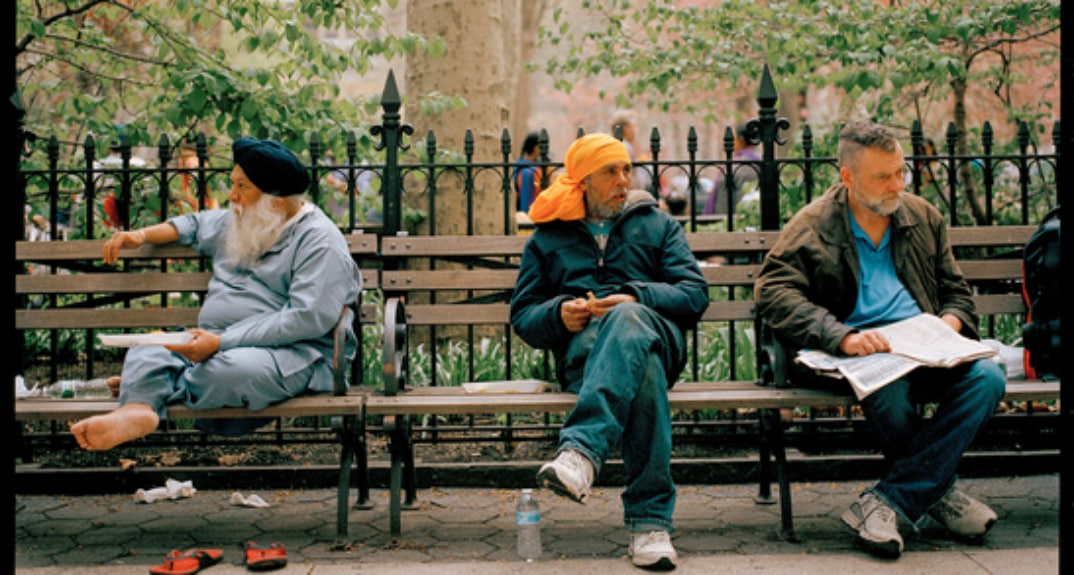 When Singh first became involved with the Tibetan freedom movement, he kept coming across photographs taken by Westerners who go into Tibetan refugee communities in India. The imagery was limited to monasteries, an exotic and oversimplified interpretation of the Tibetan exile community.“They fail to look at the current political realities faced by many Tibetans across the world,” Singh said. “To say that everyone is super religious and everyone follows the Dalai Lama’s policy of appeasement towards the Chinese, to say that these are quiet submissive people who are always praying, is to paint the wrong picture.”In his photography and activism, Singh seems to keep returning to themes of home and displacement. Through his work with the Tibetan activist community, Singh has gotten a sense of what it means to be in exile and dispersed all over the globe. He attempts to document what it means not to be able to go home.“Both sides of my family came from Pakistan side,” Singh said. “Both of our ancestral houses were in Lahore and Rawalpindi, so to uproot a people and move them 30 kilometers across and to say, oh now this is your home. To my mom and grandmothers, this idea really doesn’t make any sense.”Still, in this fraught political moment, Singh sees hope in our ability to create homes and communities for ourselves. According to him, home is about feeling safe and comfortable.“We are all just trying to find a home for ourselves in this world, which is why I’ve gravitated towards that idea,” Singh said.Images courtesy: Karanjit SinghRead part one: Go back to your countryRead part two: Subdrift: Indian Americans find a sense of communityRead part three: Republican Hindu Coalition: A misguided sense of community
First Published:Mar 28, 2017, 10:49:25 IST
Advertisement
Advertisement

Off-centre | Vande Mataram: The mother that we adore
A meditation on the meaning of India as the country celebrates 77th independence Day
Of nature, culture and alcohol: A glimpse into Sikkim’s age-old brewing traditions
Most rural households across Sikkim have their own breweries, which are an integral part of the local culture.
Revisiting the Bollywood dream sequence: A tour of the world, and within
The Bollywood dream sequence helped stretch my imagination in a way that I believed the whole world was within me. This self-sufficiency helped me get through the physical setting I was in, from awkward social gatherings to the confines of my home during the pandemic.
Trams, part of Kolkata heritage, are little more than a nostalgia ride today
In recent years, hit by natural disasters and official neglect, the city’s tram system has become little more than a nostalgia ride, its passengers more often looking for a lark than an efficient trip home.
Online exhibition archives oral histories of the Kolis, degradation of Mumbai's coastal ecology
The online exhibition Through the Eyes of the Kolis uses their photos to highlights how Mumbai's ecology has been disturbed and how the fishermen community are adapting.
Advertisement
Advertisement