
Advertisement


Sections
How child labour has come to define crimes against children
From 2010 to 2015, crimes against children saw a steep rise from 26,694 cases to 94,172 cases — an increase of 252 percent

From 2010 to 2015, crimes against children saw a steep rise from 26,694 cases to 94,172 cases — an increase of 252 percent. This is a statistic that should be a cause for much alarm and indignation. Of course, these are nationwide numbers and they need to be disaggregated for them to make more sense. But it is a question worth asking as to why crimes committed against children rarely evoke the kind of vehement public responses as crimes committed by children do.Children are particularly vulnerable to exploitation for many reasons, including their dependence on adults, their lack of knowledge of their own rights and a relative lack of access to institutions which can support them. Child labour is just one example of a widely prevalent practice of crimes against children — in which all these three factors contribute.P*, who presently lives in a children’s home run by Prayas JAC Society, is a case on how children can be particularly vulnerable. The 10-year boy is from Bihar, and comes from an extremely backward caste. In an extreme case of exploitation, although the boy worked for three years in all, his father got merely Rs 10,000 in exchange for this work. P worked in particularly dangerous conditions — in a bangle-making factory in Delhi. However, the alternative for him is not a promising one either — his father works as a farmer with a very meagre income, and the family had consented to him going to Delhi for work.![juvenile-justice2]() Indeed, a large number of cases of child labour in Delhi are characterised by dangerous work conditions or work hours that are not practically possible to monitor. For example, bangle-making is extremely risky work. As noted by a Unicef report, it involves joining the ends of a bangle over a kerosene flame, using fast-moving blades and using chemicals for decoration. Some cases of child labour involve kids working as full-time domestic helpers at homes along with their families.In such cases, it is difficult to monitor working hours and the effect that such work on the child’s education.But there are a variety of reasons that could contribute to child labour in different parts of the country. Prakhar Jain, who is pursuing a fellowship on education among tribal communities in Chhattisgarh, notes, “As the contact between tribal communities and other sections of society is increasing, tribals are becoming more attracted to the idea of earning in the form of physical cash. This leads some children to work as labourers on farms in Telangana and Andhra Pradesh to, even if they are actually better off in their native villages. The delay in payment of wages under the MGNREGA is also a factor which contributes to this.”Ravi Deshmukh, a former sarpanch from a village in Beed, Maharashtra, says, “At this time of the year, it is the season of plucking cotton. In farms all across the region, it is common to see children — some of them as young as 7 years old — being engaged in this work. In this period, there is a sudden drop in attendance rates of children in schools.”
Indeed, a large number of cases of child labour in Delhi are characterised by dangerous work conditions or work hours that are not practically possible to monitor. For example, bangle-making is extremely risky work. As noted by a Unicef report, it involves joining the ends of a bangle over a kerosene flame, using fast-moving blades and using chemicals for decoration. Some cases of child labour involve kids working as full-time domestic helpers at homes along with their families.In such cases, it is difficult to monitor working hours and the effect that such work on the child’s education.But there are a variety of reasons that could contribute to child labour in different parts of the country. Prakhar Jain, who is pursuing a fellowship on education among tribal communities in Chhattisgarh, notes, “As the contact between tribal communities and other sections of society is increasing, tribals are becoming more attracted to the idea of earning in the form of physical cash. This leads some children to work as labourers on farms in Telangana and Andhra Pradesh to, even if they are actually better off in their native villages. The delay in payment of wages under the MGNREGA is also a factor which contributes to this.”Ravi Deshmukh, a former sarpanch from a village in Beed, Maharashtra, says, “At this time of the year, it is the season of plucking cotton. In farms all across the region, it is common to see children — some of them as young as 7 years old — being engaged in this work. In this period, there is a sudden drop in attendance rates of children in schools.”![JJ2_Strip2 (1)]() In this context, it is even more important to ensure that the new amendment to the Child Labour (Prohibition and Regulation) Act, 1986 is not misused. The law now allows children to ‘help’ in certain ‘family enterprises’ if this does not affect their education. But terms like ‘help’ and ‘affecting the education’ of a child need to be clearly defined in measurable terms so that the law does not indirectly allow child labour by another name.At a broader level, it is also important to sit up and take note of crimes against children. For several kinds of crimes, there are now specific laws to deal with them. But as the issue of child labour indicates, implementing these laws in their true spirit is still a far cry.*Name has been withheld to protect privacyThe author works with Prayas JAC Society, an organisation, headquartered in New Delhi, that works on child rights
In this context, it is even more important to ensure that the new amendment to the Child Labour (Prohibition and Regulation) Act, 1986 is not misused. The law now allows children to ‘help’ in certain ‘family enterprises’ if this does not affect their education. But terms like ‘help’ and ‘affecting the education’ of a child need to be clearly defined in measurable terms so that the law does not indirectly allow child labour by another name.At a broader level, it is also important to sit up and take note of crimes against children. For several kinds of crimes, there are now specific laws to deal with them. But as the issue of child labour indicates, implementing these laws in their true spirit is still a far cry.*Name has been withheld to protect privacyThe author works with Prayas JAC Society, an organisation, headquartered in New Delhi, that works on child rights
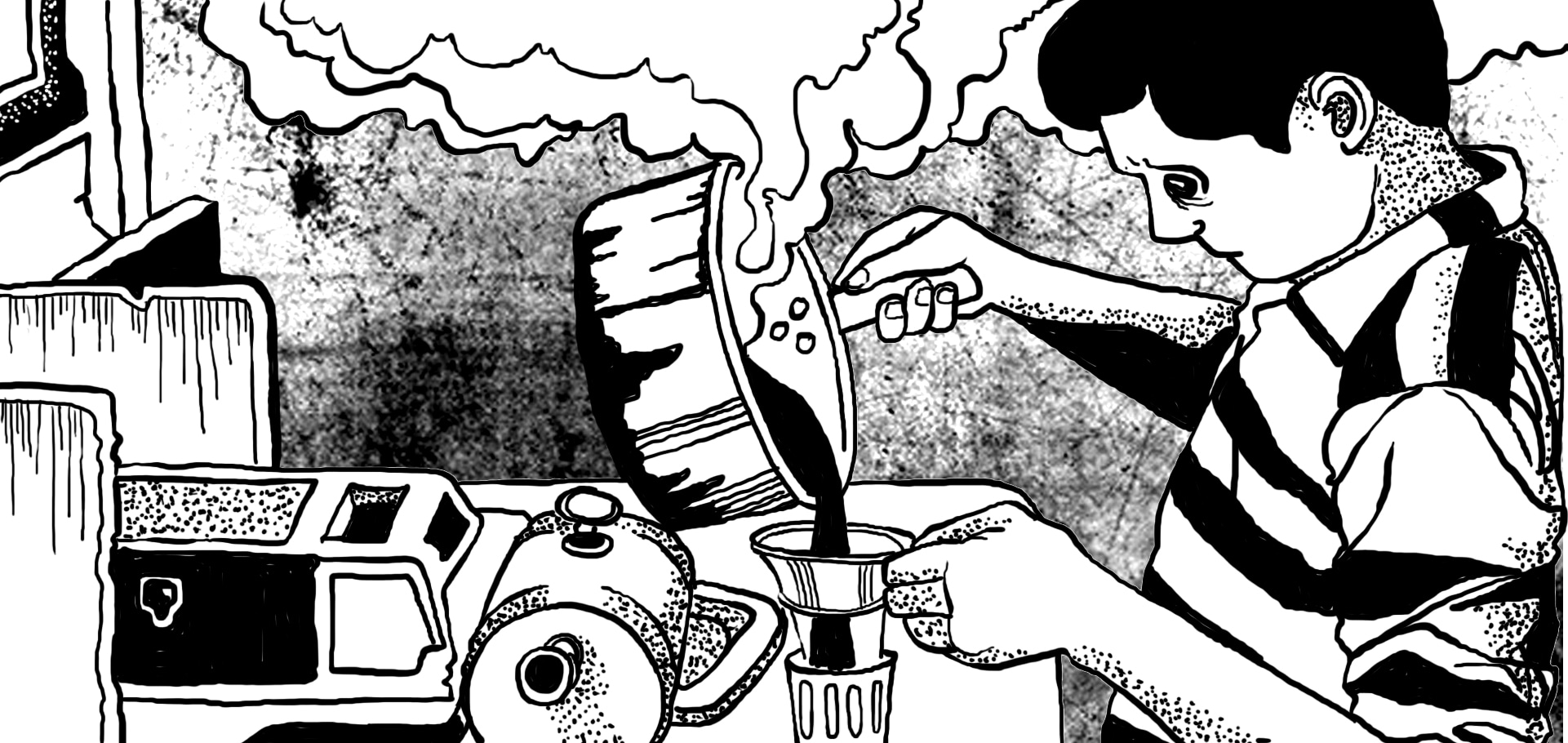 Indeed, a large number of cases of child labour in Delhi are characterised by dangerous work conditions or work hours that are not practically possible to monitor. For example, bangle-making is extremely risky work. As noted by a Unicef report, it involves joining the ends of a bangle over a kerosene flame, using fast-moving blades and using chemicals for decoration. Some cases of child labour involve kids working as full-time domestic helpers at homes along with their families.In such cases, it is difficult to monitor working hours and the effect that such work on the child’s education.But there are a variety of reasons that could contribute to child labour in different parts of the country. Prakhar Jain, who is pursuing a fellowship on education among tribal communities in Chhattisgarh, notes, “As the contact between tribal communities and other sections of society is increasing, tribals are becoming more attracted to the idea of earning in the form of physical cash. This leads some children to work as labourers on farms in Telangana and Andhra Pradesh to, even if they are actually better off in their native villages. The delay in payment of wages under the MGNREGA is also a factor which contributes to this.”Ravi Deshmukh, a former sarpanch from a village in Beed, Maharashtra, says, “At this time of the year, it is the season of plucking cotton. In farms all across the region, it is common to see children — some of them as young as 7 years old — being engaged in this work. In this period, there is a sudden drop in attendance rates of children in schools.”
"Children are particularly vulnerable to exploitation for many reasons, including their dependence on adults."Voluntary organisations and government institutions working with such children are often caught in a bind. On the one hand, ‘institutionalisation’ of children is meant to be a measure of last resort, as per the Juvenile Justice Act, 2015. But restoring a child to the same community where he/she became a victim rarely brings about any benefit, unless there is a qualitative change in the social milieu. On the other hand, many children’s homes woefully lack infrastructure, and are hardly the places of rehabilitation that they are meant to be. Quite understandably, many children consider the children’s home as similar to a jail and prefer to remain in the work environment.For instance, Suneeta Godbole, a former Child Welfare Committee member in Dantewada, Chhattisgarh, mentions the case of a 15-year-old boy whose father was killed by Maoists three years ago. His problems were compounded as his mother was an alcoholic. “He ran away from home and ended up working in a restaurant, and also lived with the restaurant. Even after a case of child labour was filed and he was taken to a children’s home, he later escaped and returned to the same restaurant. As he was a 15-year-old who had only studied till the 4th standard, he found it impossible to get back to studies,” Godbole recalls.
 In this context, it is even more important to ensure that the new amendment to the Child Labour (Prohibition and Regulation) Act, 1986 is not misused. The law now allows children to ‘help’ in certain ‘family enterprises’ if this does not affect their education. But terms like ‘help’ and ‘affecting the education’ of a child need to be clearly defined in measurable terms so that the law does not indirectly allow child labour by another name.At a broader level, it is also important to sit up and take note of crimes against children. For several kinds of crimes, there are now specific laws to deal with them. But as the issue of child labour indicates, implementing these laws in their true spirit is still a far cry.*Name has been withheld to protect privacyThe author works with Prayas JAC Society, an organisation, headquartered in New Delhi, that works on child rights
First Published:Nov 16, 2016, 18:37:39 IST
Advertisement
Advertisement

Off-centre | Vande Mataram: The mother that we adore
A meditation on the meaning of India as the country celebrates 77th independence Day
Of nature, culture and alcohol: A glimpse into Sikkim’s age-old brewing traditions
Most rural households across Sikkim have their own breweries, which are an integral part of the local culture.
Revisiting the Bollywood dream sequence: A tour of the world, and within
The Bollywood dream sequence helped stretch my imagination in a way that I believed the whole world was within me. This self-sufficiency helped me get through the physical setting I was in, from awkward social gatherings to the confines of my home during the pandemic.
Trams, part of Kolkata heritage, are little more than a nostalgia ride today
In recent years, hit by natural disasters and official neglect, the city’s tram system has become little more than a nostalgia ride, its passengers more often looking for a lark than an efficient trip home.
Online exhibition archives oral histories of the Kolis, degradation of Mumbai's coastal ecology
The online exhibition Through the Eyes of the Kolis uses their photos to highlights how Mumbai's ecology has been disturbed and how the fishermen community are adapting.
Advertisement
Advertisement