
Advertisement


Sections
'You are just like us': Pakistani poet compares rise of Hindu and Islamic fundamentalism
A progressive Pakistani poet, Fahmida Riaz, once recited a poem to an Indian audience comparing the rise of Hindutva in India with the rise of Islamic fundamentalism in Pakistan.

Recently, Parliament has been disrupted by highly communal and divisive issues like forced, large scale conversion of Muslims to Hinduism. There have been mindless utterances of the Hindutva ideologues and Sangh Parivar fringe, and the parliamentary opposition has been belligerent over it. Of course, there has been a lot of comparison between the rising Hindutva and Islamic fundamentalism.While,over the years, rhetoric has been about how the different the two religions are, progressive Pakistani poet Fahmida Riaz in a poem says that we are all the same.She had recited the poem to an Indian audience comparing the rise of Hindu extremism in India with that of Islamic fundamentalism in Pakistan.[caption id="attachment_1832285" align="alignleft" width="380"]![US said it favoured dialogue between India and Pakistan. AFP]() AFP[/caption]At a seminar called ‘Hum Gunahgaar Auratein’ on 8 March, 2014 the poet recited the poem, 'Tum bilkul hum jaisey nikley.'Fahmida Riaz is a well known Urdu writer, poet, and feminist in Pakistan. She is the author of Godaavari, Khatt-e Marmuz, and Khana e Aab O Gil. She has translated the works of Maulana Jalaluddin Rumi and Shah Abdul Latif Bhitai and Shaikh Ayaz from Sindhi to Urdu.You can watch her recite the poem here.Shabana Mir on her blog translated the poem. Read it:So it turned out you are just like us!Where were you hiding all this time, buddy?That stupidity, that ignorancewe wallowed in for a century -look, it arrived at your shores too!Many congratulations to you!Raising the flag of religion,I guess now you’ll be setting up Hindu Raj?You too will commence to muddle everything upYou, too, will ravage your beautiful garden.You, too, will sit and ponder -I can tell preparations are afoot -who is truly Hindu, who is not.I guess you’ll be passing fatwas soon!Here, too, it will become hard to survive.Here, too, you will sweat and bleed.You’ll barely make do joylessly.You will gasp for air like us.I used to wonder with such deep sorrow.And now, I laugh at the idea:it turned out you were just like us!We weren’t two nations after all!To hell with education and learning.Let’s sing the praises of ignorance.Don’t look at the potholes in your path:bring back instead the times of yore!Practice harder till you masterthe skill of always walking backwards.Let not a single thought of the presentbreak your focus upon the past!Repeat the same thing over and over -over and over, say only this:How glorious was India in the past!How sublime was India in days gone by!Then, dear friends, you will arriveand get to heaven after all.Yep. We’ve been there for a while now.Once you are there,once you’re in the same hell-hole,keep in touch and tell us how it goes!
AFP[/caption]At a seminar called ‘Hum Gunahgaar Auratein’ on 8 March, 2014 the poet recited the poem, 'Tum bilkul hum jaisey nikley.'Fahmida Riaz is a well known Urdu writer, poet, and feminist in Pakistan. She is the author of Godaavari, Khatt-e Marmuz, and Khana e Aab O Gil. She has translated the works of Maulana Jalaluddin Rumi and Shah Abdul Latif Bhitai and Shaikh Ayaz from Sindhi to Urdu.You can watch her recite the poem here.Shabana Mir on her blog translated the poem. Read it:So it turned out you are just like us!Where were you hiding all this time, buddy?That stupidity, that ignorancewe wallowed in for a century -look, it arrived at your shores too!Many congratulations to you!Raising the flag of religion,I guess now you’ll be setting up Hindu Raj?You too will commence to muddle everything upYou, too, will ravage your beautiful garden.You, too, will sit and ponder -I can tell preparations are afoot -who is truly Hindu, who is not.I guess you’ll be passing fatwas soon!Here, too, it will become hard to survive.Here, too, you will sweat and bleed.You’ll barely make do joylessly.You will gasp for air like us.I used to wonder with such deep sorrow.And now, I laugh at the idea:it turned out you were just like us!We weren’t two nations after all!To hell with education and learning.Let’s sing the praises of ignorance.Don’t look at the potholes in your path:bring back instead the times of yore!Practice harder till you masterthe skill of always walking backwards.Let not a single thought of the presentbreak your focus upon the past!Repeat the same thing over and over -over and over, say only this:How glorious was India in the past!How sublime was India in days gone by!Then, dear friends, you will arriveand get to heaven after all.Yep. We’ve been there for a while now.Once you are there,once you’re in the same hell-hole,keep in touch and tell us how it goes!
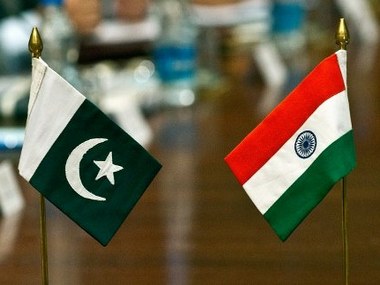 AFP[/caption]At a seminar called ‘Hum Gunahgaar Auratein’ on 8 March, 2014 the poet recited the poem, 'Tum bilkul hum jaisey nikley.'Fahmida Riaz is a well known Urdu writer, poet, and feminist in Pakistan. She is the author of Godaavari, Khatt-e Marmuz, and Khana e Aab O Gil. She has translated the works of Maulana Jalaluddin Rumi and Shah Abdul Latif Bhitai and Shaikh Ayaz from Sindhi to Urdu.You can watch her recite the poem here.
First Published:Dec 18, 2014, 15:59:55 IST
Advertisement
Advertisement

Here's why you crave sweets after every meal: This one thing can fix it
It's common to crave something sweet after meals. However, what's often dismissed as "having a sweet tooth," is mostly nutritional deficiency
1 min read
India's most beloved national parks for wildlife lovers
India holds some of the world’s most wonderful wilderness spaces. Forests and jungles where myth, beauty and survival exist side by side. From mangroves that swallow rivers to grasslands shaped by centuries of migration, the country’s national parks offer more than sightings. They offer moments of stillness, surprise, and reverence.
1 min read
Even the Beckhams break: The rise of family estrangement
People are choosing to cut off contact with their families, prioritising mental health.
4 min read
European Council Chief has an OCI card: What is it?
The OCI Scheme, introduced in 2005, grants foreign nationals of Indian origin a life-long visa for India, but no political rights.
1 min read
The 90s show Friends, and why we misread modern friendships
We’ve all heard about the loneliness epidemic at this point. It isn’t even particularly shocking — it seems like the result on the obvious — people consistently glued to their phones, seeking intimacy and even sex through phone screens, consistent comparison to other peoples’ partners, and what their relationships look like, to how far everyone has come in their jobs — there is much to feel diminished about.
5 min read
Advertisement
Advertisement