
Advertisement


Sections
Privacy and us: We are all hypocrites
We do not expect privacy; we have to choose it by defining our settings. We don't expect privacy until we are the ones being poked by a camera lens.

In the famous comedy sketch of the Monty Python crew, the Spanish Inquisition bursts through the doors shouting, "Nobody expects the Spanish Inquisition!" Amongst their chief weapons are "surprise", "fear" and "ruthless efficiency" and they yell "Confess! Confess!" as they torture victims with soft cushions.Today, nobody expects privacy until someone bursts through the door and exclaims with maniacal laughter, "Ha! You are exposed for all to see!" You might think I mean, in fact, that everyone does expect privacy. But if people expect privacy for themselves and others, why do they put everything online or buy the print, online or broadcast products that intrude into privacy?The expectation of privacy is merely latent, but it springs to the fore the moment you wake up to its sudden diminishment at the hands of a hacker. Let's take three prime examples.[caption id="attachment_45853" align="alignleft" width="380" caption="The right to privacy might exist, but the public does not expect it until those private rights and views are removed or questioned. monkeymanforever/Flickr"] [/caption]In the seemingly never-ending phone hacking scandal in Britain, all the individuals potentially affected might have had an expectation that their voice messages were for them alone. All were public figures whether by choice (actors, politicians, etc) or by situation (victims of crime, terrorism, etc). But they didn't discover that expectation of privacy until they discovered that their privacy had been intruded upon.Similarly in the WikiLeaks story last year, diplomats might have expected their thoughts and analyses about international relations would be private. But it was only with the leaking of those documents that diplomats and media tried to define what was or was not private.Or consider the ongoing extradition hearings for WikiLeaks founder Julian Assange who faces charges in Sweden of "raping" one woman and "sexually molesting and coercing" another, with supporters claiming it is politically motivated as revenge for publishing the diplomatic cables.The two women met a public figure but did not expect privacy until it was removed by an online world subsequently convinced the women are part of a conspiracy. Their identities should never be exposed unless it was proven in court they made false allegations. So their privacy exists prima facie in advance of any expectation later. That is the nature of, for example, the European Convention on Human Rights article 8, "the right to respect for his private and family life, his home and his correspondence" — it implies a privacy that exists, as both right and duty, irrespective of the expectation at any point.Finally, Facebook, Twitter and even the new Google+. For all the details, photos, opinions and arguments we post online, we do not expect privacy until it is intruded upon or removed. We do not expect privacy, we have to choose it by defining our settings as such.We don't expect privacy for our public figures either. Richard Findlay, entertainment lawyer with Scottish firm Tods Murray, says the higher up you go in an organisation, the less privacy the public expects of that person. "People have not learned how to take ownership of their lives," he says.
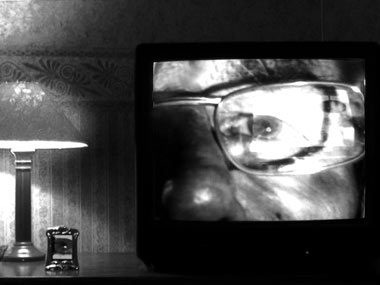 [/caption]In the seemingly never-ending phone hacking scandal in Britain, all the individuals potentially affected might have had an expectation that their voice messages were for them alone. All were public figures whether by choice (actors, politicians, etc) or by situation (victims of crime, terrorism, etc). But they didn't discover that expectation of privacy until they discovered that their privacy had been intruded upon.Similarly in the WikiLeaks story last year, diplomats might have expected their thoughts and analyses about international relations would be private. But it was only with the leaking of those documents that diplomats and media tried to define what was or was not private.Or consider the ongoing extradition hearings for WikiLeaks founder Julian Assange who faces charges in Sweden of "raping" one woman and "sexually molesting and coercing" another, with supporters claiming it is politically motivated as revenge for publishing the diplomatic cables.The two women met a public figure but did not expect privacy until it was removed by an online world subsequently convinced the women are part of a conspiracy. Their identities should never be exposed unless it was proven in court they made false allegations. So their privacy exists prima facie in advance of any expectation later. That is the nature of, for example, the European Convention on Human Rights article 8, "the right to respect for his private and family life, his home and his correspondence" — it implies a privacy that exists, as both right and duty, irrespective of the expectation at any point.Finally, Facebook, Twitter and even the new Google+. For all the details, photos, opinions and arguments we post online, we do not expect privacy until it is intruded upon or removed. We do not expect privacy, we have to choose it by defining our settings as such.We don't expect privacy for our public figures either. Richard Findlay, entertainment lawyer with Scottish firm Tods Murray, says the higher up you go in an organisation, the less privacy the public expects of that person. "People have not learned how to take ownership of their lives," he says.
"You have to decide to what extent you're going to reveal yourself, but revealing only that which you want to reveal." "As a legal firm, you have massive policies on what you can and cannot say and how you represent yourself and disclaimers that your views are from you as an individual, not the organisation you represent... An individual has to be careful the further up an organisation they are because there might be confusion in public eye." "The Archbishop of Canterbury cannot make a personal statement on gays getting married — you cannot take that away from his position — it's all interwoven." "Certain people in certain situations don't get the benefit of disclaimers because they're too high up in the organisation for the public."The right to privacy might exist, but the public does not expect it until those private rights and views are removed or questioned. Everything on Facebook is public by default, until you consider the security settings. The default is not private.Dr Natalie Coull [corr], a lecturer in computer security at the University of Abertay's ethical hacking course said people needed to be paranoid in advance. "We're living in an age where technology has advanced so rapidly thatpeople's expectations have not kept up," she says.
"Part of the problem is security has been considered an afterthought." "People think they're not going to be the victim. The technology is so advanced you cannot expect the user to fully understand how it's going to work. People don't understand they're vulnerable until after it's happened." "Security is a huge problem and it needs to be recognised and treated as something that needs to be considered explicitly. People are blissfully unaware."Governments and the companies and organisations that serve the publicmust be held to account. But the individuals within them also have default rights to privacy, which inevitably clash when challenged by the press and increasingly social media.The public watch the private lives of celebrities, waiting for them to trip up so they can yell "Confess! Confess!". We don't expect privacy until we are the ones being poked by soft cushions. . . or a camera lens.We might have to accept that it is impossible to define an accurate line between what is public and private. There are some elements clearly on both sides, but there is a digital gradient merging both in the middle, where individuals are responsible for helping to run society. Those societal institutions must be open and acceptable, but the individuals still have private lives.Our technological inventions and our shifting demands for public and private have created that mess — but just maybe the debates mean we are growing up as a global society.At the very least, everyone should now expect that.
Tristan Stewart-Robertson is a journalist based in Glasgow, Scotland. He writes for Firstpost on the media, internet and serves as an objective, moral compass from the outside.
First Published:Jul 21, 2011, 18:04:03 IST
Advertisement
Advertisement

Here's why you crave sweets after every meal: This one thing can fix it
It's common to crave something sweet after meals. However, what's often dismissed as "having a sweet tooth," is mostly nutritional deficiency
1 min read
India's most beloved national parks for wildlife lovers
India holds some of the world’s most wonderful wilderness spaces. Forests and jungles where myth, beauty and survival exist side by side. From mangroves that swallow rivers to grasslands shaped by centuries of migration, the country’s national parks offer more than sightings. They offer moments of stillness, surprise, and reverence.
1 min read
Even the Beckhams break: The rise of family estrangement
People are choosing to cut off contact with their families, prioritising mental health.
4 min read
European Council Chief has an OCI card: What is it?
The OCI Scheme, introduced in 2005, grants foreign nationals of Indian origin a life-long visa for India, but no political rights.
1 min read
The 90s show Friends, and why we misread modern friendships
We’ve all heard about the loneliness epidemic at this point. It isn’t even particularly shocking — it seems like the result on the obvious — people consistently glued to their phones, seeking intimacy and even sex through phone screens, consistent comparison to other peoples’ partners, and what their relationships look like, to how far everyone has come in their jobs — there is much to feel diminished about.
5 min read
Advertisement
Advertisement