


Once upon a time, there was a dabbawalla scam
Whatever happens, I hope this film never wins an award - because they have made hundreds of thousands of people feel good, thinking this was actually happening, when all the time it was a fairy tale.

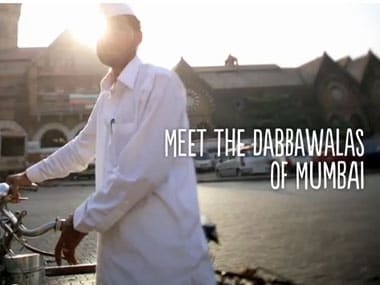 A screenshot of the video.[/caption]"200 thousand children on the streets will go hungry/ And 2 will starve to death/ How do you solve a problem this big?/ Meet the dabbawallas of Mumbai/ One of the most efficient systems in the world/ A Harvard case study/ Certified Six Sigma by Forbes/ Delivering over 200 thousand lunches (dabbas) every day/ That's 120 tonnes of food daily/ With more than 16 tonnes left uneaten/ How do you get this food to the children/ Without affecting a Six Sigma system?/ All it takes is a little share sticker/ Share my dabba/ Food left in your dabba?/ Just put a share sticker on it/ On their way back after lunch/ When the dabbas are sorted/ The ones with the sticker are kept aside/ Volunteers share the dabbas with children/ A small share sticker can make a huge difference."A couple of lines popped out: "How do you get this food to the children/ Without affecting a Six Sigma system?"How? So I looked back at the simplicity of the system that makes the Dabbawallas a case study. Each person involved in the delivery has four simple operations to undertake:* Pick up the dabba from somewhere* Hand over the dabba somewhere else* Pick up the dabba again from the person you handed it over to* Hand over the dabba to the person you first picked it up fromThat's it. Supremely easy.But this does not mean that the person who picks up the dabba from the residence is the same person who delivers it to your office, picks it up from your office and delivers it again to your residence. To learn more about how complex this seemingly simple task is, read here. Dabbawalla A picks it up from your house, carries the dabba (and others from your locality) to point B. There, many like Dabbawalla A meet and hand over dabbas meant for many destinations. The dabbas are sorted, and, using the hub-and-spoke method that major couriers use, the minimum number of trips to deliver these dabbas is calculated to ensure efficiency.Any change, therefore, would create havoc. I revisited the film, and here's how it looks now:The pick up operation remains the same.All the operations up to the point that the food reaches the office remains the same.The pick up operation from the office remains the same.And now, there's havoc. Extraordinary havoc.The red stickered dabbas need to be separated. Let's do that now.What happens to the non-stickered dabbas? Do they carry on, regardless? Or do they hang around somewhere till the red-stickered dabbas are emptied and come back?Hmmm.And for operations outside the control of the dabbawallas, where are these 200000 children? In convenient clusters, just outside the railway stations, waiting for the food? Who separates the non-veg from the veg (even the poor could care about such things)? How do they ensure that the Muslim poor don't receive pork?Hmmm.This is not good. The whole operation sounds impossible.Why speculate, when one could ask? Which is what my colleague did. He mailed the dabbawalla association. Here's what Abhishek Ekal, the VP of the Dabbawala Association had to say when we wanted to know how big this was. "We are trying to make it successful in one area first then will replicate in other part of Mumbai."It's 'trying'. But the film suggests that it is already happening, that these 16 tonnes of food are reaching 200000 starving kids. "On their way back after lunch/ When the dabbas are sorted/ The ones with the sticker are kept aside/ Volunteers share the dabbas with children." The tense used suggests that this is what HAPPENS, not that this is not something that COULD happen.So we have a pretty film, and we have a fairy tale, and not, as we first thought, a delightful solution to a worrying problem.The next answer from the Dabbawalla Association tells it all. "Who started this idea? Where did it come from?," we asked."This idea is originated by Abhinav & Denzil from Macann (sic), Dabbawala foundation understand significance of this idea & decided to put into operation the same. Happy life welfare society is nonprofit organization working for street children, who is responsible for providing volunteer & handle street children in the same."Am I the only one feeling badly let down? Whatever happens, I hope this film never wins an award - because they have made hundreds of thousands of people feel good, thinking this was actually happening, when all the time it was a fairy tale.A scam.
Anant Rangaswami was, until recently, the editor of Campaign India magazine, of which Anant was also the founding editor. Campaign India is now arguably India's most respected publication in the advertising and media space. Anant has over 20 years experience in media and advertising. He began in Madras, for STAR TV, moving on as Regional Manager, South for Sony’s SET and finally as Chief Manager at BCCL’s Times Television and Times FM. He then moved to advertising, rising to the post of Associate Vice President at TBWA India. Anant then made the leap into journalism, taking over as editor of what is now Campaign India's competitive publication, Impact. Anant teaches regularly and is a prolific blogger and author of Watching from the sidelines.

Here's why you crave sweets after every meal: This one thing can fix it
India's most beloved national parks for wildlife lovers
Even the Beckhams break: The rise of family estrangement
European Council Chief has an OCI card: What is it?
The 90s show Friends, and why we misread modern friendships