
Advertisement


Sections
Documentary Name|Place|Animal|Thing introduces Karnataka’s Hakki Pikki tribe and its oddly named people
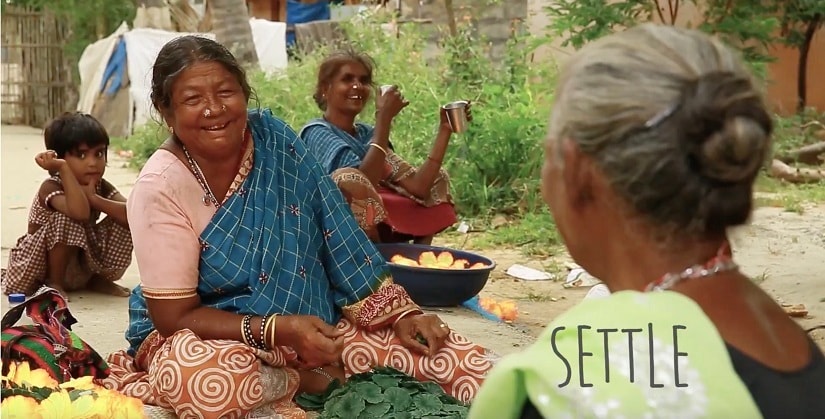
'Government', 'Division', 'English', 'Jailer', 'Settle' are all names of people from Karnataka's nomadic Hakki Pikki tribe, the subject of Nitin R's National Film Award-winning documentary Name|Place|Animal|Thing

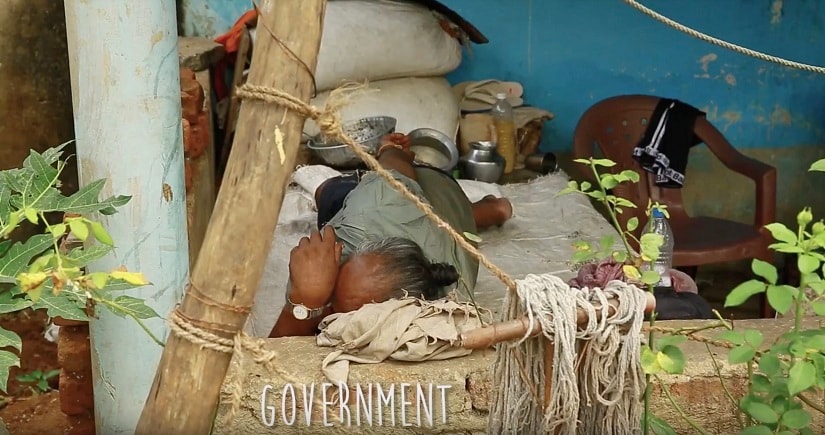
‘Government’ sleeps through all of Nitin R’s documentary Name|Place|Animal|Thing, which won the National Award for best anthropological/ethnographic film this year. ‘Government’ here is a man from the Hakki Pikki tribe, so named apparently because that’s the first thing his parents thought of after he was born.The Hakki Pikkis (literally bird hunters) are a nomadic tribe based largely in Karnataka, who were “rehabilitated” in the 1970s once their trade of bird hunting was banned. They now live in villages around Bengaluru. The tribe follows a curious naming practice (or used to at least), where the parents named their new born child after the first word that came to their mind. “In our community, we name our children with anything that comes to our mind,” the chief of Bidadi village Viman says early in the film. Division, the chief of Bhootanahalli village, explains he was so named because his mother gave birth to him inside a sub-divisional office.[caption id="attachment_4481001" align="alignnone" width="825"]![All photos are stills from Nitin R's Name|Place|Animal|Thing]() All photos are stills from Nitin R's documentary Name|Place|Animal|Thing[/caption]Director Nitin R, a second year student of sound recording and sound design for films at the Film and Television Institute of India, Pune, says he made Name|Place|Animal|Thing to “learn how to make a film”. Describing his inspiration for the documentary, he says, “A few years ago, I had just passed out from engineering college and was working with a software company and I stumbled upon (a) newspaper article about this tribe whose members had such strange names and follow(ed) some bizarre rituals. I had not gotten into filmmaking then but was thinking (about it). I thought I must make a movie on this someday… I never thought I could get into a film school then, and I figured the best way to learn filmmaking is to make a movie. So basically Name|Place|Animal|Thing is something that we did to learn how to make a film.”
All photos are stills from Nitin R's documentary Name|Place|Animal|Thing[/caption]Director Nitin R, a second year student of sound recording and sound design for films at the Film and Television Institute of India, Pune, says he made Name|Place|Animal|Thing to “learn how to make a film”. Describing his inspiration for the documentary, he says, “A few years ago, I had just passed out from engineering college and was working with a software company and I stumbled upon (a) newspaper article about this tribe whose members had such strange names and follow(ed) some bizarre rituals. I had not gotten into filmmaking then but was thinking (about it). I thought I must make a movie on this someday… I never thought I could get into a film school then, and I figured the best way to learn filmmaking is to make a movie. So basically Name|Place|Animal|Thing is something that we did to learn how to make a film.”![2]() Making Name|Place|Animal|Thing wasn’t easy, Nitin clarifies, “This documentary took three years to be made… There were financial hurdles at various stages and also since I didn’t know many people then, it was difficult to find people for certain things.” For ease of access he found work at a call centre on the outskirts of Bengaluru and moved there as well, spending his weekends doing research for the film. After three months of doing this, once he had enough money to start the filming, he put together a crew — made up of his friends who were also interested in filmmaking but, like him, had no formal training. Nitin ended up directing, recording sound and editing the film.Name|Place|Animal|Thing opens to an endearing montage of people saying out their names and cuts back to their portraits several times through the course of the film. The curious naming practice is on the decline, however, as the tribe has adjusted to their new living conditions. “So now most of these strange names are found only among the older folks,” says Nitin.The community doesn’t identify with being Hindu, Muslim or any other religion, but simply as Hakki Pikki. Two men in the film tell us their way is to be happy; whether someone dies or is born, they drink alcohol and make a celebration out of it. “If there is a wedding, we get drunk! If someone dies, we get drunk! If a child is born, we get drunk! That’s how we roll. We try to be happy all the time. Even when someone dies we don’t cry or anything, we all get together and drink alcohol!”The 23-minute-long film delves into the community’s other curious practices as well. Men do the bulk of the talking in the film, and seem proud of the fact that in their community, the cost of weddings is borne by the groom and his family, and they also have to pay dowry to the bride’s people. But they allow two marriages for men, and it is essential that virginity be maintained until one's nuptials. There are purity tests for suspected rule breakers involving hot charcoal, a heated piece of iron and rice grains, but these are carried out rarely since the community marries their children off early “to be safe”. Eight-year-old girls and 11-year-old boys are considered ready for marriage, says Viman in the film.
Making Name|Place|Animal|Thing wasn’t easy, Nitin clarifies, “This documentary took three years to be made… There were financial hurdles at various stages and also since I didn’t know many people then, it was difficult to find people for certain things.” For ease of access he found work at a call centre on the outskirts of Bengaluru and moved there as well, spending his weekends doing research for the film. After three months of doing this, once he had enough money to start the filming, he put together a crew — made up of his friends who were also interested in filmmaking but, like him, had no formal training. Nitin ended up directing, recording sound and editing the film.Name|Place|Animal|Thing opens to an endearing montage of people saying out their names and cuts back to their portraits several times through the course of the film. The curious naming practice is on the decline, however, as the tribe has adjusted to their new living conditions. “So now most of these strange names are found only among the older folks,” says Nitin.The community doesn’t identify with being Hindu, Muslim or any other religion, but simply as Hakki Pikki. Two men in the film tell us their way is to be happy; whether someone dies or is born, they drink alcohol and make a celebration out of it. “If there is a wedding, we get drunk! If someone dies, we get drunk! If a child is born, we get drunk! That’s how we roll. We try to be happy all the time. Even when someone dies we don’t cry or anything, we all get together and drink alcohol!”The 23-minute-long film delves into the community’s other curious practices as well. Men do the bulk of the talking in the film, and seem proud of the fact that in their community, the cost of weddings is borne by the groom and his family, and they also have to pay dowry to the bride’s people. But they allow two marriages for men, and it is essential that virginity be maintained until one's nuptials. There are purity tests for suspected rule breakers involving hot charcoal, a heated piece of iron and rice grains, but these are carried out rarely since the community marries their children off early “to be safe”. Eight-year-old girls and 11-year-old boys are considered ready for marriage, says Viman in the film.![4]() Though Name|Place|Animal|Thing isn’t explicitly political, it raises the question of whether “rehabilitation” has done this nomadic community any good. Members of the community describe how they rarely contracted diseases earlier, but are now more susceptible to colds, coughs and fevers.“Jungle (life) was good. Now the government has built us houses and provided us shelter, we don’t have to struggle during rains and other harsh weather conditions. Our people have started wearing proper clothes. Earlier we didn’t even wash them. We never used water even after defecation and all. Now the government has given us water. We have started using water regularly. Otherwise we bathed just four times a year because we were in the water all the time… in the rain and other water bodies.. What is the point of bathing then?” Viman asks in the film.Nitin says of the rehabilitation, “I’m not really an expert on the subject … but I think it should be something that needs to be debated when you’re uprooting a whole community from one place where they have been living for generations and then moving them to a whole different terrain. Because when you’re moving a community to another place, you’re not just moving the people but you’re ripping a culture out and traditions that were built and evolved around a specific geography. Rather than a few bureaucrats sitting around a table deciding what’s good or bad for an entire community, I think it’s good to actually involve the people or have a consultation with experts who can provide insight in the field of rehabilitation."
Though Name|Place|Animal|Thing isn’t explicitly political, it raises the question of whether “rehabilitation” has done this nomadic community any good. Members of the community describe how they rarely contracted diseases earlier, but are now more susceptible to colds, coughs and fevers.“Jungle (life) was good. Now the government has built us houses and provided us shelter, we don’t have to struggle during rains and other harsh weather conditions. Our people have started wearing proper clothes. Earlier we didn’t even wash them. We never used water even after defecation and all. Now the government has given us water. We have started using water regularly. Otherwise we bathed just four times a year because we were in the water all the time… in the rain and other water bodies.. What is the point of bathing then?” Viman asks in the film.Nitin says of the rehabilitation, “I’m not really an expert on the subject … but I think it should be something that needs to be debated when you’re uprooting a whole community from one place where they have been living for generations and then moving them to a whole different terrain. Because when you’re moving a community to another place, you’re not just moving the people but you’re ripping a culture out and traditions that were built and evolved around a specific geography. Rather than a few bureaucrats sitting around a table deciding what’s good or bad for an entire community, I think it’s good to actually involve the people or have a consultation with experts who can provide insight in the field of rehabilitation."
 All photos are stills from Nitin R's documentary Name|Place|Animal|Thing[/caption]Director Nitin R, a second year student of sound recording and sound design for films at the Film and Television Institute of India, Pune, says he made Name|Place|Animal|Thing to “learn how to make a film”. Describing his inspiration for the documentary, he says, “A few years ago, I had just passed out from engineering college and was working with a software company and I stumbled upon (a) newspaper article about this tribe whose members had such strange names and follow(ed) some bizarre rituals. I had not gotten into filmmaking then but was thinking (about it). I thought I must make a movie on this someday… I never thought I could get into a film school then, and I figured the best way to learn filmmaking is to make a movie. So basically Name|Place|Animal|Thing is something that we did to learn how to make a film.”
 Making Name|Place|Animal|Thing wasn’t easy, Nitin clarifies, “This documentary took three years to be made… There were financial hurdles at various stages and also since I didn’t know many people then, it was difficult to find people for certain things.” For ease of access he found work at a call centre on the outskirts of Bengaluru and moved there as well, spending his weekends doing research for the film. After three months of doing this, once he had enough money to start the filming, he put together a crew — made up of his friends who were also interested in filmmaking but, like him, had no formal training. Nitin ended up directing, recording sound and editing the film.Name|Place|Animal|Thing opens to an endearing montage of people saying out their names and cuts back to their portraits several times through the course of the film. The curious naming practice is on the decline, however, as the tribe has adjusted to their new living conditions. “So now most of these strange names are found only among the older folks,” says Nitin.
 Though Name|Place|Animal|Thing isn’t explicitly political, it raises the question of whether “rehabilitation” has done this nomadic community any good. Members of the community describe how they rarely contracted diseases earlier, but are now more susceptible to colds, coughs and fevers.“Jungle (life) was good. Now the government has built us houses and provided us shelter, we don’t have to struggle during rains and other harsh weather conditions. Our people have started wearing proper clothes. Earlier we didn’t even wash them. We never used water even after defecation and all. Now the government has given us water. We have started using water regularly. Otherwise we bathed just four times a year because we were in the water all the time… in the rain and other water bodies.. What is the point of bathing then?” Viman asks in the film.Nitin says of the rehabilitation, “I’m not really an expert on the subject … but I think it should be something that needs to be debated when you’re uprooting a whole community from one place where they have been living for generations and then moving them to a whole different terrain. Because when you’re moving a community to another place, you’re not just moving the people but you’re ripping a culture out and traditions that were built and evolved around a specific geography. Rather than a few bureaucrats sitting around a table deciding what’s good or bad for an entire community, I think it’s good to actually involve the people or have a consultation with experts who can provide insight in the field of rehabilitation."
First Published:May 24, 2018, 12:23:56 IST
Advertisement
Advertisement

Here's why you crave sweets after every meal: This one thing can fix it
It's common to crave something sweet after meals. However, what's often dismissed as "having a sweet tooth," is mostly nutritional deficiency
1 min read
India's most beloved national parks for wildlife lovers
India holds some of the world’s most wonderful wilderness spaces. Forests and jungles where myth, beauty and survival exist side by side. From mangroves that swallow rivers to grasslands shaped by centuries of migration, the country’s national parks offer more than sightings. They offer moments of stillness, surprise, and reverence.
1 min read
Even the Beckhams break: The rise of family estrangement
People are choosing to cut off contact with their families, prioritising mental health.
4 min read
European Council Chief has an OCI card: What is it?
The OCI Scheme, introduced in 2005, grants foreign nationals of Indian origin a life-long visa for India, but no political rights.
1 min read
The 90s show Friends, and why we misread modern friendships
We’ve all heard about the loneliness epidemic at this point. It isn’t even particularly shocking — it seems like the result on the obvious — people consistently glued to their phones, seeking intimacy and even sex through phone screens, consistent comparison to other peoples’ partners, and what their relationships look like, to how far everyone has come in their jobs — there is much to feel diminished about.
5 min read
Advertisement
Advertisement