
Advertisement


Sections
Aurangzeb book gets historian Audrey Truschke into social media row
In the book, Audrey Truschke tackles the demonisation of this Mughal emperor by people on social media; she has been accused of misleading readers and causing unrest.

Audrey Truschke's book Aurangzeb: The Life and Legacy of India's Most Controversial King, which tries to undo the demonisation of the Mughal emperor by people on social media, has come under fire on social media. Twitter trolls and users have accused her of "white-washing" history, misleading readers and trying to cause unrest in India.[caption id="attachment_3406906" align="alignnone" width="825"]![Audrey Trushke and her book Aurangzeb. Images from Twitter]() Audrey Truschke and her book Aurangzeb. Images from Twitter[/caption]In the book, Audrey Truschke, who teaches South Asian history at Rutgers University in the US, tackles the pseudo-history circulating on the Internet about the Mughal emperor. She takes on Hindutva history and provides a rebuttal for psuedo-history.However, the book has received flak in the same form and from the same quarters as the author has tried to counter in her book. Twitter users such as Shefali Vaidya have called Truschke a "so-called liberal", while others such as Makarand Paranjape have called the claims made in the book ridiculous.The main contention of these Twitter users is that Truschke has inaccurately portrayed the history of India in an attempt to glorify Aurangzeb. Some have even gone to the extent of judging the quality of her work on the basis of her nationality (she is an American) and called her the "future Wendy Doniger" and "future Romila Thapar".Audrey Truschke has countered these allegations by quoting her sources and urging critics to read her book. In one interaction, she also said, "Count me out for that project. #Aurangzeb was no saint, and I have no interest in glorifying him." In those cases where people have demanded to know who is funding her book to understand her intentions behind writing it, Truschke has said, "I have repeated this ad nauseam -- all funding sources are listed on my CV, which is publicly available. All scholars do this."In Aurangzeb: The Life and Legacy of India's Most Controversial King, Truschke uses Persian language sources to talk about Aurangzeb's understanding of religion, explaining that reducing him to his faith is inaccurate. For example, she says that religion had nothing to do with the inability of Aurangzeb to absorb the growing Maratha reign under his control. She opines that this had to do more with the lack of a courtly Persian culture in Shivaji's empire.She attempts in this book to prove the temple destruction accusations leveled against Aurangzeb as being false, stating that the few that were affected during his reign were destroyed due to political, not religious reasons.
Audrey Truschke and her book Aurangzeb. Images from Twitter[/caption]In the book, Audrey Truschke, who teaches South Asian history at Rutgers University in the US, tackles the pseudo-history circulating on the Internet about the Mughal emperor. She takes on Hindutva history and provides a rebuttal for psuedo-history.However, the book has received flak in the same form and from the same quarters as the author has tried to counter in her book. Twitter users such as Shefali Vaidya have called Truschke a "so-called liberal", while others such as Makarand Paranjape have called the claims made in the book ridiculous.The main contention of these Twitter users is that Truschke has inaccurately portrayed the history of India in an attempt to glorify Aurangzeb. Some have even gone to the extent of judging the quality of her work on the basis of her nationality (she is an American) and called her the "future Wendy Doniger" and "future Romila Thapar".Audrey Truschke has countered these allegations by quoting her sources and urging critics to read her book. In one interaction, she also said, "Count me out for that project. #Aurangzeb was no saint, and I have no interest in glorifying him." In those cases where people have demanded to know who is funding her book to understand her intentions behind writing it, Truschke has said, "I have repeated this ad nauseam -- all funding sources are listed on my CV, which is publicly available. All scholars do this."In Aurangzeb: The Life and Legacy of India's Most Controversial King, Truschke uses Persian language sources to talk about Aurangzeb's understanding of religion, explaining that reducing him to his faith is inaccurate. For example, she says that religion had nothing to do with the inability of Aurangzeb to absorb the growing Maratha reign under his control. She opines that this had to do more with the lack of a courtly Persian culture in Shivaji's empire.She attempts in this book to prove the temple destruction accusations leveled against Aurangzeb as being false, stating that the few that were affected during his reign were destroyed due to political, not religious reasons.
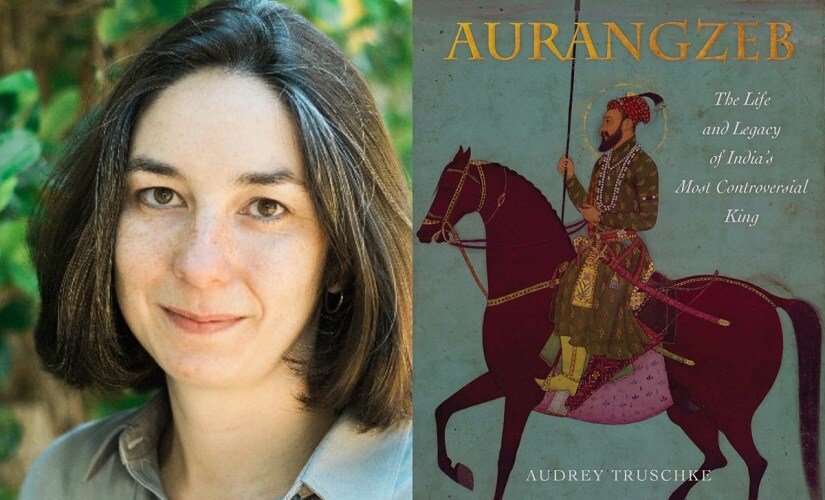 Audrey Truschke and her book Aurangzeb. Images from Twitter[/caption]In the book, Audrey Truschke, who teaches South Asian history at Rutgers University in the US, tackles the pseudo-history circulating on the Internet about the Mughal emperor. She takes on Hindutva history and provides a rebuttal for psuedo-history.However, the book has received flak in the same form and from the same quarters as the author has tried to counter in her book. Twitter users such as Shefali Vaidya have called Truschke a "so-called liberal", while others such as Makarand Paranjape have called the claims made in the book ridiculous.The main contention of these Twitter users is that Truschke has inaccurately portrayed the history of India in an attempt to glorify Aurangzeb. Some have even gone to the extent of judging the quality of her work on the basis of her nationality (she is an American) and called her the "future Wendy Doniger" and "future Romila Thapar".Audrey Truschke has countered these allegations by quoting her sources and urging critics to read her book. In one interaction, she also said, "Count me out for that project. #Aurangzeb was no saint, and I have no interest in glorifying him." In those cases where people have demanded to know who is funding her book to understand her intentions behind writing it, Truschke has said, "I have repeated this ad nauseam -- all funding sources are listed on my CV, which is publicly available. All scholars do this."In Aurangzeb: The Life and Legacy of India's Most Controversial King, Truschke uses Persian language sources to talk about Aurangzeb's understanding of religion, explaining that reducing him to his faith is inaccurate. For example, she says that religion had nothing to do with the inability of Aurangzeb to absorb the growing Maratha reign under his control. She opines that this had to do more with the lack of a courtly Persian culture in Shivaji's empire.She attempts in this book to prove the temple destruction accusations leveled against Aurangzeb as being false, stating that the few that were affected during his reign were destroyed due to political, not religious reasons.
First Published:Apr 26, 2017, 20:58:47 IST
Advertisement
Advertisement

Here's why you crave sweets after every meal: This one thing can fix it
It's common to crave something sweet after meals. However, what's often dismissed as "having a sweet tooth," is mostly nutritional deficiency
1 min read
India's most beloved national parks for wildlife lovers
India holds some of the world’s most wonderful wilderness spaces. Forests and jungles where myth, beauty and survival exist side by side. From mangroves that swallow rivers to grasslands shaped by centuries of migration, the country’s national parks offer more than sightings. They offer moments of stillness, surprise, and reverence.
1 min read
Even the Beckhams break: The rise of family estrangement
People are choosing to cut off contact with their families, prioritising mental health.
4 min read
European Council Chief has an OCI card: What is it?
The OCI Scheme, introduced in 2005, grants foreign nationals of Indian origin a life-long visa for India, but no political rights.
1 min read
The 90s show Friends, and why we misread modern friendships
We’ve all heard about the loneliness epidemic at this point. It isn’t even particularly shocking — it seems like the result on the obvious — people consistently glued to their phones, seeking intimacy and even sex through phone screens, consistent comparison to other peoples’ partners, and what their relationships look like, to how far everyone has come in their jobs — there is much to feel diminished about.
5 min read
Advertisement
Advertisement