


Mod’s own country: Why Keralam has become India’s biggest car obsession
From off-roaders and detailers to GTIs and Maybachs, why Keralam has become India's most enthusiastic automotive market

The United Democratic Front's promise to legalise safe vehicle modifications during the recent elections in Keralam - and the victorious party's attempts to live up to it - opens a window into a thriving car culture in a state better known for its high social indicators, its backwaters, and a conspicuous lack of heavy industry.
Keralam might be playfully called 'mod’s own country' on social media, but its relationship with the automobile goes a lot deeper than flashy Instagram reels.
First, a look at some numbers, though this story is not about them – not entirely at least. Keralam is among India's most motorised states, with over 1.82 crore registered vehicles: that’s 425 for every 1,000 people. Data from the Ministry of Road Transport and Highways shows that only Chandigarh (702), Puducherry (521) and Goa (476) - two union territories and India's smallest state - rank higher.
 More from Lifestyle
Successive governments have earned handsomely from this attachment. Figures obtained under the Right to Information Act and reported by the Malayalam daily Madhyamam in May 2025 show that the previous Left Democratic Front government collected over ₹68,500 crore from the motor vehicles sector.
Of that, road tax alone accounted for ₹21,431 crore (covering both commercial and private vehicles), and ₹539 crore came from fancy registration numbers alone. Keralam was among the first states to draft an EV policy, and electric vehicles now account for 12% of sales, nearly all bought by private owners.
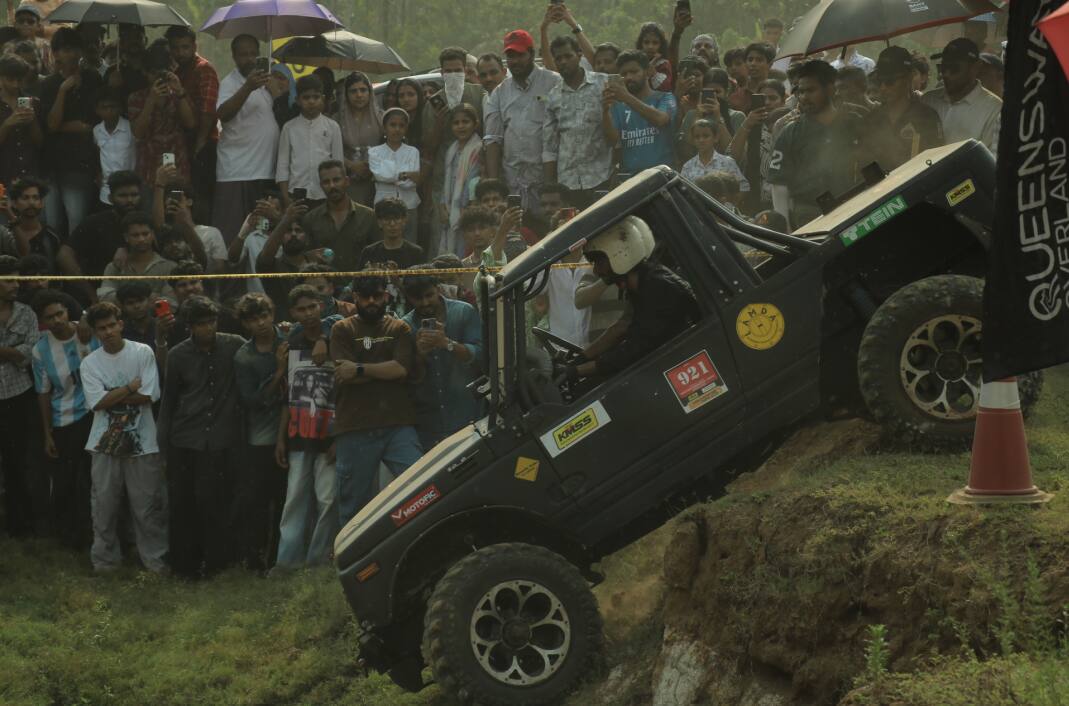
These statistics, though, don’t capture the texture of Keralam's passion for the automobile, or the ecosystem that has built up around it. Its most visible manifestations might be the supercar shopping sprees of wealthy businessmen and jewellers, or, at the other end of the spectrum, blingy tourist buses with massive woofers and even more massive online followings (check out 'Komban bus' on YouTube). But the obsession runs into quieter, less obvious corners too. Take off-roading, for instance.
Mud and money
Keralam's undulating, rain-soaked terrain makes for natural off-road country.
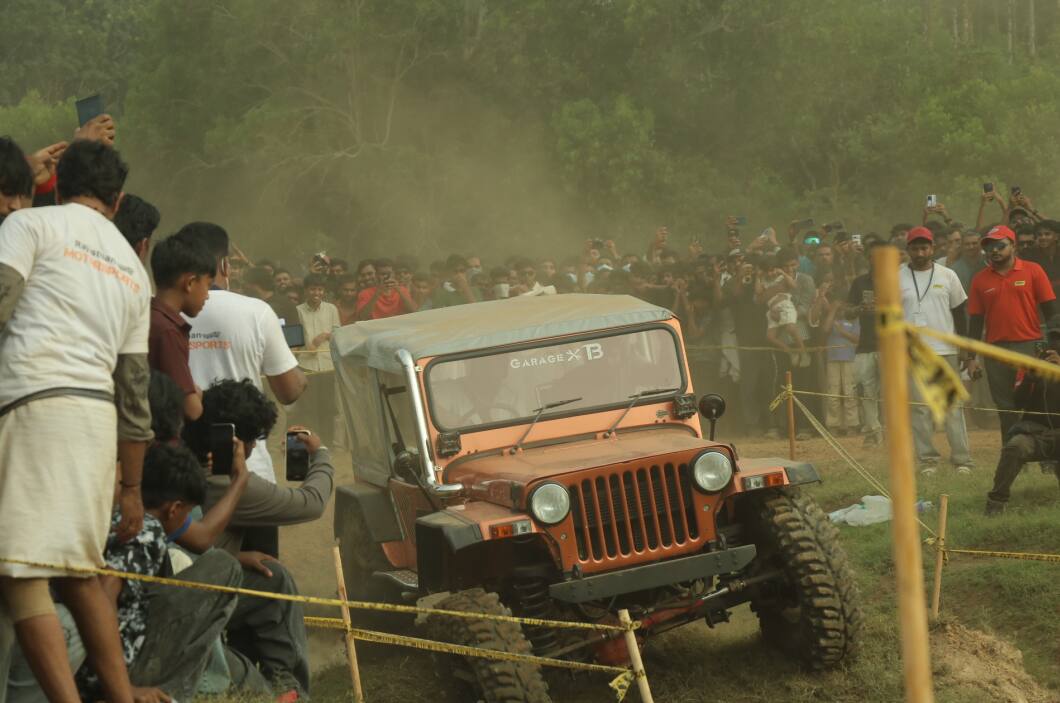
The state, many parts of which still resound with the clatter of rugged Willys and Mahindra CJ500s, has built one of the most active off-road communities in India.
"Off-road is the vertical that's happening in a very organised way," says Hani Musthafa, automotive journalist and founder of the community Flywheel. He reckons several big events a year and something most weekends, somewhere in the state.
One of the epicentres of off-roading in Keralam is Kottayam, where you'll find R&T Auto Catalyst, among the state's oldest 4x4 garages. Its planter founder, Sam Kurian Kalarickal, started off working on Willys, Mahindras, and Maruti Gypsies. Then the Rainforest Challenge (RFC) entered India in 2014, and things just went berserk in Keralam.
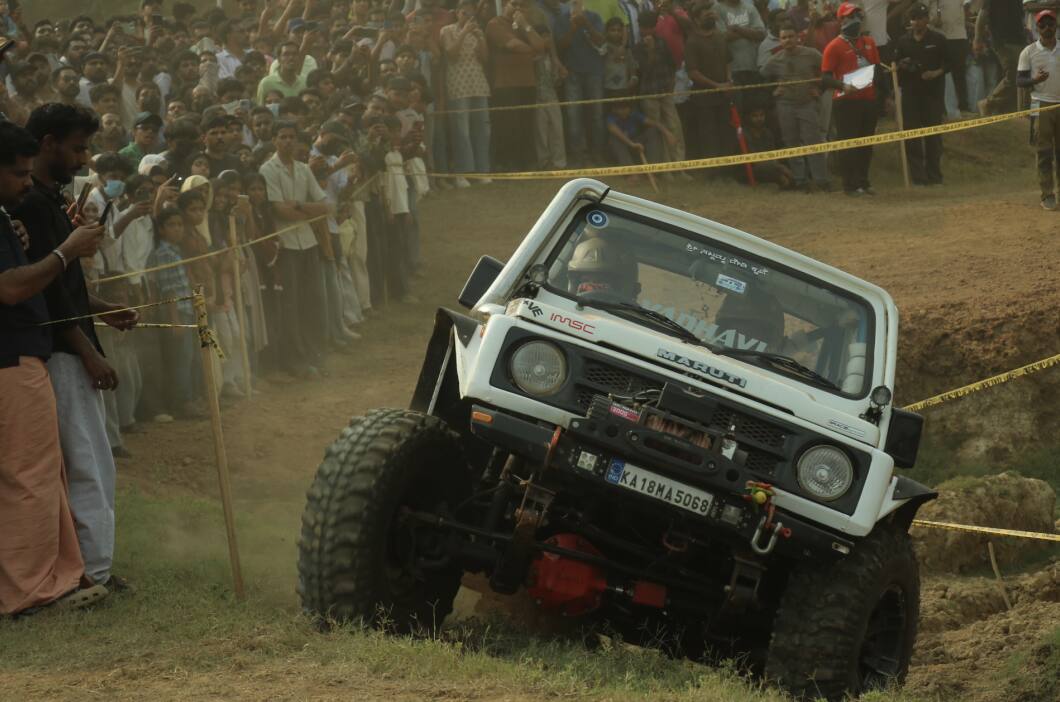
The Indian edition of RFC, billed as one of the world's toughest motorsport events, takes place in the hills around Goa every year, and regularly features participants from Keralam. In 2018, ten teams from the state participated in the gruelling competition; in 2024, Dr Mohammed Fahed VP, a paediatrician from Malappuram, won it in his fourth attempt alongside his co-driver Rajeev Lal.
RFC changed the way enthusiasts built their vehicles, says Kalarickal. A competition-grade build starts at ₹35 lakh. "A winch costs around ₹7.5 lakh, and for a competition build you need two, plus spare winch motors and ropes," Kalarickal says. "That's ₹10–12 lakh in winches alone."
Most of the gear is imported, though local fabricators now make what they can. Kalarickal also restores old classics, including Land Rovers and Land Cruisers. Of the more than 35 vehicles in his garage at any given time, he says about 70 per cent arrive from outside Keralam, trucked in from Pune, Mumbai, and Bangalore for builds and restorations their owners can't get done at home.
Sujish Kolothody, who heads the Kozhikode-based Kerala Motor Sports Welfare Society, counts around 25 clubs registered with the society and as many outside it, with some 300 properly kitted-out off-roaders flatbedded around the state for events and drives since they are not road-legal.
"We probably see around 20 big off-roading events a year," says Kolothody, whose latest edition of the Kerala Adventure Trophy near Kannur drew more than 75,000 people, with the local panchayat closing a road for three days to let it run. The spending runs from Rs 3-4 lakh at the entry end to well over ₹50 lakh. Kolothody says he has put Rs 50 lakh into his Mahindra Thar CRDe alone.
Despite the Motor Vehicles Department frequently turning up the heat, several off-road outfitters and customisers operate in a legal grey zone across the state, pimping up Toyota Hiluxes, Isuzu D-Maxes, and Thars. And the mud plugging now cuts clean across class.
"Even though it started with people in plantations who had jeeps, now it's everyone," Kalarickal says. "A person selling vegetables in the market, a JCB driver, a tipper driver."
Rise and shiny
Malayalis may love getting their cars dirty off-road, but they are equally obsessive about keeping them shiny. "I always say you should have ‘Malayali-owned’ the way you used to see ‘Parsi-owned’ in the classifieds," says Musthafa. "Because we keep our cars very well. You don't see Malayali cars with lots of scrapes and bad paint."
And that's partly because in Keralam, people get to ‘see’ their cars. "In big cities, people don't really take care of their car because they don't see it. You go to the office, you park it in the basement.
In Keralam, the apartment culture is not there. And Keralam is very work-life balanced. People have time to take the car around. Water is abundant. And they're generally people who keep things clean, a little OCD-driven," says Sajan Murali Purvangara, who heads American car-care major Turtle Wax's Indian operations.
Keralam now accounts for 18 to 20 per cent of Turtle Wax's India sales, making the state one of the company's fastest-growing markets. The company has 15 studios in Keralam, against just eight in the much larger Tamil Nadu, and business has nearly doubled every year since 2021.
Purvangara estimates Keralam's car-detailing market at Rs 150–200 crore a year, growing at 18 to 20 per cent annually. The spending isn't confined to enthusiasts alone. Turtle Wax's entry point into one of India's monsooniest states was a rain repellent. And while Punjab, the other big market, buys only premium, flashy products, Keralam buys on value. "Keralam will always buy if they see value in it," says Purvangara.
Buying up
The heads of some of India's most coveted luxury car brands are in rare consensus: Keralam is a market where people go unusually high up the range.
Hardeep Singh Brar at BMW India says the state is big on “quality of consumption” and points to the Mini as proof. Nationally, BMW sells one of its playful Minis, which start at about Rs 43 lakh, for every twenty BMWs; in Keralam, the ratio is one in five.
"The amount of customisation that happens in Keralam is far more than the rest of the country," he says. "People really want to enjoy their cars; they're not happy with stock cars."
Keralam sells only 170 to 200 luxury cars a month - under 1 per cent of all cars sold in the state - but a quarter of Mercedes-Benz's sales here are top-end vehicles costing Rs 1.4 crore and above: Maybachs, S-Class, AMGs. The buyers, says Santosh Iyer of Mercedes-Benz India, are relatively young, around 40 on average, and increasingly homegrown entrepreneurs rather than NRIs returning from the Gulf.
Musthafa reckons there are some 600 Defenders on Keralam's roads. “Per kilometre, one Defender," he half-jokes. Rajan Amba at JLR India says that Keralam "defies every expectation we had about market size versus market appetite", and that models like the “Defender resonate strongly here.”
The company's sales in the state have more than tripled since 2023, and Keralam now accounts for nearly a fifth of JLR's entire South India business, up from 14%.
The most recent evidence of the Keralam buyer's automotive literacy was on show in June last year, when Volkswagen imported 150 units of its iconic Golf GTI hot hatch into the country. A single dealership in Kochi sold 25 of them in one day. The Golf GTI is an enthusiast's car, bought by people who know what a hot hatch is and are willing to pay big money - about Rs 53 lakh - for one.
At the very top of the spending sit people like Venu Gopalakrishnan. The founder of Kochi IT firm Litmus7 is neither 'old money' nor 'Gulf money'. His stable is home to several explosive specimens at the top of the automotive food chain, including a Lamborghini Huracan Sterrato, and he has paid lakhs for registration numbers built around the figure 7, after his company.
Keralam, the tech entrepreneur says, was long "a savings-based economy," where "flaunting anything like this would be seen very negatively." For years, the wealthy who owned such cars kept them out of view. That changed partly after Covid, he says, and it became about ‘do you want to enjoy it in your own lifetime, or keep it for someone else?’
And now, he says, there is a new kind of Keralite money. “People used to create wealth for Keralam but lived outside, not within. Now the people inside have started enjoying it." Gopalakrishnan is a hardcore petrol head, but his collection, he says, is also social and business capital. "Had I not had these cars, many people across India wouldn't have recognised me." The collection has become a kind of calling card, he says, a recognition that opens up “another kind of space.”
Back to where this story began. The UDF government's recently released list of "safe modifications" - 18 items that can now be fitted without special approval - was met with groans of disappointment online. Most are accessories people already buy freely. But, as Musthafa points out, there is only so much a state government can do.
"The Motor Vehicle Act comes from the Centre," he says. "Only the portion within the state's capacity can be amended." But, in all honesty, the official list is perhaps beside the point in a state with a breadth and diversity of automotive enthusiasm that is difficult to find elsewhere in the country.

MrBeast marries Thea Booysen on Necker Island, here's a look at their wedding outfits
Bollywood finally speaks: Salman Khan, Jim Sarbh, Imran Khan among stars backing the CJP student protests
Who is Jimothy the raccoon? Meet Seattle's viral internet sensation
Stroke is rising among young adults. Doctor explains why it's happening and what you must do
Trade the hustle for the Shire: Inside the "hobbitmaxxing" trend