


The heat is breaking records, and so is climate anxiety among young people: Here's what helps
As extreme weather stops being an anomaly and starts being summer, a growing number of young people are naming what they feel: climate anxiety. Here's what it actually is, and how to sit with it without shutting down

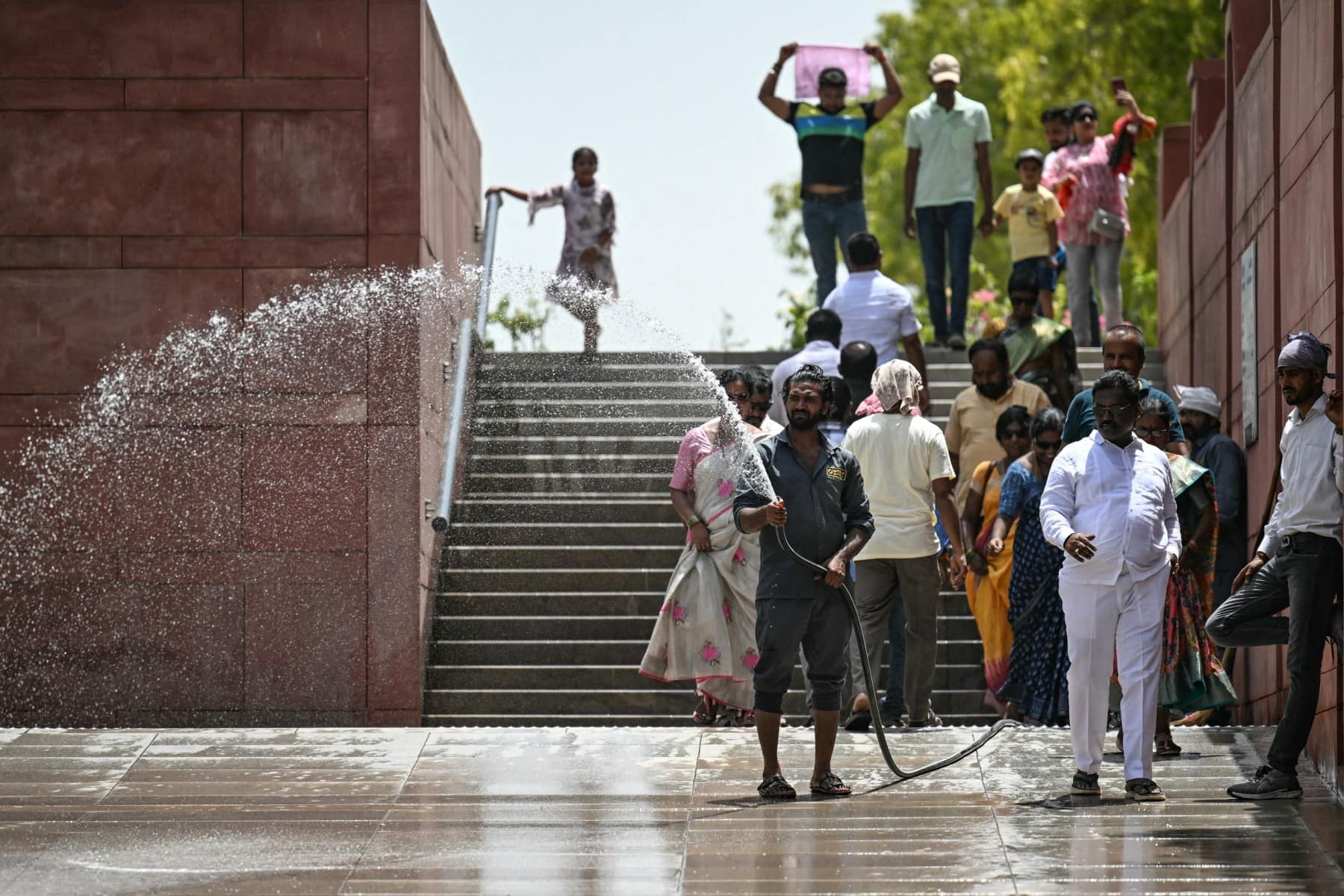
It's been a brutal few weeks for anyone paying attention to the weather. Europe just lived through what scientists are calling its most severe heatwave on record, with over 1,300 excess deaths linked to the extreme heat since June 21 alone. Back home, cities across India have been breaching 45°C, and the India Meteorological Department has spent the season issuing one heatwave advisory after another. None of this reads as unusual anymore. That's the problem.
For a generation that has grown up watching climate disasters move from "once in a lifetime" to "every summer," the dread has a name: climate anxiety, sometimes called eco-anxiety.
A 2021 Lancet study surveying 10,000 young people across ten countries found that nearly 60% were "very" or "extremely worried" about environmental problems, with many reporting that this worry affected their ability to eat, sleep, concentrate, or function.
 More from Lifestyle
Closer home, a Centre for Science and Environment survey of nearly 1,931 young Indians aged 14-25 found the same pattern: 88% had noticed visible environmental changes in their own regions over the last five to seven years, from erratic weather to intense rainfall and heatwaves, and about half reported increased stress or anxiety as a result.
A large part of that anxiety isn't really about the weather; it's about trust. Nearly two-thirds of the young people surveyed in the Lancet study said governments weren't taking their concerns seriously, weren't doing enough to prevent catastrophe, and were failing them.
What climate anxiety actually looks like
Climate anxiety isn't just worry about the planet in the abstract, says Gara Sanjay, a Bangalore-based counselling psychologist whose research focused on climate anxiety and nature connectedness in young adults.
He describes it as heightened emotional, mental, or physical distress in response to dangerous changes in the climate, closely correlated with generalised anxiety but distinct from it in one important way: it comes from care, not dysfunction. "It is a valid and natural response to climate change and environmental concerns because it comes from a place of care for the environment," he says.
Sanjay notes that the primary signs are often existential: fears about mortality, a loss of control, intrusive thoughts that make it hard to concentrate. Behaviourally, it can show up as disrupted sleep, exhaustion, and friction with family or friends over how much sustainability should factor into everyday decisions.
It can also curdle into something harder to move through. When the dread becomes too big to hold, it can tip into what Sanjay calls eco-paralysis, a state in which the crisis feels so overwhelming that any action seems pointless. He's clear that this isn't weakness. It's a common and valid response to a problem that genuinely is bigger than any one person, and what it usually signals is a need for better coping tools and stronger support, not a character flaw.
How do you actually deal with it?
This is where most coverage of climate anxiety stops short, offering vague reassurance instead of something usable. Sanjay's approach centres on rebuilding hope, deliberately, in five ways.
Shrink the problem down to what you can hold.
The climate crisis is systemic, and no individual is going to fix it alone. But small, consistent actions-carrying a reusable straw, cutting down on unnecessary AI use for tasks you could do yourself- still matter. Not because they'll reverse warming on their own, but because they give your nervous system something to do besides spiral.
Put boundaries around the news.
Climate coverage is relentless, and social media has become most people's primary source of it, which makes it nearly impossible to switch off. Setting aside a fixed window each day to disconnect isn't avoidance. It's what lets your nervous system actually regulate rather than stay in low-grade alarm all day.
Get outside, deliberately.
Sanjay points to the biophilia hypothesis, the idea that humans have a built-in emotional pull toward nature, and that this connection is part of what motivates us to protect it. Time in green spaces isn't just a mood boost. It can genuinely recalibrate how overwhelmed you feel and reconnect you to why you cared in the first place.
Don't do this alone.
Talk to friends, find a community, connect with a climate-focused group if one exists near you. Isolation makes climate anxiety worse. Knowing other people are carrying the same weight makes it lighter.
Consider therapy if it's getting in the way of your life.
"Coping with climate anxiety is not easy," Sanjay says. "It is difficult to cope with an issue that is not solely at an individual level but is deeply rooted in larger systemic problems." He points out that capitalist culture tends to frame every crisis as a personal failing, when much of the climate crisis lies well beyond individual control. Therapy, he says, can help people find resources, build coping mechanisms, and feel validated.
The heat isn't going away this summer, or probably next. But how we relate to that fact, whether it flattens us or becomes one more hard thing we've learned to carry, is something we still have some say over.
From films to music to internet trends, Preetika covers cultural moments that feel bigger than themselves, and the context that makes them matter.

Stroke is rising among young adults. Doctor explains why it's happening and what you must do
Trade the hustle for the Shire: Inside the "hobbitmaxxing" trend
Spices, health and the Indian plate: Why chilli can be good for you—but moderation is still key
The right way to break up without feeling groggy
How Spider-Man actor Tom Holland has been on a sobriety journey of 4.5 years after being "addicted to alcohol"