


YS Jaganmohan Reddy opposes NPR, urges Centre to revert to 2010 procedure citing 'insecurities' among minorities
Andhra Pradesh has become the seventh state to distance itself from Centre's controversial policy decisions, the NPR, CAA and the NRC

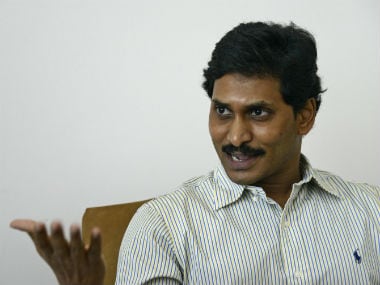
YS Jaganmohan Reddy: Reuters[/caption]There are apprehensions among the public that the NPR would lead to the National Register of Citizenship (NRC) in the wake of the Citizenship Amendment Act (CAA), which provides for citizenship to Hindus, Christians, Jains, Sikhs, Parsis and Buddhists from Afghanistan, Pakistan and Bangladesh who entered India or before 31 December 2014.Reddy's comment is noteworthy as earlier, his party YSRCP had supported the NDA government in passing the CAA in the Parliament. While in Telangana, the ruling Telangana Rashtra Samiti (TRS) opposed CAA, both Andhra Pradesh parties, YSR Congress Party and main opposition Telugu Desam Party, had supported the legislation and helped getting it passed in Rajya Sabha where NDA does not enjoy majority.Reddy's tweet has also came in the backdrop of his government's recent order, gearing up the administrative machinery for the conduct of the NPR exercise, and Housing Listing and Housing Census as part of Census of India 2021 to be taken up for 45 days between April and September 2020."In view of a number of apprehensions and doubts being expressed in various quarters with respect to the conduct of NPR exercise, following clarifications are issued to all the District Collectors/ Principal Census Officers in the shape of 'Frequently Asked Questions' (FAQ) for easy dissemination to all concerned," General Administration Department Secretary Shashi Bhushan Kumar said in the order issued on 22 January.He said people are not required to submit any document to the enumerators during the NPR exercise."Enumerators are just required to record whatever answers are given by the people and not to press for any further answers to any query if they do not intend to give and also not to ask for any document," Kumar said in the order.The GAD Secretary added that all officials involved, from enumerators onwards, "have been/are being trained" to the effect that there was no requirement of submission of any document by the people during the NPR exercise, nor any requirement to insist on answer to any query if people do not intend to answer.The NPR is a register of usual residents of the country. It is being prepared at the local (village/sub-town), subdistrict, district, state and national levels under provisions of the Citizenship Act, 1955, and the Citizenship (Registration of Citizens and Issue of National Identity Cards) Rules, 2003.The rules have a provision for fine of up to Rs 1,000 on those violating them.The data for NPR was last collected in 2010 along with the house-listing phase of Census 2011. Updating of this data was done during 2015 by conducting door-to-door survey.While updating the register in 2015, the government asked details like Aadhaar and mobile numbers. This time, information related to driving licence and voter ID card may also be gathered, officials said, adding that PAN card details will not be collected as part of this exercise.For NPR, a usual resident is defined as a person who has resided in a local area for the past six months or more, or a person who intends to reside in that area for the next six months. The law compulsorily seeks to register every citizen of India and issue a national identity card.With inputs from PTI

Govt to set up fast-track courts for swift punishment in paper leak cases, says PM Modi amid CJP protests
Sikkim tunnel collapse rescue resumes, death toll rises to 22
Delhi Police asks personnel to wear uniform: What the law says on cops in plainclothes during protests
No premium queues, 30-minute target: What changes for Indian passport applicants in UAE
CJP Protest in Delhi Live Updates: PM Modi announces fast-track courts for NEET paper leak cases