


UN holds first global study of nature and human race: 100,000 species on path to extinction
With many species on Earth dying, the UN has released a study that was three years in the making.


A waterfall flowing with greenery all around. Image credit: University of Washington[/caption]A score of 10-year targets adopted in 2010 under the UN's biodiversity treaty — to expand protected areas, slow species and forest loss, and reduce pollution impact — will almost all fail, the draft Summary for Policy Makers reports.But the focus of the five-day meet is not just pangolins, pandas, polar bears and the multitude of less "charismatic" lifeforms that humanity is eating, crowding or poisoning into oblivion. Rather, the spotlight is on the one species that has so ravaged Earth's natural systems as to imperil its own existence as well.That, of course, would be us: homo sapiens.The accelerating loss of clean air, drinkable water, healthy soil, pollinating insects, protein-rich fish and storm-blocking mangroves — to name but a few of the dwindling services rendered by Nature — poses no less of a threat to humanity than climate change, according to the report, set to be unveiled May 6.
"Up to now, we have talked about the importance of biodiversity mostly from an environmental perspective," said Robert Watson, chair of the UN-mandated body that compiled the report, told AFP. "Now we are saying that Nature is crucial for food production, for pure water, for medicines and even social cohesion."And to fight climate change, he added.Forests and oceans, for example, soak up half of the planet-warming greenhouse gases we spew into the atmosphere. If they didn't, Earth might already be locked into an unliveable future of runaway global warming. And yet, an area of tropical forest five times the size of England has been destroyed since 2014, mainly to service the growing global demand for beef, biofuels, soy beans and palm oil.It would be like setting fire to a lifeboat while lost at sea in order to cook the fish one just caught.Hidden impacts
"We need to recognise that climate change and loss of Nature are equally important, not just for the environment, but as development and economic issues as well," Watson said. "The way we produce our food and energy is undermining the regulating services that we get from Nature."Set up in 2012, the Intergovernmental Science-Policy Platform on Biodiversity and Ecosystem Services (IPBES) synthesises published science for policymakers in the same way the IPCC does for climate.Both advisory bodies are tied to UN treaties.[caption id="attachment_6521641" align="alignnone" width="1280"]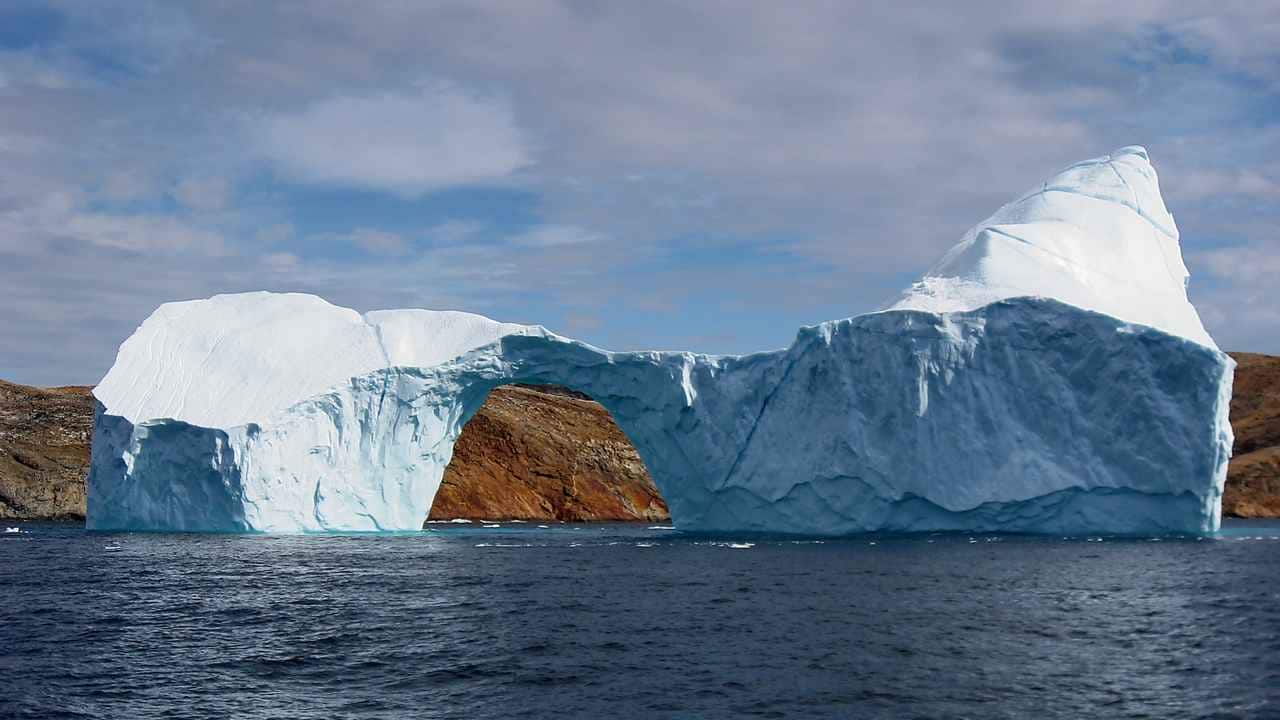
Iceberg with a hole in its center. Image credit: Wikipedia[/caption]But the Convention on Biological Diversity has always been a poor stepchild compared to its climate counterpart, and the IPBES — unlike the Intergovernmental Panel on Climate Change — was added two decades later as an afterthought, making its authority harder to establish.For the public, "biodiversity" remains an abstract concept, and its impacts harder to see: species loss is invisible and remote compared to deadly heatwaves, superstorms and sea-level rise."There is no question that the climate convention is stronger," Watson said."But our goal is to make sure that governments and the private sector really start to take biodiversity as seriously as they do climate."
Species disappearing

Govt to set up fast-track courts for swift punishment in paper leak cases, says PM Modi amid CJP protests
Sikkim tunnel collapse rescue resumes, death toll rises to 22
Delhi Police asks personnel to wear uniform: What the law says on cops in plainclothes during protests
No premium queues, 30-minute target: What changes for Indian passport applicants in UAE
CJP Protest in Delhi Live Updates: PM Modi announces announces fast-track courts for NEET paper leak cases