


UN environment head says there is no magic solution to Delhi's smog problem, decisive leadership is key
There's no magic solution to smog problem in Delhi as it's caused by a variety of factors, United Nations Environment head Erik Solheim has said

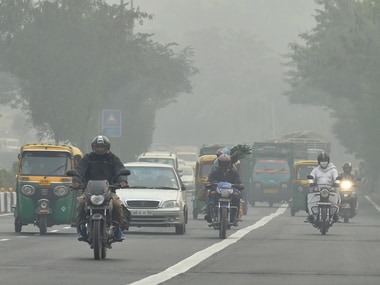
Representational image. PTI[/caption]Ahead of the third session of the UN Environment Assembly, where world leaders are gathering for the largest global meeting on pollution, an optimistic Solheim said there's a need for action on transport to curb emissions.Transport accounts for nearly 18 percent of all emissions worldwide, and over 90 percent of the sector is still dependent on carbon-intensive fossil fuels."We need action on transport for two reasons. The transport sector, be it on land, in the air or at sea, is a major contributor to emissions and a driver of climate change. It's also a big cause of pollution, with an immediate detrimental impact on the health of hundreds of millions of people," Solheim said."We have started to see a shift to low-carbon solutions, but this needs to speed up. I'm convinced that the days are numbered for the internal combustion engine, with many nations now committing themselves to a time-bound phase-out of petrol and diesel vehicles," he said."But we really need to see more innovation and change in the air transport and shipping sectors."The UN Environment Assembly, with 193 nations as its members, aims to deliver commitments to end the pollution of air, land, waterways and oceans and to safely manage chemicals and waste.According to Solheim, what's happening in many cities around the world is criminal, and people deserve far better."Living in a city should not mean being condemned to poor health and an early death. On the positive side, both policymakers and citizens are increasingly aware of the issue, and especially the costs to health, to productivity and to the environment."It's possible to build a strong consensus for action. The benefit here is that action on tackling poor air quality in cities is also a big part of the action we need to take on climate change," he said.On stepping up action to fight oceanic pollution, he said: "Beach clean-up initiatives are fantastic because they are a very useful tool to highlight the sheer scale of the problem and they help galvanise public support for change."But ultimately, we have to stop plastics getting into the oceans in the first place. For this we need stronger political leadership on the issue. Better waste management, incentives for recycling and producers taking more responsibility for where their products end up."Solheim, an admirer of Indian lawyer Afroz Shah's commitment and passion for clean seas, says his model of cleaning beaches can be replicated for the rest of the world.For Solheim, the solution to reduce greenhouse gas emissions lies in steering electricity sector transformation towards green technology.China and India are both undergoing extraordinary change, and the shift to renewables in both the countries has been one of the most promising trends of recent years."I'm convinced that both nations will emerge as global energy leaders if they continue on this path," said Solheim, who recently tried out one of the bicycles delivered by Mobike that will be available for delegates to move around during the UN Environment Assembly.He believes the bike aims to provide affordable and clean transport solutions for the cities.

Govt to set up fast-track courts for swift punishment in paper leak cases, says PM Modi amid CJP protests
Sikkim tunnel collapse rescue resumes, death toll rises to 22
Delhi Police asks personnel to wear uniform: What the law says on cops in plainclothes during protests
No premium queues, 30-minute target: What changes for Indian passport applicants in UAE
CJP Protest in Delhi Live Updates: PM Modi announces announces fast-track courts for NEET paper leak cases