


Passive Euthanasia legalised by Supreme Court: What is living will and right to die with dignity?
The Supreme Court on Friday recognised a person'e right to die with dignity while giving sanction to passive euthanasia and living will.

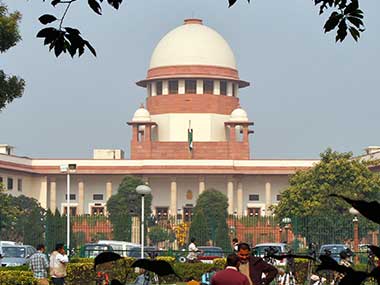
Representational image. Reuters[/caption]A five-judge constitution bench headed by Misra and comprising AK Sikri, AM Khanwilkar, DY Chandrachud and Ashok Bhushan, had on 11 October last year reserved its verdict on the plea. Here is all you need to know about passive euthanasia, right to die and living will.Passive euthanasiaA condition where there is the withdrawal of medical treatment with the deliberate intention to hasten the death of a terminally-ill patient is termed as passive euthanasia.However, active euthanasia is an intentional act of causing the death of a patient in great suffering. Active euthanasia is illegal in India.in 2011, the top court had recognised passive euthanasia in Aruna Shanbaug's case by which it had permitted withdrawal of life-sustaining treatment from patients not in a position to make an informed decision.Living will A living will is a written document that allows a person to give explicit instructions in advance about the medical treatment to be administered when he or she is terminally ill or no longer able to express informed consent.According to News18 report, in a living will, a person can outline whether or not she wants her life to be artificially prolonged in the event of a devastating illness or injury.A living will is a concept associated with passive euthanasia. The apex court, however, had earlier observed that there should be adequate safeguards, and implementation of living will be subject to medical board's certifying that the patient's comatose state is irreversible.The Centre had opposed recognition of 'living will' and said the consent for removal of artificial support system given by a person may not be an informed one and without being aware of medical advancements.According to Hindustan Times, the US, UK, Germany and Netherlands have advance medical directive laws that allow people to create a ‘living will’.Right to DieRight to die peacefully is part of Fundamental Right to Life guaranteed under Article 21 of the Constitution. Article 21 provides that "no person shall be deprived of his life or personal liberty except according to procedure established by law".With inputs from agencies

CJP protest in Delhi: New videos of stone pelting, violence emerge as police, agitators trade charges
'From make in India to launch from India': Skyroot COO on why Vikram-1 could change India’s space sector
Choke terror funding, keep international shipping lanes safe: Jaishankar at Asean Regional Forum
PM Modi announces fast-track courts for paper leak cases; CJP responds ‘Dharmendra Pradhan must go’
Sikkim tunnel collapse rescue resumes, death toll rises to 22