


Supreme Court quashes NGT order on 'silence zone' at Amarnath shrine
On the NGT's order of banning carrying of prasad, the bench suggested that Amarnath Shrine Board could provide the prasad.

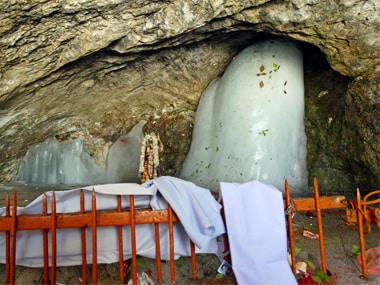
File image of the Shivalinga at the Amarnath shrine. Reuters[/caption]The Amarnath cave shrine is considered one of the most holy by Hindus. The cave itself is covered with snow most of the year barring a short period of time in summer when it is opened for pilgrims.Appearing for the Amarnath Shrine Board, senior advocate Mukul Rohatgi told the bench that the NGT had taken up the Amarnath issue on its own while dealing with a plea relating to stopping the use of horses and ponies in Vaishno Devi shrine premises in Jammu.The bench asked petitioner and environment activist Gauri Mulekhi to file a proper petition on the issue relating to the Amarnath shrine.During the hearing, Rohatgi told the bench that the NGT had barred chiming of bells, offering of prasad, chanting of mantras or saying 'Jai Bholenath' in the areas surrounding the famed cave shrine to preserve its eco sensitivity.Hearing this, the bench quipped: "What does it (NGT) want to say?"Rohatgi added: "How can they ask that you can't take 'prasad' with you? People have religious sentiments."On the NGT's order of banning carrying of prasad, the bench suggested that Amarnath Shrine Board could provide the prasad.On 13 December, the green penal had declared the cave shrine a "silence zone" and prohibited religious offerings beyond the entry point to help prevent avalanches and maintain its pristine nature.A day later, following protests by the Vishwa Hindu Parishad, which termed its order as a Tughlaki fatwa, the NGT clarified that it had not declared a silence zone at the Amarnath cave shrine but due silence had to be maintained only in front of the Shivalinga.The apex court stayed another order of the NGT where it had imposed a cost of Rs 50 lakh on the Jammu and Kashmir government for not finalising a rehabilitation plan for horses and mules which have been barred from plying from Katra to the Vaishno Devi temple.The tribunal had earlier said that a new path should be created to the shrine exclusively for pedestrians and battery-operated cars and directed that no horses or mules would be allowed on the new route to the shrine.The apex court was on Monday informed that the scheme for rehabilitation had been finalised and would be placed before the state cabinet for its approval.

Delhi Police asks personnel to wear uniform: What the law says on cops in plainclothes during protests
No premium queues, 30-minute target: What changes for Indian passport applicants in UAE
CJP Protest in Delhi Live Updates: Delhi metro shuts 16 stations as protests continue in Jantar Mantar
Bharat Forge, Flying Whales sign pact to develop 60-tonne airships for India’s defence logistics
Air India to cut Delhi-Toronto flight time by 3 hours, resume non-stop services from August 1