


Supreme Court collegium under fire: Read why Justice Chelameswar's strong dissent in 2015 order on NJAC is relevant today
The Supreme Court collegium's recommendation to promote two High Court judges to Supreme Court and Centre's subsequent nod which came at "great speed" has been criticised severely.

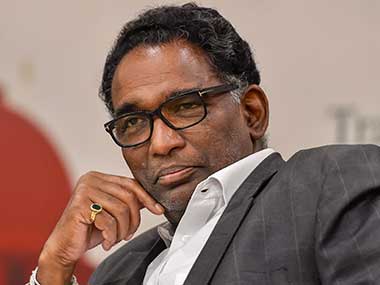
File image of Justice J Chelameswar. PTI[/caption]On 5-6 January this year during fresh deliberatons, it scrapped the earlier recommendation and instead sent the names of Justices Maheshwari and Khanna for appointment as Supreme Court judges.Retired senior judges have taken note of the appointments (after the President Ram Nath Kovind notified the appointments) and have reacted sharply to the decision. A sitting Supreme Court judge has written to Gogoi against the collegium's decision and former Delhi High Court judge has written to Kovind seeking his intervention in the collegium's decision to elevate Justice Khanna.One of the biggest critics of the system, Justice J Chelameswar, at whose official residence four collegium judges, including current Chief Justice of India Ranjan Gogoi, addressed the press a year ago on the administration of the Supreme Court under the then CJI Justice Dipak Misra, indicated that nothing had changed, told The Indian Express: "This is exactly why I refused to attend the Collegium meetings in 2016. I was told by legal luminaries then that I should resign and then speak. Now, I have retired, so should I speak?"In his 2015 order, Justice Chelameswar expressed dissent in the ruling on the National Judicial Appointments Commission (NJAC). Chelameswar's critique of the collegium system, through which he was appointed, has shaped the discourse on judicial accountability.In October 2015, a Constitutional bench of Supreme Court struck down the NDA government's NJAC Act. However, Chelameswar wrote a strongly-worded dissent note. Chelameswar argued that to entirely eliminate the government from the selection process would against the country's democratic principles.Here are the key takeaways from the 2015 dissent order:
- "Transparency is a vital factor in constitutional governance....Transparency is an aspect of rationality. The need for transparency is more in the case of appointment process. Proceedings of the collegium were absolutely opaque and inaccessible both to public and history, barring occasional leaks."
- "To hold that it (government) should be totally excluded from the process of appointing judges would be wholly illogical and inconsistent with the foundations of the theory of democracy and a doctrinal heresy," he said, adding Attorney General Mukul Rohatgi was right in his submission that exclusion of the executive branch is destructive of the basic feature of checks and balances - a fundamental principle in Constitutional theory."
- "For all the above mentioned reasons, I would uphold the Amendment. However, in view of the majority decision, I do not see any useful purpose in examining the constitutionality of the Act."

'From make in India to launch from India': Skyroot COO on why Vikram-1 could change India’s space sector
Choke terror funding, keep international shipping lanes safe: Jaishankar at Asean Regional Forum
PM Modi announces fast-track courts for paper leak cases; CJP responds ‘Dharmendra Pradhan must go’
Sikkim tunnel collapse rescue resumes, death toll rises to 22
Delhi Police asks personnel to wear uniform: What the law says on cops in plainclothes during protests