


SC concerned over female foeticide, blames state govts
The court said that it would hold quarterly monitoring of the steps taken by state governments to stop determination of sex.

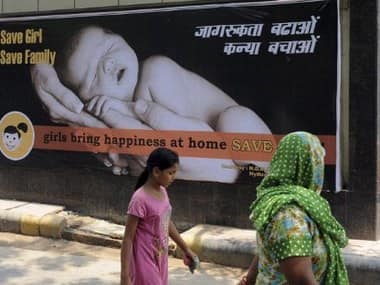
AFP[/caption]The court said that it would hold quarterly monitoring of the steps taken by state governments to stop determination of sex."Why there is no awareness that girl child is equally loveable as boy," the court said, inquiring from counsel.Justice Misra said that at the awareness camps the people should be told that "female child is better than male child as girls have neuron which makes them wise".Aghast at the submission by Bihar that they were not even aware of female foeticide and sex-determination test, Justice Radhakrishnan said: "It is an alarming situation" that they were unaware of the existence of female foeticide.Taking a dig at Punjab's poor record on checking sex determination, Justice Misra said that its affidavit was "well drafted", but "there is lethargy on the part of the police in enforcing the ban".Amicus curiae Colin Gonsalves told the court that states' affidavits concealed more than they revealed about the actual state of affairs.Gonsalves told the court that the so-called conviction that have shown in papers was nothing but imposition of a fine of Rs.500-1,000 on the violators of the prohibition.He told the court that ultra-sound machines sealed by enforcement agencies for sex determination at clinics were still lying in their premises. The machines get unsealed after paying a small fine.Haryana health secretary Navraj Sandhu, who was present, told the court that the health department alone could not enforce the ban.Sandhu told the court that it was only through the collective efforts of all the stake holders including police, education department, political leadership and the society that the problem of female foeticide could be dealt with.Describing it as a problem of mindset, Sandhu said in Haryana educated and well-to-do people were going in for sex determination tests.Adjourning the hearing, the court asked Additional Solicitor General Harin Raval to go through all the affidavits filed by different states and suggest which was the better model to eliminate the pre-natal sex determination tests.IANS

Govt to set up fast-track courts for swift punishment in paper leak cases, says PM Modi amid CJP protests
Sikkim tunnel collapse rescue resumes, death toll rises to 22
Delhi Police asks personnel to wear uniform: What the law says on cops in plainclothes during protests
No premium queues, 30-minute target: What changes for Indian passport applicants in UAE
CJP Protest in Delhi Live Updates: PM Modi announces fast-track courts for NEET paper leak cases