
Advertisement


Sections
RTE: Girls to get preference over boys in Maharashtra
The Maharashtra cabinet has decided that under the 25 percent reserved seats under RTE, more girl students will be given admission over boys.

Last week, the Maharashtra state government announced that the Right to Education (RTE) Act will beimplemented in the state from the new academic year which will begin in June this year. The implementation will see 25 percent seats being reserved for students for Economically and Socially backward sections in non-aided schools.Now according to a Times of India report, it seems that in the 25 percent reserved seats, more girl students will be given admission over boys. The report quotes an official from the cabinet meeting who said that the decision had been approved by the cabinet.So how will the quota system for girls work? TOI reports that: [/caption]Chief Minister Prithviraj Chavan had announced last week, that out of the 25 percent seats, 50 percent will be reserved for SC, ST and OBCs while the remaining 50 percent will be for the economically weaker sections of the society.RTE will be implemented from Standard I this year. There are nearly 11,728 unaided schools out of which schools run by minority instutions are 1,984. The non-aided minority-run schools are excluded from the Act.The RTE act is aimed at ensuring that students from poor backgrounds can get a quality education that many privileged upper and middle-class children in India enjoy. While the quota system will provide benefits to some students,what is overlooked is that the government primary education system is in a poor state. Poor infrastructure, low-teaching quality have ensured that government schools in India are lagging behind.RTE can give relief to only a section of students. A review of how the public school system works is also required if the government is serious about ensuring that quality education is within reach of all.with inputs from PTI
If there are 25 seats available under the RTE Act and an equal number (20) of applicants among boys and girls then, under the approved system, 20 seats will be given to girl applicants. For the remaining five seats, there will be a lottery among the applications received from boys."If the number of applications from girls is more than the seats available, the lottery will be held among the girls. The boys will have no scope then," the official told TOI.The government also set an annual income limit of Rs one lakh for parents to be eligible under the EWS (Economically Weaker Section) quota.[caption id="attachment_319675" align="alignleft" width="380" caption="There will also be reservation of seats for students from backward castes. AFP"]
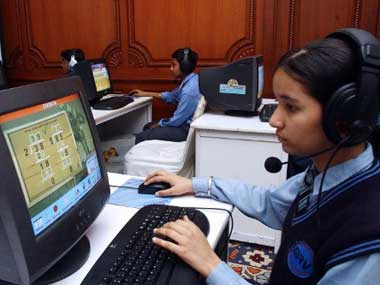 [/caption]Chief Minister Prithviraj Chavan had announced last week, that out of the 25 percent seats, 50 percent will be reserved for SC, ST and OBCs while the remaining 50 percent will be for the economically weaker sections of the society.RTE will be implemented from Standard I this year. There are nearly 11,728 unaided schools out of which schools run by minority instutions are 1,984. The non-aided minority-run schools are excluded from the Act.The RTE act is aimed at ensuring that students from poor backgrounds can get a quality education that many privileged upper and middle-class children in India enjoy. While the quota system will provide benefits to some students,what is overlooked is that the government primary education system is in a poor state. Poor infrastructure, low-teaching quality have ensured that government schools in India are lagging behind.RTE can give relief to only a section of students. A review of how the public school system works is also required if the government is serious about ensuring that quality education is within reach of all.with inputs from PTI
 First Published:May 24, 2012, 11:09:58 IST
Advertisement
Advertisement

Choke terror funding, keep international shipping lanes safe: Jaishankar at Asean Regional Forum
Jaishankar's remarks came against the backdrop of recent terror attacks targeting India and growing threats to commercial shipping amid conflicts in West Asia and Europe
2 min read
PM Modi announces fast-track courts for paper leak cases; CJP responds ‘Dharmendra Pradhan must go’
Amid protests demanding accountability for the leak of medical entrance test Neet and other irregularities in the education system, Prime Minister Narendra Modi has announced that the government has decided to set up fast-track courts to ensure swift and stringent punishment for those involved in paper leaks.
3 min read
Sikkim tunnel collapse rescue resumes, death toll rises to 22
The death toll at the collapsed tunnel at Sikkim's Namchi district rose to 22 after nine more bodies were recovered overnight. At least 27 workers were trapped in a tunnel at an NHPC project after a sudden burst of suspected methane gas trapped within rock formations triggered an explosion.
2 min read
Delhi Police asks personnel to wear uniform: What the law says on cops in plainclothes during protests
The Delhi Police has instructed all its personnel to wear uniforms when they report for duty at Jantar Mantar for crowd control. This comes after outrage grew over videos of men in civilian clothes or without name tags hitting protesters in the Capital. Is it legal for the police to ditch uniforms during protests?
4 min read
No premium queues, 30-minute target: What changes for Indian passport applicants in UAE
Indian passport applicants in the UAE can now access passport, visa and attestation services through Alhind’s 16 centres, with no premium queues, a Dh19 service fee and a target of completing applications within 30 minutes
4 min read
Advertisement
Advertisement