


Power ministry classifies electric vehicle charging stations under service, allows them to operate without licence
The power ministry has categorised charging batteries of electric vehicles as a service which will help such stations operate without a licence.

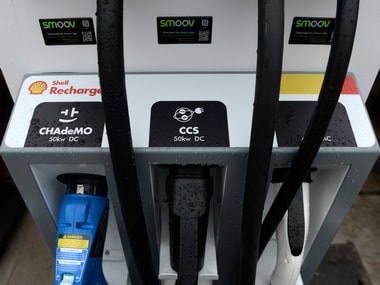
Representational image. Reuters[/caption]It is a progressive step, said Sohinder Gill, Director Corporate Affairs, Society of Manufacturers of Electric Vehicles (SMEV). It was one of the major impediments in the way of building a charging ecosystem in the country, he said, adding that SMEV requests the government to address other related issues like the acquisition of land, along with physical and non-physical incentives.Last month, power and new and renewable energy minister R K Singh had said, "We will come up shortly with a policy, including regulatory framework and technical standards on e-vehicles. Besides, we also have a plan for electric vehicle charging infrastructure in the next 15-20 days for setting up charging stations along corridors to be identified." The clarification however does not provide more details like average cost of supply of power.An official had earlier said the policy on charging stations on points along identified corridors — draft of which has been finalised by the Central Electricity Authority — would provide that the price of power for charging e-vehicles be capped at the average cost of supply in the state, excluding discom transmission and distribution (T&D) losses, plus 15 percent.The policy is expected to help the tariff for charging at an economical level of below Rs 6 per unit. In the present scenario, the electric vehicles (EVs) make economic sense as their per kilometre running cost is less than a rupee, whereas the same cost for petrol and diesel works out to an average of Rs 6.50.The government's National Electric Mobility Mission Plan launched in 2013 aims at ensuring 6-7 million electric and hybrid vehicles in India by 2020. The vision enunciated two years ago is for India to have 100 percent EVs by 2030.

'From make in India to launch from India': Skyroot COO on why Vikram-1 could change India’s space sector
Choke terror funding, keep international shipping lanes safe: Jaishankar at Asean Regional Forum
PM Modi announces fast-track courts for paper leak cases; CJP responds ‘Dharmendra Pradhan must go’
Sikkim tunnel collapse rescue resumes, death toll rises to 22
Delhi Police asks personnel to wear uniform: What the law says on cops in plainclothes during protests