
Advertisement


Sections
Ayurveda practitioner appointed Maharashtra Medical Council's registrar
The government needs a pliant council that they can manipulate to suit their needs and appointing this new registrar to the medical council is one such move

As we've moved beyond the turmoil at Film and Television Institute of India (FTII), we thought the requisite lessons were learnt and the nation would not have to put up with repeat absurdity. We were obviously wrong — this was followed by Central Board of Film Certification (CBFC) and then National Institute of Fashion Technology (NIFT). In the latest imprudent move that can also be described as aggressive nonsense, the Government of Maharashtra appointed an Ayurveda practitioner as the Registrar of the Maharashtra Medical Council (MMC). Dilip Wange, a professor at an Ayurveda College and Registrar of Ayurveda Council, took charge as the chief executive officer of a council that deals exclusively with modern allopathic medicine and its practitioners.Section 14(1) of the Maharashtra Medical Council Act, 1965 states:![Representational image. Reuters.]() Representational image. Reuters.[/caption]There are legitimate reasons why the medical fraternity in Maharashtra is particularly outraged at this decision. Firstly, it has been a long standing demand of the medical fraternity to make the council completely autonomous. And here we have a decision that completely bypasses the council and imposes on it an officer who has a clear cut conflict of interest.Secondly, the Indian Medical Association is fighting court cases against 'cross-pathy' practice. The practitioners of modern allopathic medicine in Maharashtra strongly maintain that those qualified in alternative forms of medicine should practice only their discipline and not something they are not trained in. In fact, there are court verdicts to that effect, including a Supreme Court judgment that terms 'cross-pathy' practice as quackery. The newly appointed Registrar is an Ayurveda practitioner and also registrar at Ayurveda council. This is where conflict of interest comes into play. One side would like to indulge in 'cross-pathy' practice, whereas the other side would oppose it. And the registrar will occupy a quasi-judicial office in both the councils. Thirdly, the medical fraternity would like to have an MMC registrar who understands the finer points of modern allopathic practice; someone who is familiar with issues like quackery, enquiry procedures of the council, code of medical conduct, issues involved in medical education etc.There is a strong reason why the political class is not very comfortable with an autonomous Council. Many of the private medical institutions are owned and run by them. They need a pliant council that they can manipulate to suit their needs. It, therefore, should not surprise anyone when they post the officer of their whim and choice to an important position.The MMC was constituted under the force of the Maharashtra Medical Council Act, 1965. It is meant to be the apex body that governs the medical profession in Maharashtra. It has wide and extensive powers, particularly regarding hearings and enquiries, including power of punishment. It also has power and duty to prescribe a code of ethics for regulating the profession. It can reprimand, suspend or remove a registered medical professional from its register. This quasi-judicial watchdog body is also required to supervise and regulate the medical education. Such functions and duties require that the council commands a high degree of respect and credibility. And that can happen only if it is given the independence it deserves.The sitting Council has finished its mandated term and elections to constitute a new body are long overdue. In spite of three representations to the state government, both by MMC and IMA, to hold the elections immediately, nothing seems to be moving at all. Tired of it, thus, the Indian Medical Association has moved the Mumbai High Court praying for immediate elections to the Council and to annul the registrar’s appointment.The author is a consulting surgeon based in Mumbai.
Representational image. Reuters.[/caption]There are legitimate reasons why the medical fraternity in Maharashtra is particularly outraged at this decision. Firstly, it has been a long standing demand of the medical fraternity to make the council completely autonomous. And here we have a decision that completely bypasses the council and imposes on it an officer who has a clear cut conflict of interest.Secondly, the Indian Medical Association is fighting court cases against 'cross-pathy' practice. The practitioners of modern allopathic medicine in Maharashtra strongly maintain that those qualified in alternative forms of medicine should practice only their discipline and not something they are not trained in. In fact, there are court verdicts to that effect, including a Supreme Court judgment that terms 'cross-pathy' practice as quackery. The newly appointed Registrar is an Ayurveda practitioner and also registrar at Ayurveda council. This is where conflict of interest comes into play. One side would like to indulge in 'cross-pathy' practice, whereas the other side would oppose it. And the registrar will occupy a quasi-judicial office in both the councils. Thirdly, the medical fraternity would like to have an MMC registrar who understands the finer points of modern allopathic practice; someone who is familiar with issues like quackery, enquiry procedures of the council, code of medical conduct, issues involved in medical education etc.There is a strong reason why the political class is not very comfortable with an autonomous Council. Many of the private medical institutions are owned and run by them. They need a pliant council that they can manipulate to suit their needs. It, therefore, should not surprise anyone when they post the officer of their whim and choice to an important position.The MMC was constituted under the force of the Maharashtra Medical Council Act, 1965. It is meant to be the apex body that governs the medical profession in Maharashtra. It has wide and extensive powers, particularly regarding hearings and enquiries, including power of punishment. It also has power and duty to prescribe a code of ethics for regulating the profession. It can reprimand, suspend or remove a registered medical professional from its register. This quasi-judicial watchdog body is also required to supervise and regulate the medical education. Such functions and duties require that the council commands a high degree of respect and credibility. And that can happen only if it is given the independence it deserves.The sitting Council has finished its mandated term and elections to constitute a new body are long overdue. In spite of three representations to the state government, both by MMC and IMA, to hold the elections immediately, nothing seems to be moving at all. Tired of it, thus, the Indian Medical Association has moved the Mumbai High Court praying for immediate elections to the Council and to annul the registrar’s appointment.The author is a consulting surgeon based in Mumbai.
“The Council shall, with the previous sanction of the State Government, appoint a Registrar.”Appointment of the Registrar, therefore, is a prerogative of the Council. In this case, the State ie the Government of Maharashtra has gone ahead and without even informing the Council appointed its Registrar. The Registrar is the chief executive officer of the Council, who attends all the meetings of the Council and its executive committee. He is an officer who keeps the accounts of the council, supervises over the staff and implements or executes the various provisions of the Act.[caption id="attachment_1198959" align="alignleft" width="380"]
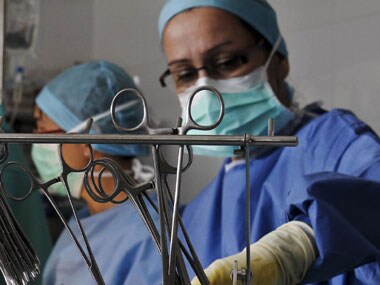 Representational image. Reuters.[/caption]There are legitimate reasons why the medical fraternity in Maharashtra is particularly outraged at this decision. Firstly, it has been a long standing demand of the medical fraternity to make the council completely autonomous. And here we have a decision that completely bypasses the council and imposes on it an officer who has a clear cut conflict of interest.Secondly, the Indian Medical Association is fighting court cases against 'cross-pathy' practice. The practitioners of modern allopathic medicine in Maharashtra strongly maintain that those qualified in alternative forms of medicine should practice only their discipline and not something they are not trained in. In fact, there are court verdicts to that effect, including a Supreme Court judgment that terms 'cross-pathy' practice as quackery. The newly appointed Registrar is an Ayurveda practitioner and also registrar at Ayurveda council. This is where conflict of interest comes into play. One side would like to indulge in 'cross-pathy' practice, whereas the other side would oppose it. And the registrar will occupy a quasi-judicial office in both the councils. Thirdly, the medical fraternity would like to have an MMC registrar who understands the finer points of modern allopathic practice; someone who is familiar with issues like quackery, enquiry procedures of the council, code of medical conduct, issues involved in medical education etc.There is a strong reason why the political class is not very comfortable with an autonomous Council. Many of the private medical institutions are owned and run by them. They need a pliant council that they can manipulate to suit their needs. It, therefore, should not surprise anyone when they post the officer of their whim and choice to an important position.The MMC was constituted under the force of the Maharashtra Medical Council Act, 1965. It is meant to be the apex body that governs the medical profession in Maharashtra. It has wide and extensive powers, particularly regarding hearings and enquiries, including power of punishment. It also has power and duty to prescribe a code of ethics for regulating the profession. It can reprimand, suspend or remove a registered medical professional from its register. This quasi-judicial watchdog body is also required to supervise and regulate the medical education. Such functions and duties require that the council commands a high degree of respect and credibility. And that can happen only if it is given the independence it deserves.The sitting Council has finished its mandated term and elections to constitute a new body are long overdue. In spite of three representations to the state government, both by MMC and IMA, to hold the elections immediately, nothing seems to be moving at all. Tired of it, thus, the Indian Medical Association has moved the Mumbai High Court praying for immediate elections to the Council and to annul the registrar’s appointment.The author is a consulting surgeon based in Mumbai.
First Published:Jun 24, 2016, 09:53:21 IST
Advertisement
Advertisement

Delhi Police asks personnel to wear uniform: What the law says on cops in plainclothes during protests
The Delhi Police has instructed all its personnel to wear uniforms when they report for duty at Jantar Mantar for crowd control. This comes after outrage grew over videos of men in civilian clothes or without name tags hitting protesters in the Capital. Is it legal for the police to ditch uniforms during protests?
4 min read
No premium queues, 30-minute target: What changes for Indian passport applicants in UAE
Indian passport applicants in the UAE can now access passport, visa and attestation services through Alhind’s 16 centres, with no premium queues, a Dh19 service fee and a target of completing applications within 30 minutes
4 min read
CJP Protest in Delhi Live Updates: Delhi metro shuts 16 stations as protests continue in Jantar Mantar
CJP Protest in Delhi Live Updates: Heavy security has been deployed at the Jantar Mantar in Delhi, where the Cockroach Janta Party (CJP) is continuing its protest demanding the resignation of Union Education Minister Dharmendra Pradhan over the recent paper leaks controversy
1 min read
Bharat Forge, Flying Whales sign pact to develop 60-tonne airships for India’s defence logistics
Bharat Forge has signed an MoU with Flying Whales to jointly develop and manufacture 60-tonne heavy-lift airships in India for defence logistics, strategic mobility and disaster response
3 min read
Air India to cut Delhi-Toronto flight time by 3 hours, resume non-stop services from August 1
Air India will resume non-stop Delhi-Toronto flights from August 1, cutting travel time by nearly three hours and deploying its new Boeing 787-9 Dreamliner on the route
2 min read
Advertisement
Advertisement