


'No Constitutional right is permanent, it changes with socio-economic conditions,' says former president Pranab Mukherjee
Mukherjee cited the example of environmental issues like climate change and how they are impacting the lives of people.

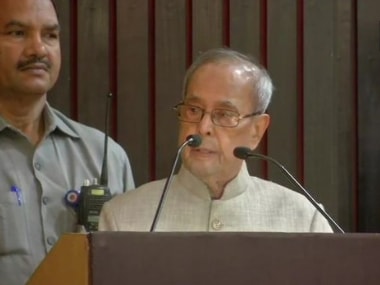
File image of Pranab Mukherjee. Twitter/@ANI[/caption]Mukherjee cited the example of environmental issues like climate change and how they are impacting the lives of people. "To my mind, no right is permanent but changes with the concept of socio-economic conditions. "Sixty-nine years ago when the Constitution was finalised by the constituent assembly, was environment a major issue then? It is no longer a subject to be decided by the policymakers and rulers because it is affecting the life of the people. If it affects the monsoon, raises sea levels, it affects the life of the people," he said. The book had been edited by Miranda House Principal Bijayalaxmi Nanda and professor Nupur Ray.The event was also attended by Veena Kukreja, Head of the Department of Political Science, DU, Manoranjan Mohanty, distinguished faculty of Council for Social Development, and Shashank Sinha, Publishing Director of Routledge which has come out with the book. Mohanty said the book talks of "diversity of rights and dilemmas of our times".Kukreja said the book is a compelling examination of the theoretical discourse on rights and its relationship with ideas, institutions, and practices in the Indian context. "By engaging with the crucial categories of class, caste, gender, region, and religion, it draws attention to the contradictions and contestations in the arena of rights and entitlements," she said.

Govt to set up fast-track courts for swift punishment in paper leak cases, says PM Modi amid CJP protests
Sikkim tunnel collapse rescue resumes, death toll rises to 22
Delhi Police asks personnel to wear uniform: What the law says on cops in plainclothes during protests
No premium queues, 30-minute target: What changes for Indian passport applicants in UAE
CJP Protest in Delhi Live Updates: PM Modi announces fast-track courts for NEET paper leak cases