
Advertisement


Sections
NCRB data shows long-drawn out trials and low conviction rates the norm; criminal justice system crying out for reform
Data from the recently released NCRB report shows a criminal justice system that is in serious need of repair.

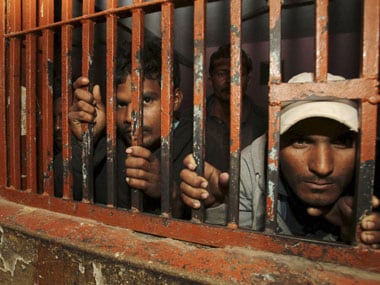 Representational image. PTI[/caption]One aspect which brings this to light in a particularly stark manner is the period for which trials remain pending. In many cases, trials remain pending for long periods of time even for relatively smaller offences. For example, let's take the examples of theft and criminal breach of trust, both of which carry a maximum punishment of three years.As many as 34.8 percent (2,97,624) of trials for theft have been pending for over five years, and 3.1 percent trials (26,919) have been pending for over ten years. The picture is even more grim when we consider the figures for criminal breach of trust. Under this section, 44.2 percent of trials (46,670) have remained pending for over three years, while 4.1 percent of trials (4,416) trials have remained pending for over ten years.It is important to note that this does not mean that the accused remain in jail throughout the period that the trial remains pending. However, over the years, undertrials have comprised a much larger share of inmates in India than convicts. Further, as per the NCRB's prison statistics, 26.1 percent of undertrials had been behind bars for over a year.Pending cases by Deven Kanal on Scribd
Vijay Raghavan, professor at the Centre for Criminology and Justice at the Tata Institute of Social Sciences, said, "The criminal justice system affects undertrials even when they are not in prison. Till the trial is on, there is a Sword of Damocles hanging over the heads of the accused. Some may lose their jobs, while others may want to hide the fact that there is a case against them. The accused have to repeatedly attend court hearings. In the cases of the poor, they sometimes fail to keep track of court dates, due to which non-bailable warrants are issued and they are re-arrested."Speaking of the burden of legal expenses on people accused of crime, Raghavan said, "Lawyers often charge a hefty amount per hearing, and this affects the financial condition of families. Legal aid lawyers are paid a pittance by the authorities, and they get their payment only when the trial is completed. So, many legal aid lawyers ask their clients for money (although the service is meant to be free of cost.)"A study by the National Law University, Delhi, on legal aid showed that as many as 89.3 percent judges said they did not prefer the involvement of legal aid lawyers in serious crimes such as murder, rape, culpable homicide not amounting to murder.The NCRB data also revealed that over half of the trials in the country end in the acquittal of the accused: he overall conviction rate at the end of 2017 was 48.8 percent. The conviction rates for theft and criminal breach of trust are lower than the average: at 36 percent and 23.6 percent respectively.The broad picture that emerges is as follows: Trials in criminal cases are likely to remain pending for a long time, the accused are likely to spend at least some time in jail without a court having pronounced them guilty, and there are strong chances that they will eventually be found innocent.Lawyer Ashish Goel listed out steps that can be taken to ensure speedy trials and to ensure that undertrials do not languish in jails unnecessarily. He said, "Timely examination of witnesses, relaxing conditions of bail, ensuring the presence of accused through video conferencing, fixing target dates for conclusion of trials, perhaps even releasing undertrials based on good behaviour (just like convicts) are some of the things that must be considered."Goel also spoke about how different components of the legal system can deny justice to those accused of crimes. He noted, "Undertrials are not produced in court for want of police escort. Jail officials do not usually (due to lack of training) release undertrials on personal bond. All of this severely undermines and tramples upon fundamental rights and raises tough questions of constitutional significance."He further noted, "The Indian criminal justice system is fundamentally flawed and has been crying for reform since ages. Numbers don’t lie and there is data to suggest that the non-convicts who are languishing in Indian prisons belong to marginalised communities (Muslims, SCs and STs) who do not have the resources to defend themselves."On the reasons for long-drawn trials, Goel said, "One reason that is often cited for high rates of pendency in courts is the lack of judges. However, in my experience, the bigger reason for this is that judges are too lenient when it comes to granting adjournments. Often, lawyers are not adequately prepared for hearings, and so they ask for repeated adjournments citing flimsy reasons. Due to this, trials remain pending for long periods of time."Nevertheless, a low jurist-to-population ratio certainly is a problem that plagues the justice system. According to a report submitted to the Union Department of Justice in January 2018, India had a judge to population ratio of 1:72,441.In comparison, developed countries such as Australia and Germany had ratios of 1:22,727 and 1:4,348 respectively. Even Malaysia, still considered a developing country, had a ratio of 1:41,667.
First Published:Nov 11, 2019, 20:35:13 IST
Advertisement
Advertisement

Sikkim tunnel collapse rescue resumes, death toll rises to 22
The death toll at the collapsed tunnel at Sikkim's Namchi district rose to 22 after nine more bodies were recovered overnight. At least 27 workers were trapped in a tunnel at an NHPC project after a sudden burst of suspected methane gas trapped within rock formations triggered an explosion.
2 min read
Delhi Police asks personnel to wear uniform: What the law says on cops in plainclothes during protests
The Delhi Police has instructed all its personnel to wear uniforms when they report for duty at Jantar Mantar for crowd control. This comes after outrage grew over videos of men in civilian clothes or without name tags hitting protesters in the Capital. Is it legal for the police to ditch uniforms during protests?
4 min read
No premium queues, 30-minute target: What changes for Indian passport applicants in UAE
Indian passport applicants in the UAE can now access passport, visa and attestation services through Alhind’s 16 centres, with no premium queues, a Dh19 service fee and a target of completing applications within 30 minutes
4 min read
CJP Protest in Delhi Live Updates: Delhi metro shuts 16 stations as protests continue in Jantar Mantar
CJP Protest in Delhi Live Updates: Heavy security has been deployed at the Jantar Mantar in Delhi, where the Cockroach Janta Party (CJP) is continuing its protest demanding the resignation of Union Education Minister Dharmendra Pradhan over the recent paper leaks controversy
1 min read
Bharat Forge, Flying Whales sign pact to develop 60-tonne airships for India’s defence logistics
Bharat Forge has signed an MoU with Flying Whales to jointly develop and manufacture 60-tonne heavy-lift airships in India for defence logistics, strategic mobility and disaster response
3 min read
Advertisement
Advertisement