


National Centre for Seismology says 29 Indian cities are highly vulnerable to earthquake
Twenty-nine Indian cities and towns, including Delhi and capitals of nine states, fall under "severe" to "very severe" seismic zones

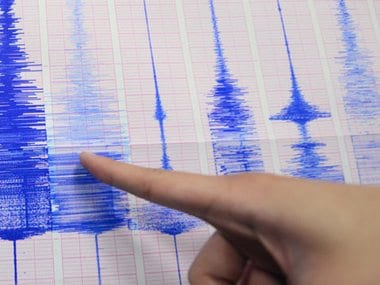
Representational image. Reuters[/caption]The Bureau of Indian Standards (BIS) has classified different regions in the country into zones II to V, taking into consideration earthquake records, tectonic activities and damage caused, the director of the NCS, Vineet Gauhlat, said.The NCS, which records earthquakes and carries out studies pertaining to microzonation of cities, comes under the India Meteorological Department (IMD).Seismic microzonation is the process of subdividing a region into smaller areas having different potential for hazardous earthquake effects.Zone II is considered the least seismically active, while Zone V is the most active. Zone IV and V fall under "severe" to "very severe" categories respectively.Zone V includes the entire northeastern region, parts of Jammu and Kashmir, Himachal Pradesh, Uttarkhand, the Rann of Kutch in Gujarat, parts of north Bihar and the Andaman and Nicobar archipelago.Parts of Jammu and Kashmir, Delhi, Sikkim, northern Uttar Pradesh, West Bengal, Gujarat and a small part of Maharashtra fall under Zone IV.Bhuj, which was struck by a massive earthquake in 2001 in which 20,000 people were killed, Chandigarh, Ambala, Amritsar, Ludhiana and Roorkee fall under zones IV and V.Kusala Rajendran, a professor at the Indian Institute of Science (IISc), Bengaluru, and an expert on paleoseismology, earthquake recurrence and active tectonics, said most of the cities in the list have a high population density and fall in the Indo-Gangetic plains."The Himalayan arc, stretching from the upper Assam region to Jammu and Kashmir, is known to be a high seismic zone and these cities in the Indo-Gangetic belt fall within reasonable limits of the Himalayas. So repercussions are bound to be felt there," she observed.M Rajeevan, Secretary, Ministry of Earth Sciences, said 31 new earthquake observatories will come up in the country by March 2018. At present, there are 84 observatories.This is being done to detect and record earthquake parameters more accurately and identify possible precursors of tremors.The NCS has also carried out microzonation of cities like Delhi and Kolkata to study the possible impact of earthquake in these mega cities.

CJP protest in Delhi: New videos of stone pelting, violence emerge as police, agitators trade charges
'From make in India to launch from India': Skyroot COO on why Vikram-1 could change India’s space sector
Choke terror funding, keep international shipping lanes safe: Jaishankar at Asean Regional Forum
PM Modi announces fast-track courts for paper leak cases; CJP responds ‘Dharmendra Pradhan must go’
Sikkim tunnel collapse rescue resumes, death toll rises to 22