


Nagaland declared 'disturbed area' for six more months under AFSPA, announces Union home ministry
The Home Ministry said the central government is of the opinion that the area comprising the whole state of Nagaland is in such a disturbed and dangerous condition that the use of armed forces in aid of civil power is necessary.

New Delhi: The entire state of Nagaland has been declared a "disturbed area" for six more months, till June-end, under the controversial AFSPA which empowers security forces to conduct operations anywhere and arrest anyone without any prior notice.In a notification, the Home Ministry said the central government is of the opinion that the area comprising the whole state of Nagaland is in such a disturbed and dangerous condition that the use of armed forces in aid of civil power is necessary.[caption id="attachment_7151921" align="alignleft" width="380"]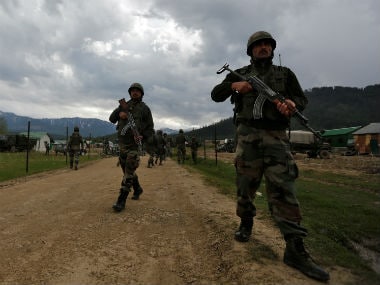 Representational image. Reuters[/caption]"Now, therefore, in exercise of the powers conferred by Section 3 of the Armed Forces (Special Powers) Act, 1958 (No. 28 of 1958), the central government hereby declares that whole of the said state to be a 'disturbed area' for a period of six months with effect from December 30, 2019 for the purpose of that Act," it said.A home ministry official said the decision to continue the declaration of Nagaland as "disturbed area" has been taken as killings, loot and extortion have been going on in various parts of the state which necessitated the action for the convenience of the security forces operating there.There have been demands from various organisations in the Northeast as well as in Jammu and Kashmir for repealing the controversial Armed Forces (Special Powers) Act (AFSPA), which, they say, gives "sweeping powers" to security forces.The AFSPA has been in force in Nagaland for decades. It has not been withdrawn even after a framework agreement was signed on 3 August, 2015 by Naga insurgent group NSCN-IM general secretary Thuingaleng Muivah and government interlocutor RN Ravi in presence of Prime Minister Narendra Modi.The framework agreement came after over 80 rounds of negotiations spanning 18 years with the first breakthrough in 1997 when the ceasefire agreement was sealed after decades of insurgency in Nagaland.

Govt to set up fast-track courts for swift punishment in paper leak cases, says PM Modi amid CJP protests
Sikkim tunnel collapse rescue resumes, death toll rises to 22
Delhi Police asks personnel to wear uniform: What the law says on cops in plainclothes during protests
No premium queues, 30-minute target: What changes for Indian passport applicants in UAE
CJP Protest in Delhi Live Updates: PM Modi announces announces fast-track courts for NEET paper leak cases