


Mumbai rains expose BMC's larger planning failings; local govt must step up to prevent annual flooding
While dealing with the Mumbai monsoon floods, shortcuts are futile and there must be long-term action.

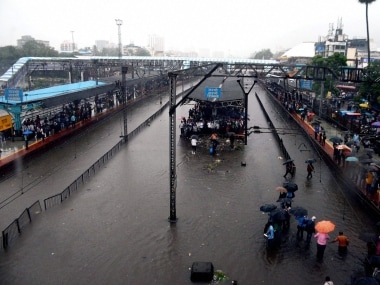
The monsoons drag India's financial capital to a standstill. PTI[/caption]Mhaske expressed his amazement at the sheer lack of action after the 2005 floods. He said that we have had 12 years to plan and implement policies to battle the monsoons but we have failed to do so.The answer according to him is to grow the city outward instead of piling more citizens in the same area. He says that providing more affordable housing towards the hinterland and linking it to the south part of the city with better public transport will ease the pressure on the fragile infrastructure. He recommends pushing both commercial and government activity to the north side of the city which will encourage citizens to move outwards as well.Micro-level actionsMhaske is hardly alone in being surprised by the lack of action after major floods. Atul Deulgaonkar, an independent journalist and author noted that after the Chennai floods, studies had found that cloudbursts (rainfall of over 100mm in an hour) would continue to happen. Thus humans will have to live with the weather conditions as they are and be prepared to face heavy rains from time to time.Deulgaonkar feels actions at the micro-level must take place to better combat the rains. He says that there are no shortcuts to blunt the monsoon's impact but cities must look at better water management and garbage disposal to solve these issues. In particular he mentions the fact that the storm water passes through the sewage pipelines which come under stress in the monsoon. This also leads to wastage of water. He says that the separation of the storm water pipes and sewage pipes should be taken up at the earliest.Lack of preparationTaking the example of Hurricane Harvey which has hit the US, Mhaske said that abundant public warnings and the presence of mitigation plans reduced the impact of the hurricane. The lack of the same in Mumbai is the reason why the city suffered so heavily despite the Indian Meteorological Department (IMD) issuing a warning days before the actual event.Deulgaonkar too flags the Texas example as one which showed planning. This led many lives being saved and weakened the impact of the hurricane.Ineffective leadershipThe lack of a leader was also acutely felt during the floods. No one from the BMC, the state government or the administration was seen as taking charge of the situation. Mhaske says that while the local government needs to take the lead, some blame also lies with the political leadership and its head, the chief minister.Deulgaonkar mentions the pre-monsoon meetings which take place between various stakeholders in the month of April. Representatives from the state administration, the Disaster Management Authority, the Railways, the Navy and Airport authority among others take part in this meeting. The idea is to come up with a collective disaster risk reduction plan to deal with the rains. However, a lack of political and administrative will means that these meeting rarely amount to much.Local government must step upThe good side of Mumbai was also visible in these tough times as non-state apparatus kicked into gear with corporates, ganesh pandals, gurudwaras, celebrities and common Mumbaikars offering help to those stranded away from home. Mhaske says there is a need to better integrate these actions with the government machinery. If the government could coordinate with these community centres then that could help the citizens to a much larger degree.Mhaske also insists that the local government must be made accountable to the people. He mentions the Principle of Subsidiarity which states that decisions must be taken at the most local level. Further, there is also a need for citizens to develop a better civic sense and take ownership of the city. They must get involved in the local government and ensure that the administrators are actually held responsible.There is also a dire need to reorient our priorities, or at least those of our leaders. A study by the Praja Foundation found that while storm water drainage was one of the leading causes of civic complaints by Mumbai citizens between 2014 to 2016, it only formed a minuscule portion (4.2 percent) of the questions asked by ward councillors at Ward Committee meetings. The highest number of questions were reserved for "Naming/Renaming of Roads/Chowks ".Better management of the monsoons is not unachievable. However as Deulgaonkar says, shortcuts are futile and there must be long-term action. Otherwise every year, the city will grind to a halt as the rain gods make merry.With inputs from PTIClick here for LIVE updates on the Mumbai rains
Utkarsh is a lawyer-turned-writer who writes on a wide variety of subjects including TV shows, books, football and law.

China has dominated Myanmar’s rare earth mines — now India eyes deal to harness country’s critical minerals
CJP protest in Delhi: New videos of stone pelting, violence emerge as police, agitators trade charges
'From make in India to launch from India': Skyroot COO on why Vikram-1 could change India’s space sector
Choke terror funding, keep international shipping lanes safe: Jaishankar at Asean Regional Forum
PM Modi announces fast-track courts for paper leak cases; CJP responds ‘Dharmendra Pradhan must go’