


Judicial appointments continue to vex Indian State: Constant disagreements, short tenures plague system
The problem of appointment of judges continues to vex the Indian State and its pillars of democracy.

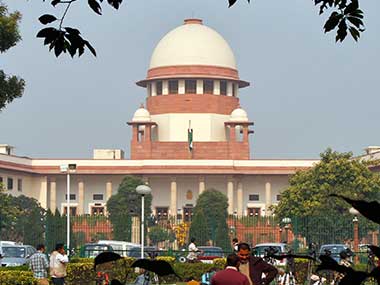
File image of the Supreme Court. Reuters[/caption]This additional factor always had the potential to create conflict and it fulfilled that potential recently. According to a report in The Indian Express, two days after the Collegium recommended the appointment of Punjab & Haryana High Court judge Surya Kant to the Chief Justiceship of the Himachal Pradesh High Court, Supreme Court judge Justice AK Goel sent a letter to Chief Justice Dipak Misra putting on record his “respectful disagreement with the proposal”. Justice Goel is the consultee judge in this case by virtue of having served in the Punjab and Haryana High Court.Justice Kant's appointment was against normal practice as he superseded his senior brother judge in the Punjab & Haryana High Court, Justice AK Mittal. This is not the first time Justice Goel sought to benefit Justice Mittal by his actions. In April 2017, when there was a proposal to appoint Justice Mittal as the Chief Justice of the Delhi High Court superseding Justice SS Saron, Justice Goel was in favour of the appointment even as two other consultee judges opposed it in writing, said the Indian Express report.Laughably short tenuresFinally, when the judiciary does manage to make its mind up over who to appoint, the retirement rules mean that some of the tenures end up being extraordinarily short. A recent example of this is apparent in Manipur and Meghalaya.The first woman Chief Justice of the Manipur High Court, Abhilasha Kumari, took oath on 9 February and will retire on 22 February, and Justice Tarun Agarwala, who took oath as the Chief Justice of Meghalaya High Court on 12 February, will end his term on 2 March, reported Hindustan Times. Both of them would have been in the top jobs for less than a month and their retirements will set off another round of judicial appointments which we have seen are not exactly straightforward.The report further adds that seven other high courts — Telangana and Andhra Pradesh, Calcutta, Chhattisgarh, Delhi, Himachal Pradesh, Bombay and Jharkhand — are currently without chief justices.With the enormous backlog of cases in the judicial system, these incidents only serve to cause further dismay in litigants. As Firspost wrote earlier, the concept of seniority and regional representation in how the Supreme Court is constituted may require a re-look. It may not make sense to have Supreme Court judges who have very short tenures before retirement. It may be good to have younger judges who will be able to spend a longer time at the Supreme Court. This will help the court to fulfil its role in settling substantial questions of law and will also help it to clear the backlog of cases, as the judges will be on the bench longer and therefore will be able to hear more cases.

Delhi Police asks personnel to wear uniform: What the law says on cops in plainclothes during protests
No premium queues, 30-minute target: What changes for Indian passport applicants in UAE
CJP Protest in Delhi Live Updates: Delhi metro shuts 16 stations as protests continue in Jantar Mantar
Bharat Forge, Flying Whales sign pact to develop 60-tonne airships for India’s defence logistics
Air India to cut Delhi-Toronto flight time by 3 hours, resume non-stop services from August 1