


JP Nadda introduces Bill allowing Ayurvedic doctors, homeopaths to practice allopathy after clearing bridge course
Doctors pursuing Indian systems of medicine, including Ayurveda, and homeopathy may be allowed to practice allopathy after clearing a bridge course

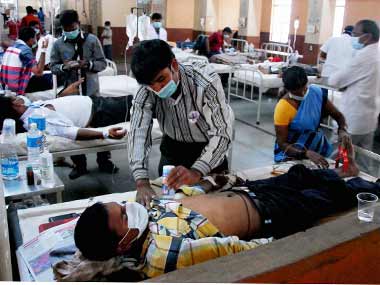
Representational image. PTI[/caption]It has also proposed that specific educational modules or programmes for developing bridges across the various systems of medicine and promotion of medical pluralism, can be done with the approval of all the members present in the joint sitting."The joint sitting, may, by an affirmative vote of all members present and voting, decide on approving specific bridge course that may be introduced for the practitioners of homeopathy and of Indian Systems of Medicine to enable them to prescribe such modern medicine at such level as may be prescribed," according to the Bill.It provides for the constitution of four autonomous boards entrusted with conducting undergraduate and postgraduate education, assessment and rating of medical institutions and registration of practitioners under the National Medical Commission.The commission will have a government-nominated chairman and members, and the board members will be selected by a search committee under the Cabinet Secretary, it says.A 25-member commission will replace the elected MCI, the Bill says.The proposed measure has been strongly opposed by the Indian Medical Association (IMA) which claimed that it will "cripple" the functioning of medical profession by making it completely answerable to the bureaucracy and non-medical administrators."Regulators need to have an autonomy and be independent of the administrators. The National Medical Commission will be a regulator appointed by the administrators under their direct control," IMA's president KK Aggarwal said.The Bill also proposes a common entrance exam and licentiate (exit) exam which all medical graduates will have to clear to get practicing licences. The licentiate (exit) examination will have to be coducted within three years after Parliament passes it.A medical advisory council, including one member representing each state and Union territory (vice-chancellors in both cases), the chairman, University Grants Commission, and the director of the National Accreditation and Assessment Council will make recommendations to the NMC.No permission would be needed to add new seats or to start post-graduate courses, it says.The Bill is aimed at bringing reforms in the medical education sector which has been under scrutiny for corruption and unethical practices, a senior health ministry official said.

Govt to set up fast-track courts for swift punishment in paper leak cases, says PM Modi amid CJP protests
Sikkim tunnel collapse rescue resumes, death toll rises to 22
Delhi Police asks personnel to wear uniform: What the law says on cops in plainclothes during protests
No premium queues, 30-minute target: What changes for Indian passport applicants in UAE
CJP Protest in Delhi Live Updates: PM Modi announces announces fast-track courts for NEET paper leak cases