


Intolerance debate: What Chief Justice Thakur said, and how the media interpreted him
Chief Justice of India TS Thakur, on Sunday weighed in on the debate over intolerance that has generated huge amount of heat and attention of late.

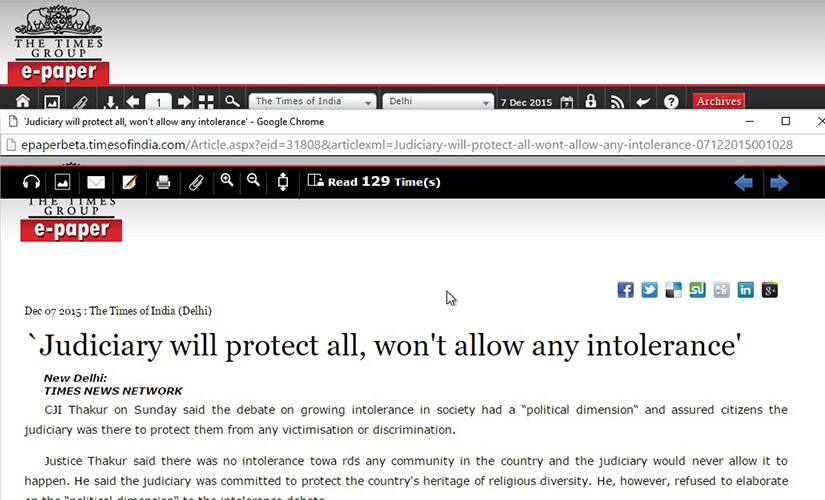
By Sreemoy TalukdarChief Justice of India TS Thakur, on Sunday weighed in on the debate over intolerance that has generated huge amount of heat and attention of late.Let's look at what he actually said.While talking to journalists at his residence two days after assuming office as the 43rd Chief Justice of India, Thakur said: "Yeh siyasi pahlu hain (this is a political issue). We have a rule of law. So long as rule of law is there, so long as there is an independent judiciary and so long as courts are upholding the rights and obligations, I do not think anyone has to fear for anything."On the political aspect of the debate, the CJI said: "Siyasi log iska kaise upyog karten hain aur kaise fayada uthayenge, main kuchch nahin kehna chahunga (I do not want to say anything on how politicians use this and try to take advantage of it), but we are committed to uphold the rule of law and protect the rights of all citizens."He further said, "India is a big country, we should not be afraid of anything. Yeh sab perception ki batein hain. Jab tak judiciary independent hai,koi baat ki dar nahi honi chahiye (These are all matters of perception. There is nothing to fear till the judiciary is independent).""We are committed to uphold the Rule of Law and protect right of all citizens of the society and people from all creeds and religions. There is no fear to any section of society," Chief Justice Thakur added.This was a clear, authoritative, unequivocal statement from Indian judiciary's highest chair. The CJI has taken a stand, reinforced faith in India's democratic institutions and allayed fear of its citizens. Let's now take a look at how the media chose to interpret the CJI's statement.The following are the headlines from some English language newspapers in India and some websites who reported on the event:The Indian Express, which was at the forefront of the 'intolerance' debate, carried this headline in its Delhi edition: "Tolerance must…no need to fear as long as judiciary is there: new CJI"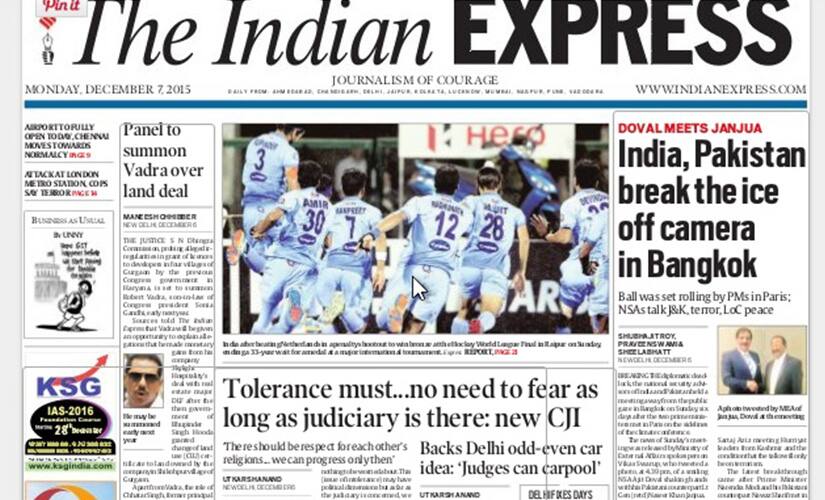 The Times of India's Delhi edition carried this headline: 'Judiciary will protect all, won't allow any intolerance'
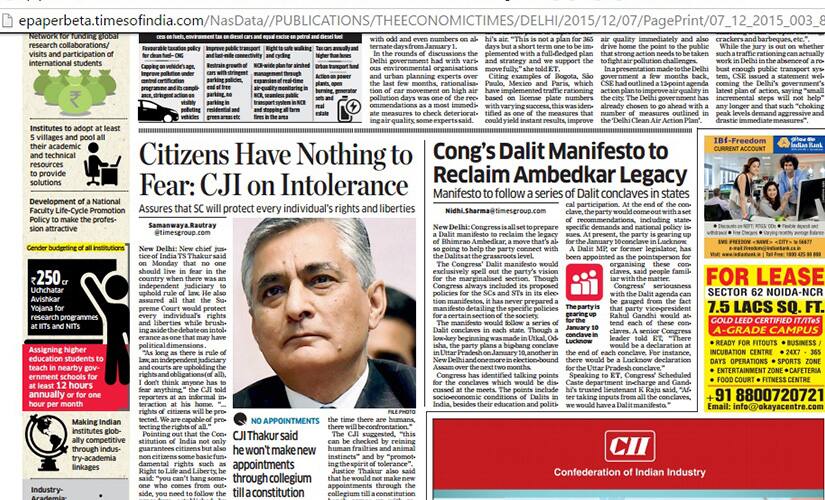
 The Economic Times, which carried the article on Page 3 in its Delhi edition, wrote this: Citizens Have Nothing To Fear: CJI On Intolerance"
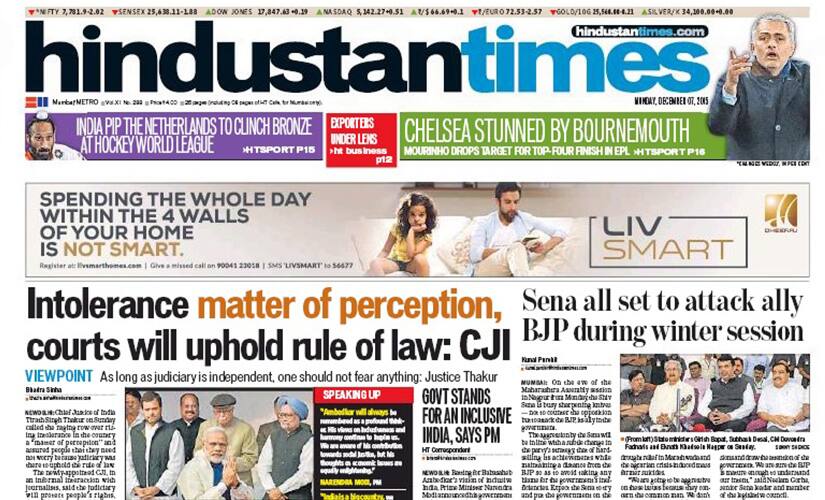
 The Hindustan Times, in its Mumbai edition, carried this hedaline: "Intolerance matter of perception, courts will uphold rule of law: CJI"
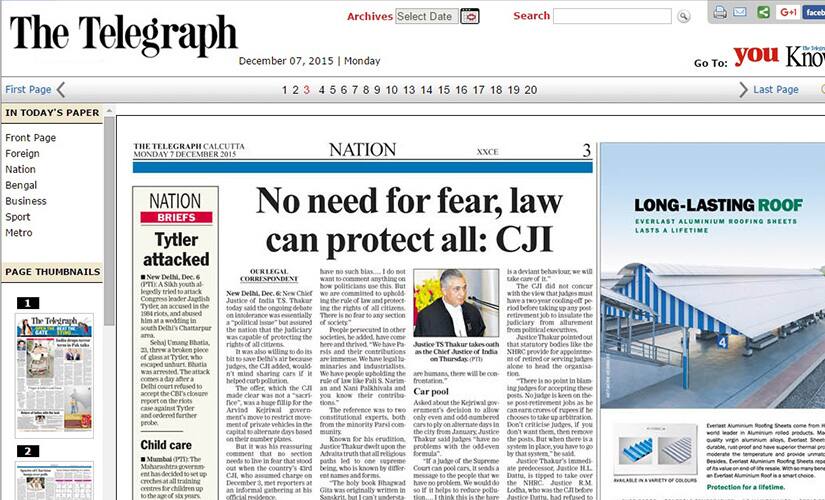
 The Telegraph, which has so far given the intolerance debate wide, front-page coverage, chose this time to take the article in an inside page. It did, however, carry the news in brief on Page 1. Here's the headline of its Calcutta edition: "No need for fear, law can protect all: CJI"
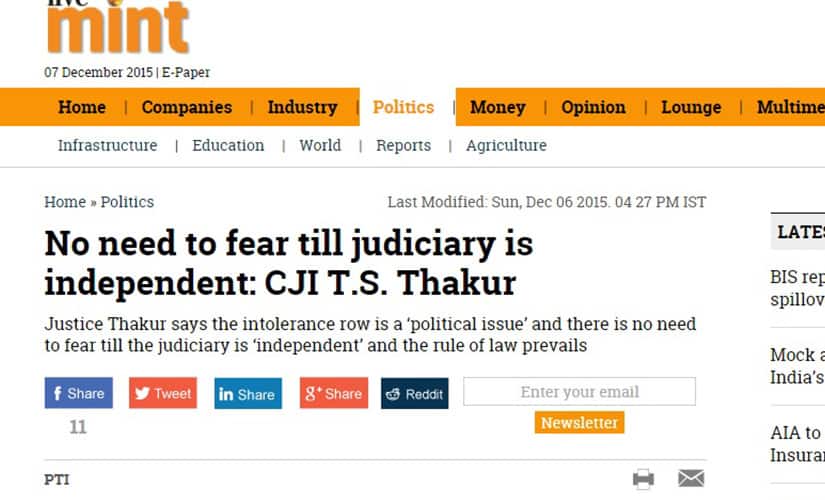
 Let's now look at the internet.Livemint carried this headline: "No need to fear till judiciary is independent: CJI T.S. Thakur"
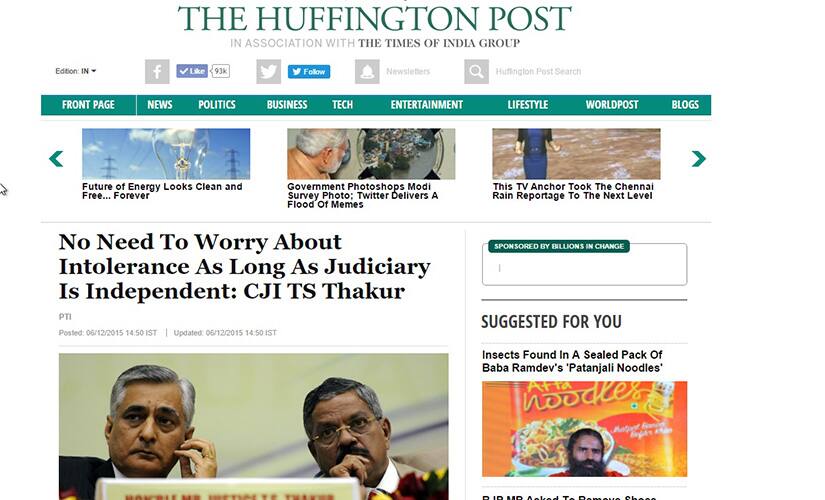
 Here's the headline of Huffington Post India: "No Need To Worry About Intolerance As Long As Judiciary In Independent: CJI TS Thakur"
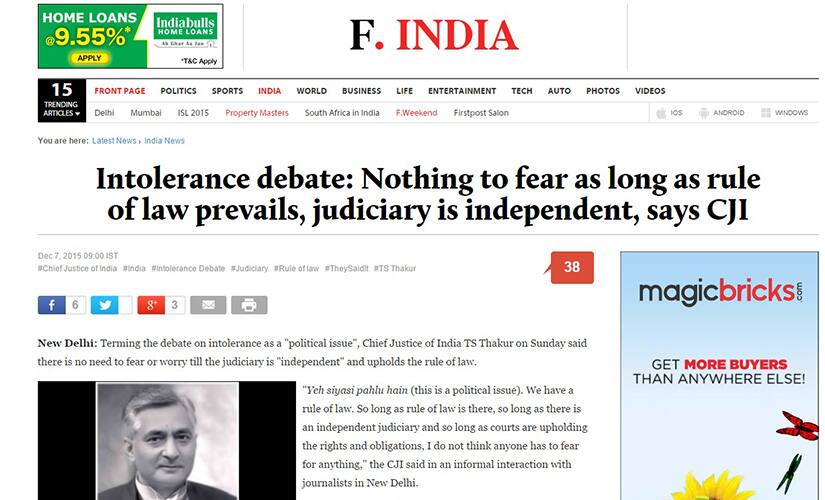
 Closer to home, Firstpost carried this headline: "Intolerance debate: Nothing to fear as long as rule of law prevails, judiciary is independent, say CJI"
 Interestingly, the headlines of these influential and widely-followed newspapers and websites seemed to have completely overlooked the CJI's suggestion that there is a political angle to the 'intolerance' debate.One may wonder why bother about headlines when the accompanying article clearly reports the Chief Justice's full statements.Yes, they do. But let's first understand that there's a reason why headlines, are, well, headlines.They not only create first impressions, more importantly, they can change the way people read an article and even the way they remember it. They draw attention to a particular point that is more likely to stay with the reader. If a headline is even slightly misleading, it may create a false perception. And the importance of perception in a narrative can never be overstated. The crux of Chief Justice TS Thakur's statement is that there is no intolerance in India and that the issue has clear political dimensions.While he didn't spell it out in as many words, the careful choice of letters leave little doubt over what the Chief Justice was hinting at. "Siyasi log iska kaise upyog karten hain aur kaise fayada uthayenge, main kuchch nahin kehna chahunga (I do not want to say anything on how politicians use this and try to take advantage of it)."By choosing to downplay this aspect of Chief Justice Thakur's statement and through clever semantics, creating the impression that the Indian judiciary's highest chair was tacitly admitting the presence of an intolerant atmosphere in India, the media has opened itself up to criticism that it is seeking to reinforce a certain narrative.In sum, the charge aginst the media is not one of inaccuracy, but subtle shifts in headline-making that encourages readers to draw inaccurate inferences.

Govt to set up fast-track courts for swift punishment in paper leak cases, says PM Modi amid CJP protests
Sikkim tunnel collapse rescue resumes, death toll rises to 22
Delhi Police asks personnel to wear uniform: What the law says on cops in plainclothes during protests
No premium queues, 30-minute target: What changes for Indian passport applicants in UAE
CJP Protest in Delhi Live Updates: PM Modi announces fast-track courts for NEET paper leak cases