
Advertisement


Sections
Indigenous and local communities are key players in preventing the sixth mass extinction
Local communities are an important part of preserve the country’s natural, ecological diversity.

The Intergovernmental Science-Policy Platform on Biodiversity and Ecosystem Services’ (IPBES) warned on 7 May of one million species at the risk of going extinct at least in part due to humankind's activities. The report's findings were carefully examined and negotiated by representatives of 132 governments before it was finalised and approved.The landmark report is a cumulation of nearly 15,000 studies, government reports as well as reports from indigenous and local communities. It is also the first appraisal of the earth's biodiversity of global scale since 2005, and shows alarming statistics about species loss alongside strategies to overcome them. It's grim stuff.That said, coordinating lead author of the IPBES report from India, Suneetha Subramanian, expressed hope. The global assessment report on biodiversity and ecosystem services, which was released on 6 May, said human actions threaten more species with global extinction now than ever before."An average of around 25 percent of species in the assessed animal and plant groups are threatened, suggesting that around 1 million species already face extinction — many within decades — unless action is taken to reduce the intensity of drivers of biodiversity loss," read the report. The document makes no bones in blaming humans for the catastrophic loss in biodiversity — especially in the last 50 years, which has been unprecedented in human history.[caption id="attachment_5649171" align="alignnone" width="1280"]![Rice harvest put to dry before seeds are preserved. Image credit: Seed Freedom]() Rice harvest put to dry before seeds are preserved. Image credit: Seed Freedom[/caption]It associates the loss of species to five key reasons. The direct drivers of changes in nature with the largest global impact change, according to the report, have been:
Rice harvest put to dry before seeds are preserved. Image credit: Seed Freedom[/caption]It associates the loss of species to five key reasons. The direct drivers of changes in nature with the largest global impact change, according to the report, have been:![A migration of wildebeest in the Serengeti National Park, Tanzania. Wildebeest are among the most cautious animals in the moonlit grasslands – choreographing their movements to match the available moonlight and minimize their risk of attack by their predators, the African lion. Image: Wikimedia Commons]() A migration of wildebeest in the Serengeti National Park, Tanzania. Wildebeest are among the most cautious animals in the moonlit grasslands – choreographing their movements to match the available moonlight and minimize their risk of attack by their predators, the African lion. Image: Wikimedia Commons[/caption]Instead of giving local communities a bigger voice in the country’s development paradigm, the Supreme Court on 13 February put out an order that threatened to evict more than a million forest dwellers. The order has, however, been put on hold till 10 July. In India, the law requires local communities to be only consulted, and not consented, said experts. According to the IPBES report, nature is generally declining less rapidly in regions where the indigenous people live."Indigenous peoples and local communities are facing growing resource extraction, commodity production, along with mining, transport and energy infrastructure, with dire impacts on livelihoods and health," the report concluded. There are some 300 million indigenous people living in undisturbed natural areas, and another 600 million in local communities 'striding the natural and built words'.Experts working on forest rights in India criticise both the IPBES report and the country’s government of diluting forest rights as purely money-driven, policies that are driven by economics and not conservation. "One major flaw I see with the IPBES report is that while it talks about the economic impact of biodiversity loss, it hardly does go into the root causes of the loss. Economic growth based models of development that are even pushed by SDGs (Sustainable Development Goals) continue to rely on a linear path of modernity in which everyone has to become consumeristic to keep the economy afloat. Without a fundamental shift from this thinking, there is no hope for humanity being able to make peace with the earth," said Ashish Kothari who is a member of Kalpavriksh — an environmental NGO based in Pune. Kothari was also involved in the drafting of the Biological Diversity Act, the National Wildlife Action Plan (2000) and also coordinated India's National Biodiversity Strategy and Action Plan (NBSAP) process.[caption id="attachment_6301801" align="alignnone" width="1280"]
A migration of wildebeest in the Serengeti National Park, Tanzania. Wildebeest are among the most cautious animals in the moonlit grasslands – choreographing their movements to match the available moonlight and minimize their risk of attack by their predators, the African lion. Image: Wikimedia Commons[/caption]Instead of giving local communities a bigger voice in the country’s development paradigm, the Supreme Court on 13 February put out an order that threatened to evict more than a million forest dwellers. The order has, however, been put on hold till 10 July. In India, the law requires local communities to be only consulted, and not consented, said experts. According to the IPBES report, nature is generally declining less rapidly in regions where the indigenous people live."Indigenous peoples and local communities are facing growing resource extraction, commodity production, along with mining, transport and energy infrastructure, with dire impacts on livelihoods and health," the report concluded. There are some 300 million indigenous people living in undisturbed natural areas, and another 600 million in local communities 'striding the natural and built words'.Experts working on forest rights in India criticise both the IPBES report and the country’s government of diluting forest rights as purely money-driven, policies that are driven by economics and not conservation. "One major flaw I see with the IPBES report is that while it talks about the economic impact of biodiversity loss, it hardly does go into the root causes of the loss. Economic growth based models of development that are even pushed by SDGs (Sustainable Development Goals) continue to rely on a linear path of modernity in which everyone has to become consumeristic to keep the economy afloat. Without a fundamental shift from this thinking, there is no hope for humanity being able to make peace with the earth," said Ashish Kothari who is a member of Kalpavriksh — an environmental NGO based in Pune. Kothari was also involved in the drafting of the Biological Diversity Act, the National Wildlife Action Plan (2000) and also coordinated India's National Biodiversity Strategy and Action Plan (NBSAP) process.[caption id="attachment_6301801" align="alignnone" width="1280"]![Bush Vipers are a class of snakes found only in tropical subsaharan Africa. Many species have isolated and fragmented distributions since they are confined only to rain forests. Image courtesy: WWF]() Bush vipers are a class of snakes found only in tropical subsaharan Africa. Many species have isolated and fragmented distributions since they are confined only to rain forests. Image courtesy: WWF[/caption]On 24 April, the National Biodiversity Authority put out draft guidelines on Access to Biological Resources (ABS) and Associated Knowledge and Equitable Sharing of Benefits, Regulations, and invited comments and responses from the public. The draft is in pursuance of the Nagoya Protocol, which is a global signatory of over 100 countries on access to genetic resources and the fair and equitable sharing of benefits arising from their utilization to the Convention on Biological Diversity. The protocol prescribes to free prior and informed consent (FPIC)."In the biodiversity regime, FPIC is conspicuous by its absence. Question is if the new ABS guidelines address that gap, even though they claim to be issued in 'pursuance of the Nagoya Protocol'. However, the Biodiversity Act, only deals with issues around access to biological resources and related people's knowledge," said independent legal researcher Shalini Bhutani.Another researcher from the Centre For Policy Research, a public policy think tank, agreed. "The guidelines put out by the NBA envisages a very myopic outlook towards conservation of biodiversity. It does not go beyond sharing of economic benefits," said Kanchi Kohli. "There are other benefits that can be given to local communities; like access to government gene banks or involving them in the conservation of certain species. These guidelines have missed the opportunity to make conservation holistic," she added.
Bush vipers are a class of snakes found only in tropical subsaharan Africa. Many species have isolated and fragmented distributions since they are confined only to rain forests. Image courtesy: WWF[/caption]On 24 April, the National Biodiversity Authority put out draft guidelines on Access to Biological Resources (ABS) and Associated Knowledge and Equitable Sharing of Benefits, Regulations, and invited comments and responses from the public. The draft is in pursuance of the Nagoya Protocol, which is a global signatory of over 100 countries on access to genetic resources and the fair and equitable sharing of benefits arising from their utilization to the Convention on Biological Diversity. The protocol prescribes to free prior and informed consent (FPIC)."In the biodiversity regime, FPIC is conspicuous by its absence. Question is if the new ABS guidelines address that gap, even though they claim to be issued in 'pursuance of the Nagoya Protocol'. However, the Biodiversity Act, only deals with issues around access to biological resources and related people's knowledge," said independent legal researcher Shalini Bhutani.Another researcher from the Centre For Policy Research, a public policy think tank, agreed. "The guidelines put out by the NBA envisages a very myopic outlook towards conservation of biodiversity. It does not go beyond sharing of economic benefits," said Kanchi Kohli. "There are other benefits that can be given to local communities; like access to government gene banks or involving them in the conservation of certain species. These guidelines have missed the opportunity to make conservation holistic," she added.
 Rice harvest put to dry before seeds are preserved. Image credit: Seed Freedom[/caption]It associates the loss of species to five key reasons. The direct drivers of changes in nature with the largest global impact change, according to the report, have been:
- changes in land and sea use
- direct exploitation of organisms
- climate change
- pollution
- invasion of alien species
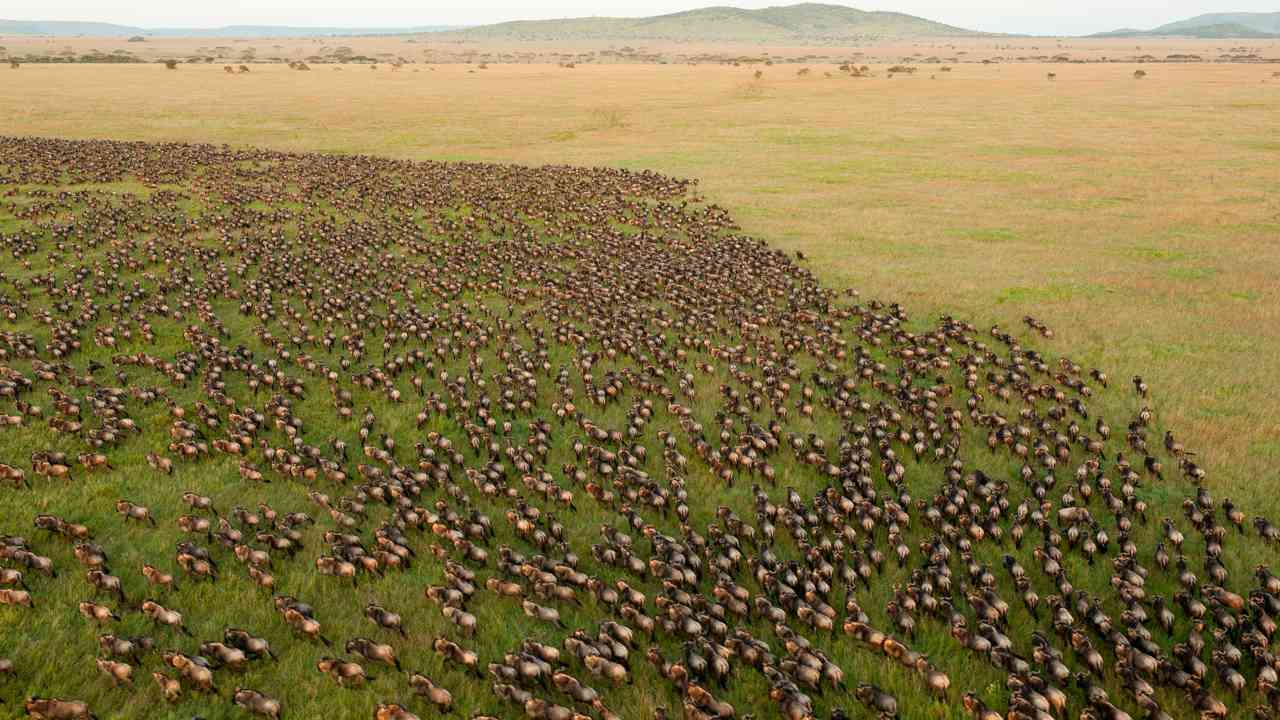 A migration of wildebeest in the Serengeti National Park, Tanzania. Wildebeest are among the most cautious animals in the moonlit grasslands – choreographing their movements to match the available moonlight and minimize their risk of attack by their predators, the African lion. Image: Wikimedia Commons[/caption]Instead of giving local communities a bigger voice in the country’s development paradigm, the Supreme Court on 13 February put out an order that threatened to evict more than a million forest dwellers. The order has, however, been put on hold till 10 July. In India, the law requires local communities to be only consulted, and not consented, said experts. According to the IPBES report, nature is generally declining less rapidly in regions where the indigenous people live."Indigenous peoples and local communities are facing growing resource extraction, commodity production, along with mining, transport and energy infrastructure, with dire impacts on livelihoods and health," the report concluded. There are some 300 million indigenous people living in undisturbed natural areas, and another 600 million in local communities 'striding the natural and built words'.Experts working on forest rights in India criticise both the IPBES report and the country’s government of diluting forest rights as purely money-driven, policies that are driven by economics and not conservation. "One major flaw I see with the IPBES report is that while it talks about the economic impact of biodiversity loss, it hardly does go into the root causes of the loss. Economic growth based models of development that are even pushed by SDGs (Sustainable Development Goals) continue to rely on a linear path of modernity in which everyone has to become consumeristic to keep the economy afloat. Without a fundamental shift from this thinking, there is no hope for humanity being able to make peace with the earth," said Ashish Kothari who is a member of Kalpavriksh — an environmental NGO based in Pune. Kothari was also involved in the drafting of the Biological Diversity Act, the National Wildlife Action Plan (2000) and also coordinated India's National Biodiversity Strategy and Action Plan (NBSAP) process.[caption id="attachment_6301801" align="alignnone" width="1280"]
 Bush vipers are a class of snakes found only in tropical subsaharan Africa. Many species have isolated and fragmented distributions since they are confined only to rain forests. Image courtesy: WWF[/caption]On 24 April, the National Biodiversity Authority put out draft guidelines on Access to Biological Resources (ABS) and Associated Knowledge and Equitable Sharing of Benefits, Regulations, and invited comments and responses from the public. The draft is in pursuance of the Nagoya Protocol, which is a global signatory of over 100 countries on access to genetic resources and the fair and equitable sharing of benefits arising from their utilization to the Convention on Biological Diversity. The protocol prescribes to free prior and informed consent (FPIC)."In the biodiversity regime, FPIC is conspicuous by its absence. Question is if the new ABS guidelines address that gap, even though they claim to be issued in 'pursuance of the Nagoya Protocol'. However, the Biodiversity Act, only deals with issues around access to biological resources and related people's knowledge," said independent legal researcher Shalini Bhutani.Another researcher from the Centre For Policy Research, a public policy think tank, agreed. "The guidelines put out by the NBA envisages a very myopic outlook towards conservation of biodiversity. It does not go beyond sharing of economic benefits," said Kanchi Kohli. "There are other benefits that can be given to local communities; like access to government gene banks or involving them in the conservation of certain species. These guidelines have missed the opportunity to make conservation holistic," she added.
First Published:May 08, 2019, 18:37:13 IST
Advertisement
Advertisement

CJP protest in Delhi: New videos of stone pelting, violence emerge as police, agitators trade charges
Fresh videos of violence that broke out during the Cockroach Janta Party's (CJP) protest in Delhi have surfaced, with the police releasing footage showing alleged stone pelting, vandalism and attacks on security personnel
3 min read
'From make in India to launch from India': Skyroot COO on why Vikram-1 could change India’s space sector
Skyroot Aerospace’s successful Vikram-1 mission marks a major milestone for India’s private space sector, as the country seeks to shift from “Make in India” to “Launch from India” and compete in the global commercial satellite launch market
8 min read
Choke terror funding, keep international shipping lanes safe: Jaishankar at Asean Regional Forum
Jaishankar's remarks came against the backdrop of recent terror attacks targeting India and growing threats to commercial shipping amid conflicts in West Asia and Europe
2 min read
PM Modi announces fast-track courts for paper leak cases; CJP responds ‘Dharmendra Pradhan must go’
Amid protests demanding accountability for the leak of medical entrance test Neet and other irregularities in the education system, Prime Minister Narendra Modi has announced that the government has decided to set up fast-track courts to ensure swift and stringent punishment for those involved in paper leaks.
3 min read
Sikkim tunnel collapse rescue resumes, death toll rises to 22
The death toll at the collapsed tunnel at Sikkim's Namchi district rose to 22 after nine more bodies were recovered overnight. At least 27 workers were trapped in a tunnel at an NHPC project after a sudden burst of suspected methane gas trapped within rock formations triggered an explosion.
2 min read
Advertisement
Advertisement