


India's defence needs political substance
The suggestion that we isolate defence and security issues from the rough and tumble of politics illustrates the complete disconnect between the establishment and the defence needs of a mature democracy

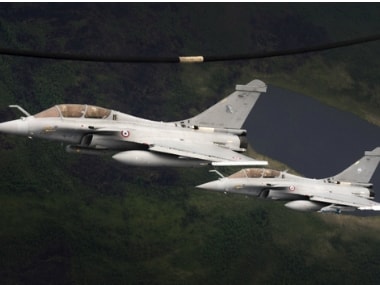
Representational image. Reuters[/caption]A multi-domain structureWhen was the last time we heard a serious debate in Parliament on the challenges that China poses or on the resolution of the impasse between India and Pakistan on the Line of Control? Or, on what ails our defence manufacturing and innovation industry or reverse engineering capability?As global interest in India’s security challenges grow, ideas on streamlining and restructuring organs of national security should be discussed seriously. However, introspection by leading political parties, looking at matters of security as a national mission, and not point-scoring, has been conspicuous by its absence.On paper, there are already structures in place to enable multi-domain discussions, involving practitioners, technocrats, academics and information specialists—for example, the National Security Council, its associated secretariat and the National Security Advisory Board (NSAB).However, they operate suboptimally because of the reluctance of a powerful bureaucracy and a comfortably cocooned military to open the management and direction of ‘defense and security’—to make it inclusive and knowledge-centric rather than power-centric and obsessively secretive.Body blow to synergyFor these reasons, I find arguments for delinking defence and security from politics as regressive and unmindful of the complicated geopolitical and security environment we live in. The current system enables the creation of fiefs designed for pursuit of power rather than synergy and interoperability.These fiefs will come in the way of efforts to improve integration within the defence ministry and the three services -- army, navy, and air force. They will also stall progress in creating synergies between intelligence agencies and the structures associated with external and internal security.Parliament and defenceMy prognosis involves clearing the cobwebs that have ensnared acquisition of platforms and weapon systems, the creation of a vibrant indigenous defence manufacturing ecosystem, restructuring of higher defence organisation and improving coordination between various stakeholders of national security.It is my belief that the next step that India needs to take to punch its weight in the international arena—after alleviating poverty and raising its Human Development Index—is to usher in a bipartisan political approach to national security that embraces intellectual capital and conveys intent and consistency.Once that happens, India will be on track to emerge as a leading power and not merely a power with promise and potential.That Rafale has become a tool for political skulduggery reflects the lack of substance within the current political debate ahead of the general election. But, it also underlines the need for a bipartisan approach on defence and security matters.The author is a retired air vice-marshal, a military historian and a strategic commentator

CJP protest in Delhi: New videos of stone pelting, violence emerge as police, agitators trade charges
'From make in India to launch from India': Skyroot COO on why Vikram-1 could change India’s space sector
Choke terror funding, keep international shipping lanes safe: Jaishankar at Asean Regional Forum
PM Modi announces fast-track courts for paper leak cases; CJP responds ‘Dharmendra Pradhan must go’
Sikkim tunnel collapse rescue resumes, death toll rises to 22