
Advertisement


Sections
India's A-SAT programme born in response to China's growing space capabilities: Understanding Mission Shakti
New Delhi's A-SAT programme was born in response to China’s growing capabilities — in turn, driven by that country’s efforts to counter the United States’ supremacy in space. In essence, China sought to show it could cripple the satellite networks on which the United States’ military command-and-control capabilities rest.

For decades now, it's been clear the next war between the great powers — should such an apocalypse ever dawn — will be fought not only on land, sea and air. Last year's Worldwide Threat Assessment, released by the United States' Director of National Intelligence, assessed that if "a future conflict were to occur involving Russia or China, either country would justify attacks against US and allied satellites as necessary to offset any perceived US military advantage derived from military, civil or commercial space systems".In essence, militaries — increasingly depended on satellites for intelligence, communications, and targeting — will seek to blind the other side by destroying their capabilities in space.The anti-satellite weapons India successfully tested on 27 March are one key element of such a capability — along with a spectrum of other capabilities, ranging from "killer satellites" which can intercept platforms of adversaries, to ground-based lasers to blind them.A-SAT technology isn't particularly new. As early as 1959, the United States' SAINT project envisaged using a satellite equipped with a nuclear bomb to destroy Soviet satellites. And, from the late 1960s, both the Soviets and the United States developed non-nuclear A-SATs. From 2015, Russia has tested a new generation of land-based A-SATs, known as the PL-19 Nudol.Now, India’s joined that élite league.Chinese Challenge[caption id="attachment_6336971" align="alignnone" width="1277"]![YouTube grab of an A-SAT]() YouTube grab of an A-SAT[/caption]New Delhi's A-SAT programme was born in response to China’s growing capabilities — in turn, driven by that country’s efforts to counter the United States’ supremacy in space. In essence, China sought to show it could cripple the satellite networks on which the United States’ military command-and-control capabilities rest.In 2007, Beijing had demonstrated its ability to destroy enemy satellites, when it launched a Hongqi 19 missile, with a Kaituozhe1 rocket booster, to destroy redundant Feng Yun 1-C weather satellite in Low Earth Orbit, approximately 800 kilometers above the Earth.The People’s Republic continued to develop its A-SAT weapons — first testing the Dong Neng-2 interceptor missile in May, 2013, and following up in 2013, 2014 and 2015. The latest test, of the Dong Neng-3 missile was in February, 2018.India's ResponseFollowing China’s 2007 tests, Indian military officials began to seriously consider the need to acquire similar capabilities. That year, the then army chief General Deepak Kapoor said space was the "ultimate military high ground", needing domination in future wars.Integrated Defense Staff chief Lieutenant-General HS Lidder also weighed in, saying, "inevitably there will be a military contest in space". He predicted that "with time, we will get sucked into the military race to protect space assets".Five years later, in 2012, Defense Research and Development Organisation chief VK Saraswat claimed that India had all the building blocks in place to integrate an anti-satellite weapon to destroy hostile satellites in low earth and polar orbits.[caption id="attachment_6337061" align="alignleft" width="380"]
YouTube grab of an A-SAT[/caption]New Delhi's A-SAT programme was born in response to China’s growing capabilities — in turn, driven by that country’s efforts to counter the United States’ supremacy in space. In essence, China sought to show it could cripple the satellite networks on which the United States’ military command-and-control capabilities rest.In 2007, Beijing had demonstrated its ability to destroy enemy satellites, when it launched a Hongqi 19 missile, with a Kaituozhe1 rocket booster, to destroy redundant Feng Yun 1-C weather satellite in Low Earth Orbit, approximately 800 kilometers above the Earth.The People’s Republic continued to develop its A-SAT weapons — first testing the Dong Neng-2 interceptor missile in May, 2013, and following up in 2013, 2014 and 2015. The latest test, of the Dong Neng-3 missile was in February, 2018.India's ResponseFollowing China’s 2007 tests, Indian military officials began to seriously consider the need to acquire similar capabilities. That year, the then army chief General Deepak Kapoor said space was the "ultimate military high ground", needing domination in future wars.Integrated Defense Staff chief Lieutenant-General HS Lidder also weighed in, saying, "inevitably there will be a military contest in space". He predicted that "with time, we will get sucked into the military race to protect space assets".Five years later, in 2012, Defense Research and Development Organisation chief VK Saraswat claimed that India had all the building blocks in place to integrate an anti-satellite weapon to destroy hostile satellites in low earth and polar orbits.[caption id="attachment_6337061" align="alignleft" width="380"]![Prime Minister Narendra Modi announced that India conducted A-SAT test and shot down low Earth orbit satellite.]() Prime Minister Narendra Modi announced that India conducted A-SAT test and shot down low Earth orbit satellite.[/caption]His claim, however, was greeted with some scepticism by international experts, who questioned whether India in fact had the elements needed for a successful A-SAT, like space-based sensors, synthetic aperture radars, guidance and control systems, and global positioning systems. In the time since then, India has succeeded in acquiring the technologies it needs — though, if the Chinese experience is a guide, some years of further testing will be needed to ensure the system's combat reliability.The FalloutIn the event of China and India waging a full-scale war, A-SAT capability will be critical: both countries will seek to knock out the others’ communications systems, their ability to conduct reconnaissance, and to accurately hit targets. The capability is therefore valuable, though, judging by the fact that the National Democratic Alliance has steadily squeezed defence budgets, war isn’t a prospect the government thinks is likely.
Prime Minister Narendra Modi announced that India conducted A-SAT test and shot down low Earth orbit satellite.[/caption]His claim, however, was greeted with some scepticism by international experts, who questioned whether India in fact had the elements needed for a successful A-SAT, like space-based sensors, synthetic aperture radars, guidance and control systems, and global positioning systems. In the time since then, India has succeeded in acquiring the technologies it needs — though, if the Chinese experience is a guide, some years of further testing will be needed to ensure the system's combat reliability.The FalloutIn the event of China and India waging a full-scale war, A-SAT capability will be critical: both countries will seek to knock out the others’ communications systems, their ability to conduct reconnaissance, and to accurately hit targets. The capability is therefore valuable, though, judging by the fact that the National Democratic Alliance has steadily squeezed defence budgets, war isn’t a prospect the government thinks is likely.
 YouTube grab of an A-SAT[/caption]New Delhi's A-SAT programme was born in response to China’s growing capabilities — in turn, driven by that country’s efforts to counter the United States’ supremacy in space. In essence, China sought to show it could cripple the satellite networks on which the United States’ military command-and-control capabilities rest.In 2007, Beijing had demonstrated its ability to destroy enemy satellites, when it launched a Hongqi 19 missile, with a Kaituozhe1 rocket booster, to destroy redundant Feng Yun 1-C weather satellite in Low Earth Orbit, approximately 800 kilometers above the Earth.The People’s Republic continued to develop its A-SAT weapons — first testing the Dong Neng-2 interceptor missile in May, 2013, and following up in 2013, 2014 and 2015. The latest test, of the Dong Neng-3 missile was in February, 2018.India's ResponseFollowing China’s 2007 tests, Indian military officials began to seriously consider the need to acquire similar capabilities. That year, the then army chief General Deepak Kapoor said space was the "ultimate military high ground", needing domination in future wars.Integrated Defense Staff chief Lieutenant-General HS Lidder also weighed in, saying, "inevitably there will be a military contest in space". He predicted that "with time, we will get sucked into the military race to protect space assets".Five years later, in 2012, Defense Research and Development Organisation chief VK Saraswat claimed that India had all the building blocks in place to integrate an anti-satellite weapon to destroy hostile satellites in low earth and polar orbits.[caption id="attachment_6337061" align="alignleft" width="380"]
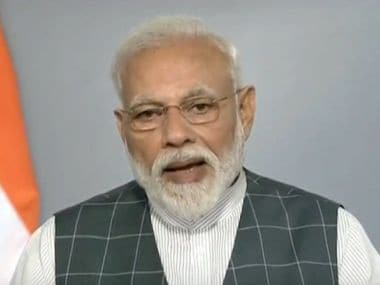 Prime Minister Narendra Modi announced that India conducted A-SAT test and shot down low Earth orbit satellite.[/caption]His claim, however, was greeted with some scepticism by international experts, who questioned whether India in fact had the elements needed for a successful A-SAT, like space-based sensors, synthetic aperture radars, guidance and control systems, and global positioning systems. In the time since then, India has succeeded in acquiring the technologies it needs — though, if the Chinese experience is a guide, some years of further testing will be needed to ensure the system's combat reliability.The FalloutIn the event of China and India waging a full-scale war, A-SAT capability will be critical: both countries will seek to knock out the others’ communications systems, their ability to conduct reconnaissance, and to accurately hit targets. The capability is therefore valuable, though, judging by the fact that the National Democratic Alliance has steadily squeezed defence budgets, war isn’t a prospect the government thinks is likely.
In the short term, India may also face some flack from the many countries which are worried about the weaponisation of space. There is no ban on the deployment and use of weapons — other than nuclear weapons — in space. Ever since the 80s, countries in space had voluntarily observed a moratorium on the destruction of satellites — but China broke that in 2007.For many countries, the biggest case against A-SAT testing has been consequences of space debris. Debris from China's 2007 test, for example, knocked out a Russian satellite, much to Moscow’s ire. Debris from the test—estimated at 950 pieces larger than 7.5 centimetres—will orbit earth for a decade or more, threatening other countries’ space assets. European states and Japan have the technological capacity to develop A-SAT weapons, but have held back, not wishing to fuel the competition,However, both Beijing and Moscow have sharpened their claws in space without suffering any great fallout — and New Delhi may be expecting to mitigate any criticism by arguing it had no choice but to follow suit.The years after Beijing's first test have seen diplomatic initiatives to bring about a treaty to ban the use of weapons, including ASAT, in space. For a variety of reasons, the United States, Russia and China have been unable to find common ground. Having tested an ASAT weapon, India will now seek to be included in any discussions. This preempts the possibility of its interests being ignored in a final deal, as was the case with nuclear weapons.
First Published:Mar 27, 2019, 14:03:22 IST
Advertisement
Advertisement

CJP protest in Delhi: New videos of stone pelting, violence emerge as police, agitators trade charges
Fresh videos of violence that broke out during the Cockroach Janta Party's (CJP) protest in Delhi have surfaced, with the police releasing footage showing alleged stone pelting, vandalism and attacks on security personnel
3 min read
'From make in India to launch from India': Skyroot COO on why Vikram-1 could change India’s space sector
Skyroot Aerospace’s successful Vikram-1 mission marks a major milestone for India’s private space sector, as the country seeks to shift from “Make in India” to “Launch from India” and compete in the global commercial satellite launch market
8 min read
Choke terror funding, keep international shipping lanes safe: Jaishankar at Asean Regional Forum
Jaishankar's remarks came against the backdrop of recent terror attacks targeting India and growing threats to commercial shipping amid conflicts in West Asia and Europe
2 min read
PM Modi announces fast-track courts for paper leak cases; CJP responds ‘Dharmendra Pradhan must go’
Amid protests demanding accountability for the leak of medical entrance test Neet and other irregularities in the education system, Prime Minister Narendra Modi has announced that the government has decided to set up fast-track courts to ensure swift and stringent punishment for those involved in paper leaks.
3 min read
Sikkim tunnel collapse rescue resumes, death toll rises to 22
The death toll at the collapsed tunnel at Sikkim's Namchi district rose to 22 after nine more bodies were recovered overnight. At least 27 workers were trapped in a tunnel at an NHPC project after a sudden burst of suspected methane gas trapped within rock formations triggered an explosion.
2 min read
Advertisement
Advertisement