


Indian students will never excel unless they question authority, try to understand need for social justice
It is clear to me, based on the large sample size that I have encountered, that Indian children are not rebellious. They are conventional.

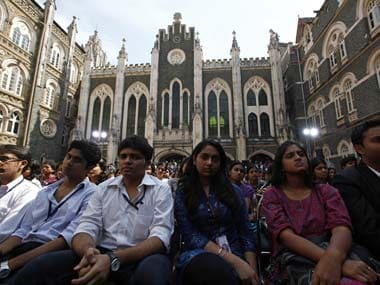
Representational image. Reuters[/caption]The third thing is that both sexes are uniformly unaware of the idea of social justice. For example, let us look at reservations. The audience I have encountered are almost never sympathetic to the plight of Dalits and Adivasis. Even after it is established that there are almost no Dalits and Adivasis in the audience — because they have been excluded thoroughly from the system — the view does not change. I have often said that I wish comments against reservations are preceded by an acceptance of the reality that these two communities face discrimination. This never happens. The only thing that the youngsters are angry about is that they want ‘merit’ to triumph over reservations.The fourth thing is that Kashmir has become, because of the media, the single biggest issue agitating them. I have pointed out to them that we have three areas in India where there is, what the government calls, terrorism. The most violent of these in the last 10 years has been the Naxal area, where 6,080 people have died. The second most violent of these is the North East, where 5,050 people have died. The third most violent is Jammu and Kashmir, where 3,378 people have died.However, I never get questions about either the North East or about Naxal violence. Kashmir and stone-pelters greatly agitate our youngsters. And this agitation of theirs is not accompanied by any particular knowledge of the history of Article 370 and the behaviour of the Indian state. This is surprising because they are students. They hold the black and white view of national and anti-national shown on our channels.Fifth, there are exceptions to the observations made above and generally speaking these come from students of fine arts, literature and that sort of fields. Engineering, commerce and science students are more likely to be the norm.Sixth, Prime Minister Narendra Modi is very popular with students. He is thought to mean well and they like what they see in him. The students can easily dismiss objections about either his past or his performance.Seventh, while they are uncomfortable with the lynchings linked to cattle slaughter and beef, they do not hold the government responsible for the violence.Eighth, they never speak unprompted about their future or the jobs market in India. They seem to be either unaware of the debate about employment being one of the big issues or they are confident that their own future is sorted.Ninth, I should say that the quality of questioning is basic and weak. We are not producing good students who are examining the issue independently of what they are being fed either by the media or their educators.The last thing is that the quality of English language is poor. The higher education system is throwing out graduates who are not equipped for proper white collar work and many, if not most, of them lack basic communication skills that are required for high end work.
Aakar Patel is a writer and columnist. He is a former newspaper editor, having worked with the Bhaskar Group and Mid Day Multimedia Ltd.

PM Modi announces fast-track courts for paper leak cases; CJP responds ‘Dharmendra Pradhan must go’
Sikkim tunnel collapse rescue resumes, death toll rises to 22
Delhi Police asks personnel to wear uniform: What the law says on cops in plainclothes during protests
No premium queues, 30-minute target: What changes for Indian passport applicants in UAE
CJP Protest in Delhi Live Updates: PM Modi announces fast-track courts for NEET paper leak cases