
Advertisement


Sections
Hindi 'imposition' debate: Schools can play key role in promoting integration through 3-language formula
The language debate has again assumed significance in the light of remarks made by Home Minister Amit Shah.

The language debate has again assumed significance in the light of remarks made by Home Minister Amit Shah. It is pertinent at the outset that the constitutional position of languages is thus examined to have a more informed approach to this debate.The constitutional position on the issue is straightforward and is found in Article 343, which states that the official language of the Union should be Hindi in the Devanagari script, along with English. English in clause 2 of the Above article, is also provided an official position, but only temporarily for 15 years from the date of the commencement of the Constitution. However, Parliament, through the Official Languages Act, 1963, extended the operation of English even after this period.The Constitution also lists out 22 languages in the VIII Schedule known as scheduled languages. States are also free to choose from these or their own official languages, and hence all states have their different sets of official languages. That said, there is no national language of India. Whether India should have one, is in itself a very complicated issue. The constitutional position hasn't been of any help on this issue and thus needs a critique.[caption id="attachment_6889951" align="alignleft" width="380"]![Representational image. Reuters]() Representational image. Reuters[/caption]The emphasis on non-permanence of English in the Constitution should not only be regretted, but be criticised with contempt. The only good thing about the British rule was perhaps the unintended introduction of English language, which benefits Indians even today, exceptionally.Most knowledge around the world is mostly available in English, and hence, it's easier for Indians to approach it. Indians remain relevant in the services sector across the globe only because of their fundamental knowledge of English.
Representational image. Reuters[/caption]The emphasis on non-permanence of English in the Constitution should not only be regretted, but be criticised with contempt. The only good thing about the British rule was perhaps the unintended introduction of English language, which benefits Indians even today, exceptionally.Most knowledge around the world is mostly available in English, and hence, it's easier for Indians to approach it. Indians remain relevant in the services sector across the globe only because of their fundamental knowledge of English.
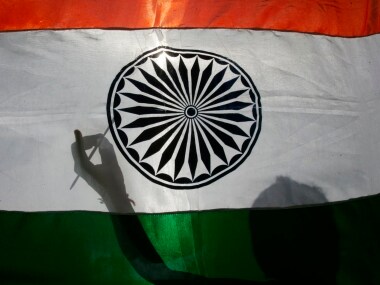 Representational image. Reuters[/caption]The emphasis on non-permanence of English in the Constitution should not only be regretted, but be criticised with contempt. The only good thing about the British rule was perhaps the unintended introduction of English language, which benefits Indians even today, exceptionally.Most knowledge around the world is mostly available in English, and hence, it's easier for Indians to approach it. Indians remain relevant in the services sector across the globe only because of their fundamental knowledge of English.
Therefore, the emphatic impermanence of English in the Constitution is irrational.The Indian federal model is unique and has often been criticised for not being federal at all. States ideally should have had sole authority in determining their official language, a superimposition of any one or two official languages by the Union goes against the essential grain of federalism.The Supreme Court has held federalism to be a basic feature of our Constitution, but its practice in the realm of language remains unsatisfactory. The Indian demographic spread can be compared to the European Union (EU). The EU, for most purposes, works like a highly federal country, with different national identities coming under one umbrella.We can see the same issue has driven states apart from each other in India and fueled animosity, whereas, in Europe, such linguistic and cultural differences couldn't keep these countries from coming together under an umbrella, in which they also sacrificed their sovereignty, to an extent.However, even after accounting for the federal model of our Constitution, there could have been better approaches to the issue of language in the constituent assembly (CA) itself. The CA debated at length on the subject, yet did not come up with a meaningful constitutional position, that's the reason this debate rages on till today.Perhaps, a three-language model would have suited the most to dynamics of the Union. In the EU, too, there are 24 official languages. However, three languages – English, French, and German – have a higher status and are called 'procedural languages.'
In India, most languages can be classified as Sanskrit-based languages or South Indian languages.English remains the second most widely spoken language in India, in addition to its relevance otherwise, makes it one of the three candidates to be official languages. Ideally, it can be the only official language of the Union courting the least controversy. The other two official languages can be one from Sanskrit-based languages, and the other from South Indian languages.For the Sanskrit-based languages, an interesting example is the revival of Hebrew in West Asia, through its introduction in the British mandate of Israel and subsequently by Israel. Hebrew, much like Sanskrit, was only a religious language till the 20th Century when it was revived as lingua franca, primarily by introducing it as the official language.Something on these lines could have been done in India for Sanskrit too. Indeed, this position was discussed in the CA, debated, and Sanskrit's introduction as the official language was endorsed by none other than Dr BR Ambedkar himself. For the third official language, perhaps the most widely spoken of the South Indian languages could have been accepted.A school curriculum requiring the learning of English, the mother tongue, and one language from the other group, would have promoted national integration much more efficiently, cohesively, and in a non-controversial manner.A strong language bonding across the country is not only desirable, but also essential for national integration. But this approach is accommodative of bonding based on more than one language, but it can never be based on 22, like the present position.The lessons from Europe should not be forgotten, when strong linguistic identities precipitated two World Wars, even when there was a monolithic religion identity.
First Published:Sep 15, 2019, 16:31:10 IST
Advertisement
Advertisement

Govt to set up fast-track courts for swift punishment in paper leak cases, says PM Modi amid CJP protests
Amid protests demanding accountability for the leak of medical entrance test Neet and other irregularities in the education system, Prime Minister Narendra Modi has announced that the government has decided to set up fast-track courts to ensure swift and stringent punishment for those involved in paper leaks.
2 min read
Sikkim tunnel collapse rescue resumes, death toll rises to 22
The death toll at the collapsed tunnel at Sikkim's Namchi district rose to 22 after nine more bodies were recovered overnight. At least 27 workers were trapped in a tunnel at an NHPC project after a sudden burst of suspected methane gas trapped within rock formations triggered an explosion.
2 min read
Delhi Police asks personnel to wear uniform: What the law says on cops in plainclothes during protests
The Delhi Police has instructed all its personnel to wear uniforms when they report for duty at Jantar Mantar for crowd control. This comes after outrage grew over videos of men in civilian clothes or without name tags hitting protesters in the Capital. Is it legal for the police to ditch uniforms during protests?
4 min read
No premium queues, 30-minute target: What changes for Indian passport applicants in UAE
Indian passport applicants in the UAE can now access passport, visa and attestation services through Alhind’s 16 centres, with no premium queues, a Dh19 service fee and a target of completing applications within 30 minutes
4 min read
CJP Protest in Delhi Live Updates: PM Modi announces announces fast-track courts for NEET paper leak cases
CJP Protest in Delhi Live Updates: Heavy security has been deployed at the Jantar Mantar in Delhi, where the Cockroach Janta Party (CJP) is continuing its protest demanding the resignation of Union Education Minister Dharmendra Pradhan over the recent paper leaks controversy
1 min read
Advertisement
Advertisement