


Government of India seeks to define stem cells as drug, regulate use in therapy; scientists term move 'long overdue'
The health ministry , in a proposal to amend existing rules, pushed to bring stem cells and cell-based products under legal regulations

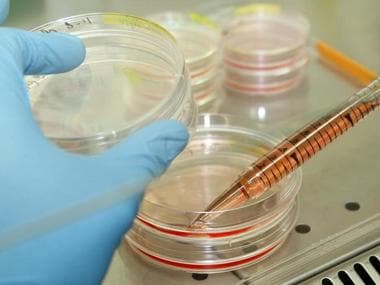
Representational image. Reuters[/caption]Although ICMR has been at the forefront of the process bringing in regulations in stem cell use, and has compiled reports regarding guidelines for such research, the government body was reportedly not consulted by the ministry before the notification was sent out. Responding to these reports, Jotwani said, "ICMR will be reviewing and deliberating the draft notification in consultation with the experts in the field and also in light of National Guidelines for Stem Cell Research-2017, which was released by Hon’ble Ministry of Health and Family Welfare. The recommendation or outcome of the same will be communicated to the ministry in due course".Dr Sanjay Kumar, a senior researcher at the Centre for Stem Cell Research (CSCR), told Firstpost that government regulations in this sector are currently virtually absent, a fact taken advantage of by many who "milk the poor by settling on their own prices and practices". The notification, however, does not touch upon the use of autologous stem cells, where the individual’s own stem cells are collected and minimally treated before infusing it back into the patient."I think they will slowly rope in autologous stem cells into the regulations as well. There are some genuine cases where you can actually improve medical conditions of people by using autologous stem cells, going by what we observe at the centre. But not all people are ethical, scientifically or otherwise, and some want to make a quick buck: They are maligning the entire process. Sometimes, as scientists, we should also take part of the blame because we have hyped up the notion that everything can be cured by stem cells. Many of the patients are critically ill and desperate for medical treatment, and they are the ones who the crooks in the business target," Kumar said.He added that government regulations will not hamper research. "Whichever institution has robust stem regulations usually have a strong IRB (institutional review board). In CSCR, 30 to40 people are present in every IRB meeting. So regulation does happen in different capacities even now, and are absolutely necessary too. Regulations will not come in the way of research in any way: Now the process will be a little longer but that's alright because every institution needs to have regulations," he said.Regulations around the worldHaving worked in several countries for his research, Kumar says India is one of the only nations yet to bring in regulations for use of stem cells. "The United States is the strictest in this regard and has multiple stages of regulations in place. All advanced countries already have strict regulations in place, except India and China," he said.In the United States, FDA's Center for Biologics Evaluation and Research regulates human cells, tissues, and cellular and tissue-based products intended for implantation, transplantation, infusion or transfer into a human recipient, including hematopoietic stem cells.A National Library of Medicine report says that China has one of the most unrestrictive stem cell policies in the world. In Japan, while the government allows scientists to conduct stem cell research for therapeutic purposes, there are no formal guidelines.South Korea‘s reputation as a leader in stem cell research suffered a blow in 2006 when it was discovered that the country’s leading biomedical researcher, Dr Hwang Woo-suk, falsely claimed that he was the first scientist to clone human embryonic stem cells for the purpose of clinical trials, a Pew Research Centre report stated. Despite the scandal, the South Korean government continues to promote therapeutic cloning for stem cell research, although reproductive cloning is forbidden.The report added that Germany has one of the most restrictive policies for human embryonic stem cell research, due in part to the history of unethical medical experiments conducted by the Nazi regime during World War II. However, in April 2008, German Parliament authorised the use of imported stem cell lines produced before 1 May, 2007, to better facilitate the study of stem cell therapy.While Mexico has a flourishing stem cell industry, it does not have formal regulations, a fact criticised by the international community. Mexican doctors currently use stem cells to treat foreign patients, including Americans, who suffer from ailments such as cerebral palsy, autism, and paralysis.

Sikkim tunnel collapse rescue resumes, death toll rises to 22
Delhi Police asks personnel to wear uniform: What the law says on cops in plainclothes during protests
No premium queues, 30-minute target: What changes for Indian passport applicants in UAE
CJP Protest in Delhi Live Updates: Delhi metro shuts 16 stations as protests continue in Jantar Mantar
Bharat Forge, Flying Whales sign pact to develop 60-tonne airships for India’s defence logistics