
Advertisement


Sections
Delhi's deadly air exposes the divide in how pollution affects its rich and poor
The rich & the poor breathe the same hazardous air, but the poor are more exposed to pollution.

Walls draped in lush vertical gardens and air filtered through purifiers insulate diners at a swanky New Delhi food court from the choking haze outside in one of the most polluted places on earth.But these eco-eateries, offering cleaner air as well as modern menus to the well-heeled are beyond reach for the poor, who have little means of escaping the deadly smog which coats the city for much of the year.Air pollution kills more than one million Indians every year, according to a study by Lancet Planetary Health, and Delhi is ranked one of the most toxic cities to live in, regularly exceeding World Health Organisation (WHO) limits.But for Ramavtar Singh there is no escape: like many of the city's poorest, he eats, sleeps, and works outside."I work for six to eight hours every day and my children eat and sleep outside most times of the year," the father of five tells AFP at a roadside food stall, gulping down a 50-cent dish of rice and lentils.Singh earns a living by cycling passengers and cargo around Delhi on his rickshaw, a strenuous activity that means he's inhaling dangerous concentrations of tiny pollutants deep into his lungs.[caption id="attachment_5481101" align="alignnone" width="1280"]![Delhi Pollution. PTI]() Delhi Pollution. PTI[/caption]At best, he can wrap a rag over his mouth on smoggy days, a low-cost approach taken by laborers and rickshaw drivers that does little to prevent the most dangerous particles entering the bloodstream.Delhi's smog peaks from October to February, routinely exceeding WHO recommendations for PM2.5 – tiny and harmful airborne particles – and some days registers levels more than 20 times safe limits.Experts warn the long term health consequences of living enveloped in pollution are disastrous, often causing chronic sickness and in some cases early death.'A quick oxygen shot'Across town, Abhimanyu Mawatwal is settling down for lunch at a food court in Worldmark Aerocity, a grand commercial centre boasting purified air.A meal here could cost twice Singh's monthly salary, but it is a price Mawatwal is willing to pay because outside the smog is at hazardous levels."I love to come here for my meals. It is like getting a quick oxygen shot," the office worker says, surrounded by creeper vines and a faux stream as he breathed lungfuls of filtered air circulating through expensive filters."We need to bring greenery to concrete jungles and create places where everybody can come for a breath of fresh air," insists S. K. Sayal, CEO of Bharti Realty which owns Worldmark Aerocity.Delhi's affluent, who are often better informed about the dangers of pollution, increasingly expect the same safety measures they have in place at home, to be available when they are out.High-end eateries, bars and cinemas are tapping into that demand – installing electronic air purifiers and creating dedicated areas of rich vegetation to help filter airborne toxins.[caption id="attachment_5799751" align="alignnone" width="1280"]
Delhi Pollution. PTI[/caption]At best, he can wrap a rag over his mouth on smoggy days, a low-cost approach taken by laborers and rickshaw drivers that does little to prevent the most dangerous particles entering the bloodstream.Delhi's smog peaks from October to February, routinely exceeding WHO recommendations for PM2.5 – tiny and harmful airborne particles – and some days registers levels more than 20 times safe limits.Experts warn the long term health consequences of living enveloped in pollution are disastrous, often causing chronic sickness and in some cases early death.'A quick oxygen shot'Across town, Abhimanyu Mawatwal is settling down for lunch at a food court in Worldmark Aerocity, a grand commercial centre boasting purified air.A meal here could cost twice Singh's monthly salary, but it is a price Mawatwal is willing to pay because outside the smog is at hazardous levels."I love to come here for my meals. It is like getting a quick oxygen shot," the office worker says, surrounded by creeper vines and a faux stream as he breathed lungfuls of filtered air circulating through expensive filters."We need to bring greenery to concrete jungles and create places where everybody can come for a breath of fresh air," insists S. K. Sayal, CEO of Bharti Realty which owns Worldmark Aerocity.Delhi's affluent, who are often better informed about the dangers of pollution, increasingly expect the same safety measures they have in place at home, to be available when they are out.High-end eateries, bars and cinemas are tapping into that demand – installing electronic air purifiers and creating dedicated areas of rich vegetation to help filter airborne toxins.[caption id="attachment_5799751" align="alignnone" width="1280"]![Residents take an early morning walk amidst smog in Delhi. AP]() Residents take an early morning walk amidst smog in Delhi. AP[/caption]But for Singh, and the one in five Indians living on less than $2 a day, visiting such places is nothing more than a fantasy."What will I do if I spend all the money on one meal? How will I feed my family?" said the rickshaw cyclist, who earns about 1,200 rupees ($17) a month.He cannot dream of buying the foreign-made air purifiers to protect his family at home – machines favoured by Delhi's elite, expat communities and office workers – that easily cost Singh's annual wage."The rich and the poor have to breathe the same poisonous air. But the poor are more exposed to pollution," explains Sunil Dahiya, a campaigner for Greenpeace India.He adds: "Most of the time, they don't even know the effects the toxic air is having on their health. Poor communities are definitely at the losing end."
Residents take an early morning walk amidst smog in Delhi. AP[/caption]But for Singh, and the one in five Indians living on less than $2 a day, visiting such places is nothing more than a fantasy."What will I do if I spend all the money on one meal? How will I feed my family?" said the rickshaw cyclist, who earns about 1,200 rupees ($17) a month.He cannot dream of buying the foreign-made air purifiers to protect his family at home – machines favoured by Delhi's elite, expat communities and office workers – that easily cost Singh's annual wage."The rich and the poor have to breathe the same poisonous air. But the poor are more exposed to pollution," explains Sunil Dahiya, a campaigner for Greenpeace India.He adds: "Most of the time, they don't even know the effects the toxic air is having on their health. Poor communities are definitely at the losing end."
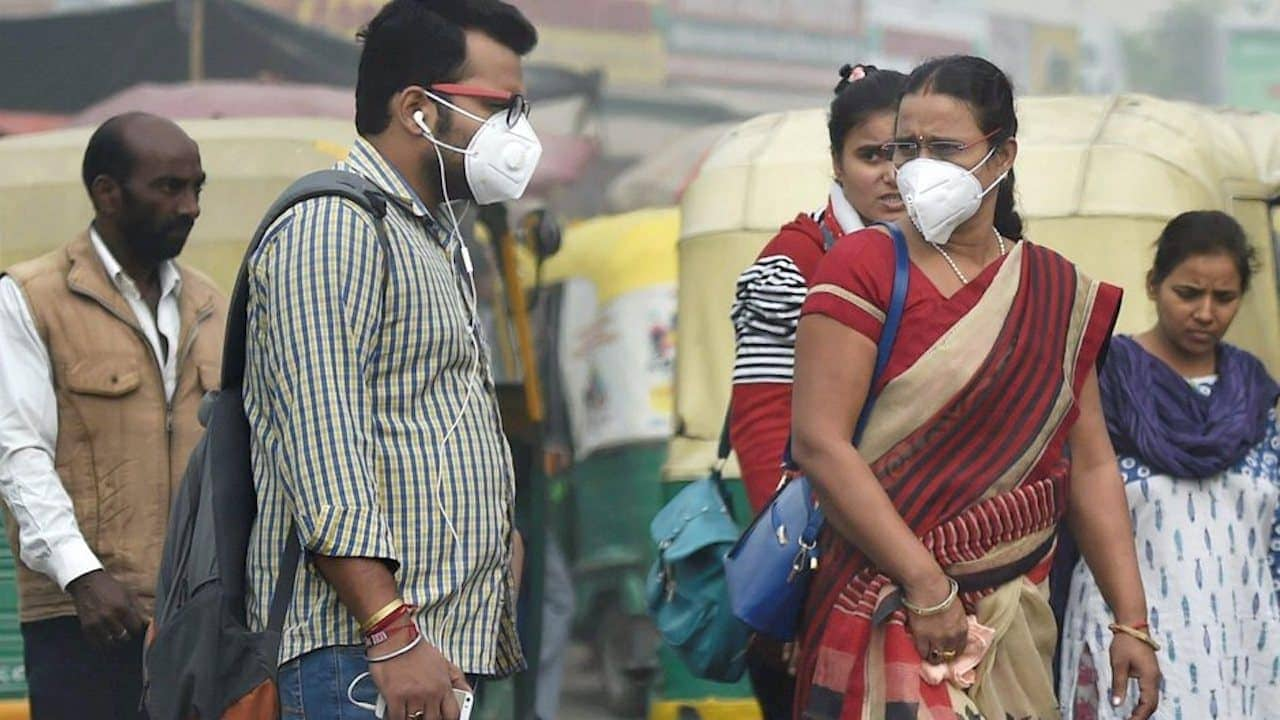 Delhi Pollution. PTI[/caption]At best, he can wrap a rag over his mouth on smoggy days, a low-cost approach taken by laborers and rickshaw drivers that does little to prevent the most dangerous particles entering the bloodstream.Delhi's smog peaks from October to February, routinely exceeding WHO recommendations for PM2.5 – tiny and harmful airborne particles – and some days registers levels more than 20 times safe limits.Experts warn the long term health consequences of living enveloped in pollution are disastrous, often causing chronic sickness and in some cases early death.'A quick oxygen shot'Across town, Abhimanyu Mawatwal is settling down for lunch at a food court in Worldmark Aerocity, a grand commercial centre boasting purified air.A meal here could cost twice Singh's monthly salary, but it is a price Mawatwal is willing to pay because outside the smog is at hazardous levels.
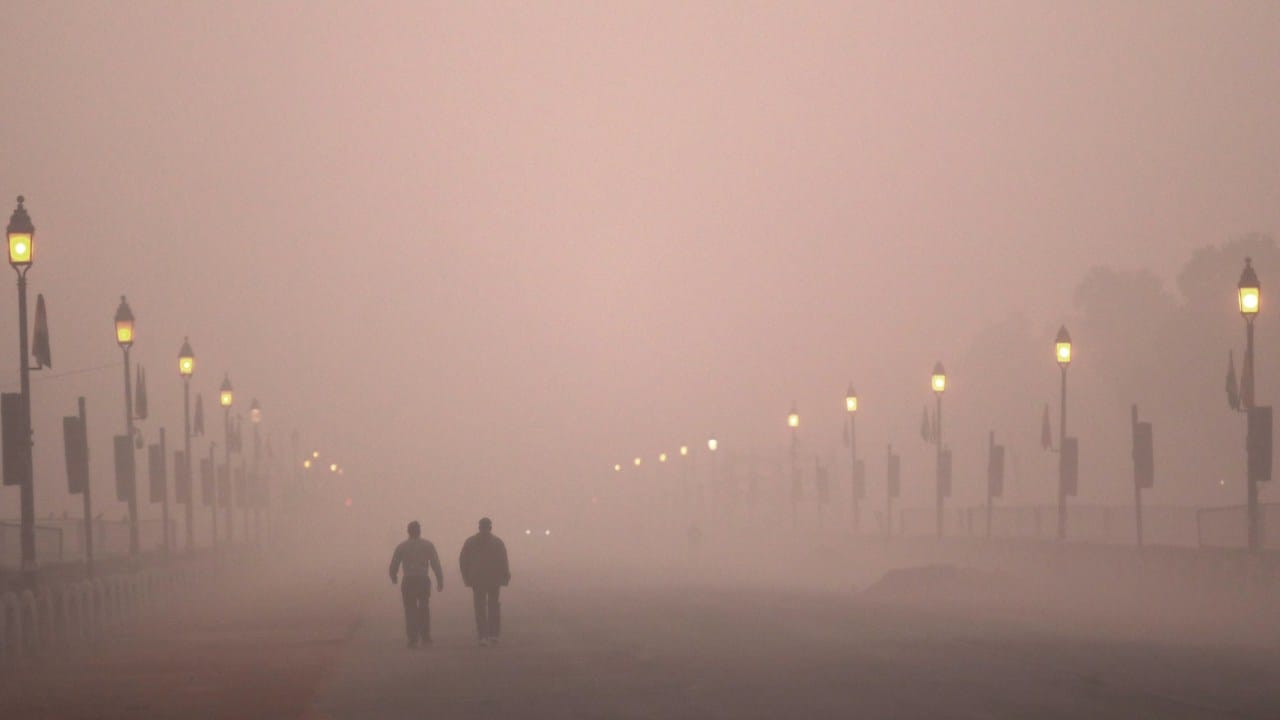 Residents take an early morning walk amidst smog in Delhi. AP[/caption]But for Singh, and the one in five Indians living on less than $2 a day, visiting such places is nothing more than a fantasy."What will I do if I spend all the money on one meal? How will I feed my family?" said the rickshaw cyclist, who earns about 1,200 rupees ($17) a month.He cannot dream of buying the foreign-made air purifiers to protect his family at home – machines favoured by Delhi's elite, expat communities and office workers – that easily cost Singh's annual wage."The rich and the poor have to breathe the same poisonous air. But the poor are more exposed to pollution," explains Sunil Dahiya, a campaigner for Greenpeace India.He adds: "Most of the time, they don't even know the effects the toxic air is having on their health. Poor communities are definitely at the losing end."
First Published:Mar 22, 2019, 11:36:34 IST
Advertisement
Advertisement

Sikkim tunnel collapse rescue resumes, death toll rises to 22
The death toll at the collapsed tunnel at Sikkim's Namchi district rose to 22 after nine more bodies were recovered overnight. At least 27 workers were trapped in a tunnel at an NHPC project after a sudden burst of suspected methane gas trapped within rock formations triggered an explosion.
2 min read
Delhi Police asks personnel to wear uniform: What the law says on cops in plainclothes during protests
The Delhi Police has instructed all its personnel to wear uniforms when they report for duty at Jantar Mantar for crowd control. This comes after outrage grew over videos of men in civilian clothes or without name tags hitting protesters in the Capital. Is it legal for the police to ditch uniforms during protests?
4 min read
No premium queues, 30-minute target: What changes for Indian passport applicants in UAE
Indian passport applicants in the UAE can now access passport, visa and attestation services through Alhind’s 16 centres, with no premium queues, a Dh19 service fee and a target of completing applications within 30 minutes
4 min read
CJP Protest in Delhi Live Updates: Delhi metro shuts 16 stations as protests continue in Jantar Mantar
CJP Protest in Delhi Live Updates: Heavy security has been deployed at the Jantar Mantar in Delhi, where the Cockroach Janta Party (CJP) is continuing its protest demanding the resignation of Union Education Minister Dharmendra Pradhan over the recent paper leaks controversy
1 min read
Bharat Forge, Flying Whales sign pact to develop 60-tonne airships for India’s defence logistics
Bharat Forge has signed an MoU with Flying Whales to jointly develop and manufacture 60-tonne heavy-lift airships in India for defence logistics, strategic mobility and disaster response
3 min read
Advertisement
Advertisement