


Dalits in media feel the sting of caste discrimination
Dalits do not abound in the media; and those who have made it there feel that they are discriminated against, especially in the regional media

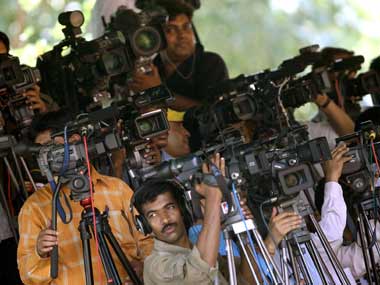
Representational Image. Reuters[/caption]Discrimination in its most severe form was experienced in the Hindi media and other languages. Dalits having ambiguous surnames, often adopted to conceal their caste, invited relentless questioning from upper caste colleagues. At the disclosure or identification of their Dalit identity, most of the 21 journalists reported harassment, snide remarks, and deliberate targeting that was manifest in a denial of promotions and increments.Naveen Kumar, for instance, was employed as a trainee in a premier Hindi TV channel, where his boss pestered him to divulge his caste. On Naveen’s disclosure that he belonged to the Scheduled Caste of Bairwa from Rajasthan, his boss began calling him by his caste – “Bairwa do this, Bairwa do that”. When Naveen was assigned to the morning desk of the channel, his boss there would rebuke him even over minor mistakes and blame it on the incorrigible attributes of his jati.Sangh Priy Gautam, a Hindi journalist in Agra, was left aghast when, on getting laid off in Meerut, he approached an influential acquaintance to recommend him to an editor in Haryana. Within hours, Sangh Priy received a text message asking whether he was a Brahmin. Why do you want to know that? asked Sangh Priy. The acquaintance replied: the editor (in Haryana) is Brahmin, wants to hire a Brahmin.Again, Ashok Das was one of the 10 journalists – of whom eight were Brahmin, one Bhumihar - a Hindi daily hired for its bureau in Aligarh, from where it planned to take out a city edition. Ashok realised none of the journalists wanted to share a room with him until one socially conscionable Brahmin offered to take him in. It was this Brahmin journalist who told Ashok of the furious debate he had sparked among the others the day he disclosed his Dalit identity to the group. In Hyderabad, Chanti Kranti Kiran, who is the Input Editor of V6 News, was asked within a few days of joining his first job what his caste was. In response to his reply, his boss said, “You were hired because we thought you were Brahmin.”Their experiences appear inordinately tragic because many of them had overcome terrible odds to enter the media in the first place. For instance, Santosh Valmiki, principal correspondent, Hindustan, Lucknow, would as a child accompany his mother as she went from house to house cleaning toilets; he also hawked newspapers to finance his college education. Despite his over two decades of experience, he rued he was still a principal correspondent. “Those junior to me in the profession have become editors,” he said, arguing that connection and patronage are important to rise in career. But Dalits are poorly represented in the media, and consequently have “no mai-baap” to bank upon, he said.In fact, at times, the desire to transform an unequal, oppressive society prompts Dalits to take to the media. For instance, Ved Prakash, assistant producer in Total TV, decided to become a journalist following the beating he was subjected to by an upper caste bully in a Bihar village where he taught in a school. The upper caste villagers resented a Dalit teaching their children.Or take Mallepalli Laxmaiah, a Telugu columnist, whose inspiration to join the media was linked to the fact his uncle was killed by upper caste landlords. In his more youthful days of activism, Laxmaiah was himself picked up under the draconian TADA. I also came across Satyendra Murli, now with Hindustan, who witnessed his mother and sister thrown out of the village temple. In many ways, Dalits become sorely disappointed at the discovery that the Indian media, which professes to be progressive, tends to reflect the inequalities of the larger social system.Instances of caste-based antagonism against Dalits in the English media were missing from the narratives of most employed in it, barring the case of one woman journalist whose boss was harassingly curious about her caste because of her ambiguous surname. No doubt, some journalists did leave the English media, but it was mostly on account of better salaries offered elsewhere.Nevertheless, journalists in the English media, like their Hindi counterparts, felt deeply insulted by the disparaging remarks of their colleagues against Mayawati and other Dalit leaders in discussions. Their failings, they claimed, were often portrayed as arising from their caste, leading to stereotyping of Dalits. D Karthikeyan of The Hindu recounted such discussions in the newsroom of the newspaper’s Madurai bureau until these chatterings plumbed to such infuriating and pathetic depths that he felt compelled to complain to the bosses, who issued a warning to the errant bureau.There is, however, also a pull-factor that lures Dalit journalists away from the media. For one, salaries at entry into the media are too low for them to sustain themselves in cities, particularly as they have to support other members of the extended family who are economically poor and educationally backward. Their fear of layoffs is particularly acute as most lack a strong economic base, having no inherited ancestral assets.By contrast, government jobs – the most favoured option among Dalits – provide permanent tenure, ensure time-bound promotions till a certain stage, and insulate them from the adverse impact of discrimination and antagonism against Dalits. Government jobs also enable Dalits to marry into higher income groups in their community, thus becoming upwardly mobile.Not all respondents, however, subscribed to the view of being discriminated against. At least one former Dalit journalist, Animesh Biswas, who is now employed in a public relations company, thought Dalits have a tendency to speak about “their background as soon they encounter problems.” He and a few others blamed the abysmal standard of education which fails to equip Dalits with the language skills the media expects them to possess.The overwhelming feeling among Dalit journalists about the prevalence of antagonism against them tends to make them rethink the idea of continuing in journalism. Their still poor presence in the media has serious implications for news coverage. Telugu columnist Mallepalli Laxmaiah thought the media coverage is governed by five Cs – controversy, crime, cinema, cricket and corporate. “Violence against Dalits comes under Crime and is consequently covered. All other aspects of their life don’t make for a story,” he said.Perhaps this explains why the mainstream media eventually ends up speaking to, and about, the upper caste/middle class India.(The longer version of this story, divided into three parts, can be read on The Hoot website here, here and here.)(Ajaz Ashraf is a Delhi-based journalist and can be reached at ashrafajaz3@gmail.com)

China has dominated Myanmar’s rare earth mines — now India eyes deal to harness country’s critical minerals
CJP protest in Delhi: New videos of stone pelting, violence emerge as police, agitators trade charges
'From make in India to launch from India': Skyroot COO on why Vikram-1 could change India’s space sector
Choke terror funding, keep international shipping lanes safe: Jaishankar at Asean Regional Forum
PM Modi announces fast-track courts for paper leak cases; CJP responds ‘Dharmendra Pradhan must go’