


Chhattisgarh govt passes amendment allowing tribal groups right to sterilisation with 'permission' from authorities
On 26 May, the Chhattisgarh govt passed an amendment to a 1979 order which says that tribal groups can be allowed the right to sterilisation.

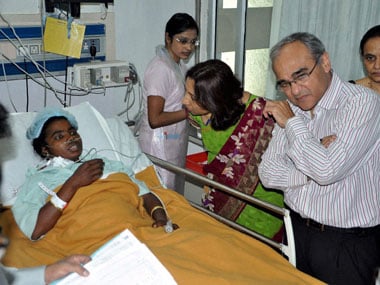
Representational image. PTI[/caption]The 26 May amendment to the order, passed by the Health and Family Welfare department, says: "The family will have to write an application, writing of a desire to get sterilised and submit it to the subdivisional magistrate. The officer will give a letter of proof, which says the application is being given on the applicant’s own volition, and they have been given information on the consequences of the operation. Then sterilisation can be done. For this, the help of the chief medical officer, or a civil surgeon of the health department or other officials can be taken."Ironically, not much has changed in the order even after the recent amendment and the draconian law still allows a state government to have unimaginable control over the body of these women.Even though the government has claimed to have amended the existing order, nothing really has changed. The supposed change to the existing rule doesn't still allow full autonomy to the tribals to decide what they want to do with their reproductive systems or with their bodies.As per the 2001 census, Chhattisgarh is home to 1.21 lakh people from primarily vulnerable tribal groups. Sterilisation programmes conducted by the health department in Chhattisgarh grabbed headlines in 2014 when government medical officer Dr RK Gupta performed tubectomies on 83 women within a span of six hours in November in Bilaspur, of which 13 women died within days, The Indian Express reported.Sterilisation camps had been held across Pendari, Gaurela, Pendra and Marwahi. These were poor women with three to five children who couldn't afford food for them. The doctor had spent just two-three minutes on each surgery without hygienic medical equipment.However, in February 2017, the Chhattisgarh High Court acquitted Gupta, stating the court did not have the state government's sanction to prosecute a public servant, a previous article on Firstpost stated. The court described it as an "abuse of the process of the law".In August 2015, the Chhattisgarh government had released a report which stated that the death of 13 women in Bilaspur was due to due to the distribution of substandard and poisonous drugs and medical negligence, according to The Times of India.

'From make in India to launch from India': Skyroot COO on why Vikram-1 could change India’s space sector
Choke terror funding, keep international shipping lanes safe: Jaishankar at Asean Regional Forum
PM Modi announces fast-track courts for paper leak cases; CJP responds ‘Dharmendra Pradhan must go’
Sikkim tunnel collapse rescue resumes, death toll rises to 22
Delhi Police asks personnel to wear uniform: What the law says on cops in plainclothes during protests