
Advertisement


Sections
CAG report on Rafale: Here's why the Centre's bid evaluation method may have been questioned
The Comptroller and Auditor General (CAG), in its report tabled in Parliament on Wednesday, raised a question on the bid evaluation method the Centre used to acquire the Rafale fighter jets for the Indian Air Force.

The Comptroller and Auditor General (CAG), in its report tabled in Parliament on Wednesday, raised a question on the bid evaluation method the Centre used to acquire the Rafale fighter jets for the Indian Air Force.The report said that the quantitative assessment carried out through the Best Value method would have yielded better value for money as compared to the Lowest Price Technically Acceptable (LPTA) method the Centre had adopted to award the contract to procure the fighter jets to the lowest bidder.[caption id="attachment_4223811" align="alignleft" width="380"]![Defence procurement. Representational image. Reuters]() Representational image. Reuters[/caption]The LPTA method uses the objective evaluation criteria of picking the lowest offered price and is, hence, considered a safe approach that could also drive the prices down. Under this method, the proposal is evaluated on the basis of certain parameters, or minimum requirements, to come to the best value. The contract is then awarded to the bidder who meets these requirements and also offers the lowest cost.This method is more effective when the risk involved is low. However, it does not take into account a bidder's past performance as long as it meets the criteria related to product requirements and costs.
Representational image. Reuters[/caption]The LPTA method uses the objective evaluation criteria of picking the lowest offered price and is, hence, considered a safe approach that could also drive the prices down. Under this method, the proposal is evaluated on the basis of certain parameters, or minimum requirements, to come to the best value. The contract is then awarded to the bidder who meets these requirements and also offers the lowest cost.This method is more effective when the risk involved is low. However, it does not take into account a bidder's past performance as long as it meets the criteria related to product requirements and costs.
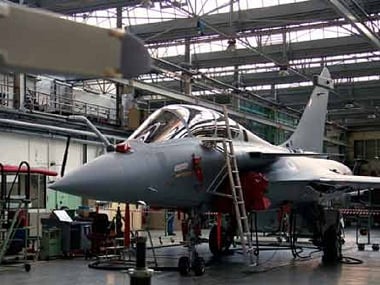 Representational image. Reuters[/caption]The LPTA method uses the objective evaluation criteria of picking the lowest offered price and is, hence, considered a safe approach that could also drive the prices down. Under this method, the proposal is evaluated on the basis of certain parameters, or minimum requirements, to come to the best value. The contract is then awarded to the bidder who meets these requirements and also offers the lowest cost.This method is more effective when the risk involved is low. However, it does not take into account a bidder's past performance as long as it meets the criteria related to product requirements and costs.
On one hand, the LPTA method makes the process of selecting the vendor much less complicated and quicker and also reduces procurement costs for the government. But on the other hand, vendors selected through this mechanism look strictly at cutting costs, bringing in the risk of compromising on quality as well as higher repair and replacement costs. For a product like the Rafale fighter jet, this would directly translate to compromising national security and safety.Thus, in the case of the Rafale deal, which is a value-centric one that looks at the procurement of highly technical products, the LPTA method may not have been the best one to use.For specialised products, using a method that ensures better technology — even if it comes at higher costs — ensures that money is not wasted on a poorly-performing product in future. Therefore, the CAG report tabled in the Rajya Sabha recommends adopting the Best Value method for such acquisitions.This method looks at selecting a vendor that comes with the best value in terms of both cost and services. It allows the government to come to a decision by weighing various factors, which, in the case of the Rafale deal, would be the technical competence of the jets, quality of parts and technology transfer, among others, apart from the cost.The Best Value method also gives the government the flexibility to choose an offer on the basis of these factors and technical ratings, or purely on the basis of cost. Each factor, such as past performance, cost and technical prowess, is evaluated on differing scales, with parameters apart from cost likely being given greater importance.The choice between the LPTA and Best Value methods would depend on a number of criteria, such as the importance of cost savings in the contract, significance of a bidder's past performance, the skills and precision required, the nature of product or commodity, definition of scope of the contract and the performance of a previous programme under the method adopted before.
First Published:Feb 13, 2019, 14:25:54 IST
Advertisement
Advertisement

Delhi Police asks personnel to wear uniform: What the law says on cops in plainclothes during protests
The Delhi Police has instructed all its personnel to wear uniforms when they report for duty at Jantar Mantar for crowd control. This comes after outrage grew over videos of men in civilian clothes or without name tags hitting protesters in the Capital. Is it legal for the police to ditch uniforms during protests?
4 min read
No premium queues, 30-minute target: What changes for Indian passport applicants in UAE
Indian passport applicants in the UAE can now access passport, visa and attestation services through Alhind’s 16 centres, with no premium queues, a Dh19 service fee and a target of completing applications within 30 minutes
4 min read
CJP Protest in Delhi Live Updates: Delhi metro shuts 16 stations as protests continue in Jantar Mantar
CJP Protest in Delhi Live Updates: Heavy security has been deployed at the Jantar Mantar in Delhi, where the Cockroach Janta Party (CJP) is continuing its protest demanding the resignation of Union Education Minister Dharmendra Pradhan over the recent paper leaks controversy
1 min read
Bharat Forge, Flying Whales sign pact to develop 60-tonne airships for India’s defence logistics
Bharat Forge has signed an MoU with Flying Whales to jointly develop and manufacture 60-tonne heavy-lift airships in India for defence logistics, strategic mobility and disaster response
3 min read
Air India to cut Delhi-Toronto flight time by 3 hours, resume non-stop services from August 1
Air India will resume non-stop Delhi-Toronto flights from August 1, cutting travel time by nearly three hours and deploying its new Boeing 787-9 Dreamliner on the route
2 min read
Advertisement
Advertisement