
Advertisement


Sections
Alcohol ban: Bihar buying better clothes, eating better and nutritious food, finds state-commissioned study
According to two studies commissioned by Nitish Kumar's Bihar government in Bihar, the liquor ban in the state has resulted in a dip in criminal cases, women feeling their opinion was valued more and in people spending their money in clothes and food items instead of alcohol.

Patna: According to two studies commissioned by the Nitish Kumar government in Bihar, the liquor ban in the state has resulted in a dip in criminal cases, women feeling their opinion was valued more and in people spending their money in clothes and food items instead of alcohol. One of the studies, conducted by the think tank Asian Development Research Institute or ADRI, found the sale of expensive sarees rose by 1,751 percent and expensive dress materials rose by 910 percent.Consumption of honey has increased by 380 percent and that of cheese by 200 percent in the first six months of the ban, according to latest studies on the measure. The studies, conducted by reputed think tank Asian Development Research Institute (ADRI) and government-funded knowledge institute Development Management Institute (DMI), also pointed out that 19 percent of households acquired new assets from the money they earlier splurged on alcohol.[caption id="attachment_2929594" align="alignleft" width="380"]![Representational image. AFP]() Representational image. AFP[/caption]Both studies were commissioned by the state to evaluate consequences of prohibition, which came into force in April, 2016 "mainly as a response to demands of rural women who suffered because of the widespread practice of drinking alcohol".The findings were appended to the economic survey report and tabled before the state assembly this year. The ADRI study took stock of purchasing behaviour as recorded at retail outlets of COMFED (Bihar State Milk Co-operative Federation), better known by the brand name "Sudha".It noted that the consumption of honey registered a monumental increase by 380 percent and cheese by 200 percent. An impressive rise in sale was also recorded for items like butter milk — 40 percent — flavoured milk — 28.4 percent — and lassi — 19.7 percent — the report said.The ADRI study collected data on purchase of a few other consumer items as well, based on sales tax revenues. The increase was substantial — the sale of expensive sarees rose by 1,751 percent, expensive dress materials by 910 percent, processed food by 46 percent, furniture by 20 percent and sports goods by 18 percent.The other study done by DMI also underscored the "substantial economic impact" of the ban on alcohol.
Representational image. AFP[/caption]Both studies were commissioned by the state to evaluate consequences of prohibition, which came into force in April, 2016 "mainly as a response to demands of rural women who suffered because of the widespread practice of drinking alcohol".The findings were appended to the economic survey report and tabled before the state assembly this year. The ADRI study took stock of purchasing behaviour as recorded at retail outlets of COMFED (Bihar State Milk Co-operative Federation), better known by the brand name "Sudha".It noted that the consumption of honey registered a monumental increase by 380 percent and cheese by 200 percent. An impressive rise in sale was also recorded for items like butter milk — 40 percent — flavoured milk — 28.4 percent — and lassi — 19.7 percent — the report said.The ADRI study collected data on purchase of a few other consumer items as well, based on sales tax revenues. The increase was substantial — the sale of expensive sarees rose by 1,751 percent, expensive dress materials by 910 percent, processed food by 46 percent, furniture by 20 percent and sports goods by 18 percent.The other study done by DMI also underscored the "substantial economic impact" of the ban on alcohol.
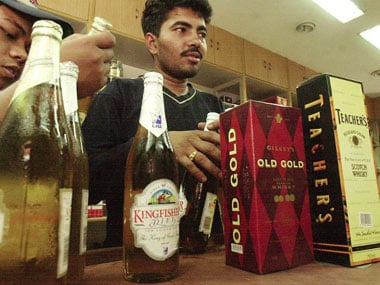 Representational image. AFP[/caption]Both studies were commissioned by the state to evaluate consequences of prohibition, which came into force in April, 2016 "mainly as a response to demands of rural women who suffered because of the widespread practice of drinking alcohol".The findings were appended to the economic survey report and tabled before the state assembly this year. The ADRI study took stock of purchasing behaviour as recorded at retail outlets of COMFED (Bihar State Milk Co-operative Federation), better known by the brand name "Sudha".It noted that the consumption of honey registered a monumental increase by 380 percent and cheese by 200 percent. An impressive rise in sale was also recorded for items like butter milk — 40 percent — flavoured milk — 28.4 percent — and lassi — 19.7 percent — the report said.The ADRI study collected data on purchase of a few other consumer items as well, based on sales tax revenues. The increase was substantial — the sale of expensive sarees rose by 1,751 percent, expensive dress materials by 910 percent, processed food by 46 percent, furniture by 20 percent and sports goods by 18 percent.The other study done by DMI also underscored the "substantial economic impact" of the ban on alcohol.
The DMI study, based on primary data collected from 2,368 households in five districts of Nawada, Purnea, Samastipur, West Champaran and Kaimur, noted that families reported a weekly expenditure of Rs 1331 on food after prohibition, compared with Rs 1005 before the ban, implying an increase of 32 percent"."After prohibition, 19 percent of households acquired new assets and another five percent spent money on renovating their house", the study said. It also observed that 58 percent women feel they were given more respect and played a better role in making household decisions. Going further, 22 percent of women said their opinion was now counted not just for household matters, but for village issues as well, the study added.On the crime front, the ADRI report noted there was a 66.6 percent dip in cases of kidnapping for ransom, followed by 28.3 percent dip in murder cases and 2.3 percent in dacoity.Taking into account the consumption figures of 2011, there were at least 44 lakh alcoholics in Bihar when the prohibition was enforced in April 2016. Even by conservative estimates, each of these boozers has been spending at least Rs 1,000 per month on alcohol, the ADRI study said.On this basis, at least Rs 440 crore every month was saved every month, which translates to Rs 5,280 crore every year, it added.
First Published:Jun 18, 2018, 07:26:54 IST
Advertisement
Advertisement

'From make in India to launch from India': Skyroot COO on why Vikram-1 could change India’s space sector
Skyroot Aerospace’s successful Vikram-1 mission marks a major milestone for India’s private space sector, as the country seeks to shift from “Make in India” to “Launch from India” and compete in the global commercial satellite launch market
8 min read
Choke terror funding, keep international shipping lanes safe: Jaishankar at Asean Regional Forum
Jaishankar's remarks came against the backdrop of recent terror attacks targeting India and growing threats to commercial shipping amid conflicts in West Asia and Europe
2 min read
PM Modi announces fast-track courts for paper leak cases; CJP responds ‘Dharmendra Pradhan must go’
Amid protests demanding accountability for the leak of medical entrance test Neet and other irregularities in the education system, Prime Minister Narendra Modi has announced that the government has decided to set up fast-track courts to ensure swift and stringent punishment for those involved in paper leaks.
3 min read
Sikkim tunnel collapse rescue resumes, death toll rises to 22
The death toll at the collapsed tunnel at Sikkim's Namchi district rose to 22 after nine more bodies were recovered overnight. At least 27 workers were trapped in a tunnel at an NHPC project after a sudden burst of suspected methane gas trapped within rock formations triggered an explosion.
2 min read
Delhi Police asks personnel to wear uniform: What the law says on cops in plainclothes during protests
The Delhi Police has instructed all its personnel to wear uniforms when they report for duty at Jantar Mantar for crowd control. This comes after outrage grew over videos of men in civilian clothes or without name tags hitting protesters in the Capital. Is it legal for the police to ditch uniforms during protests?
4 min read
Advertisement
Advertisement