


Aadhaar no longer mandatory for mobile numbers, bank accounts as Cabinet approves law amendment
The Supreme Court had struck down Section 57 of the Aadhaar Act that made seeding of the biometric ID with SIMs and bank accounts mandatory, saying it had no legal backing.

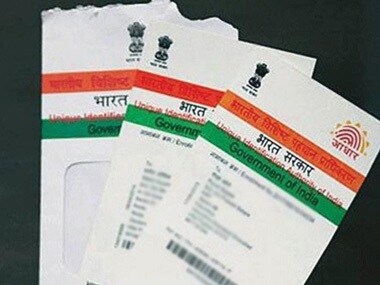
Representational image. News18[/caption]Sources said the two Acts will be amended to provide for voluntary sharing of the 12-digit identification number for obtaining new mobile phone connections and for the opening of bank accounts.The Supreme Court had struck down Section 57 of the Aadhaar Act that made seeding of the biometric ID with SIMs and bank accounts mandatory, saying it had no legal backing.To overcome this lacuna, the Telegraph Act is being amended to provide legal backing for the issuance of mobile SIMs through Aadhaar.Similarly, the amendment to the PMLA will give individuals option to link their bank accounts to Aadhaar in the KYC option.The apex court in a landmark judgment had held constitutional validity of Aadhaar for the distribution of state-sponsored welfare subsidies, but ruled that it cannot be made mandatory for opening bank accounts or providing mobile-phone connections. The ruling followed petitons by activists and lawyers citing privacy concerns.Conceptualised under the previous UPA regime in 2009, under the extraordinary Aadhaar programme provides for giving every resident a biometric ID by assigning a unique 12-digit identification number after collecting their biometric data and photographs. It was envisioned as a cost-saving tool that could improve the delivery of services and subsidies to poor by eliminating bogus beneficiaries and checking diversions.

China has dominated Myanmar’s rare earth mines — now India eyes deal to harness country’s critical minerals
CJP protest in Delhi: New videos of stone pelting, violence emerge as police, agitators trade charges
'From make in India to launch from India': Skyroot COO on why Vikram-1 could change India’s space sector
Choke terror funding, keep international shipping lanes safe: Jaishankar at Asean Regional Forum
PM Modi announces fast-track courts for paper leak cases; CJP responds ‘Dharmendra Pradhan must go’