
Advertisement


Sections
World Osteoporosis Day 2019: Why women, in particular, should take guard against this malady
People living with osteoporosis tend to have lower bone mass and experience deterioration in the bone tissue.

October has been a month of observing many "world health days”, some of which are dedicated to conditions that affect women primarily. Why is this important? Because studies show that women’s health seldom gets the attention it deserves in India.For instance, a recently published study by the All India Institute of Medical Sciences (AIIMS) found that of the 2,377,028 people who visited the AIIMS outpatient facility from January to December 2016, only 37% were women.[caption id="attachment_7520361" align="alignleft" width="380"]![Representational image. Image source: Getty Images.]() Representational image. Image source: Getty Images.[/caption]On World Osteoporosis Day today, 20 October, we look at another medical condition that is more likely to affect women than men.
Representational image. Image source: Getty Images.[/caption]On World Osteoporosis Day today, 20 October, we look at another medical condition that is more likely to affect women than men.
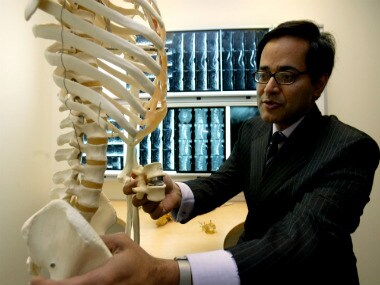 Representational image. Image source: Getty Images.[/caption]On World Osteoporosis Day today, 20 October, we look at another medical condition that is more likely to affect women than men.
What is osteoporosis?
Simply put, osteoporosis is a skeletal disorder. People living with osteoporosis tend to have lower bone mass and experience deterioration in the bone tissue. This may make their bones more fragile, and increase the chances of a fracture.There are many things that contribute to the development of this condition. Advancing age, menopause, hypogonadism (when the sex glands produce less or no sex hormones), premature ovarian failure, low body mass index, rheumatoid arthritis, low bone mineral density, vitamin D deficiency, hyperkyphosis (curvature of spine over 50 degrees), smoking, alcohol abuse and long-term use of some medicines are the top causes. Research also shows that Indian women tend to have lower bone mineral density than Caucasians and Africans.Most Indian diets also do not meet the dietary allowances of 600 milligrams per day of calcium for adult women set by the Indian Council of Medical Research.Prevention of osteoporosis
It is a good idea for women over 55 years to have their bone mass density measured, irrespective of whether they have any symptoms of osteoporosis. Doctors typically prescribe a DEXA scan (dual-energy X-ray absorptiometry), or MRI of the spine, or Spine CT scan for this.Apart from these tests, there are some things we can do to improve bone health:- Introduce more calcium-rich foods like cheese, chia seeds, almonds, and green vegetables in our diet.
- Spend enough time in the sun or take vitamin D supplements up to 1,200 mg per day.
- Do regular weight-bearing and muscle-strengthening exercises to keep the body healthy.
- Osteoporotic women are at high risk of getting a fracture. They should try to avoid falling, by correcting any defects in their vision and reducing hazards in the home like slippery floors, obstacles, and insufficient light.
First Published:Oct 20, 2019, 07:00:31 IST
Advertisement
Advertisement

Stroke is rising among young adults. Doctor explains why it's happening and what you must do
Stroke is increasingly affecting adults in their 30s, 40s and 50s. Experts say unhealthy lifestyles, undiagnosed high blood pressure and delayed treatment are driving the rise in younger stroke cases
3 min read
Stroke in young adults, silent symptoms and late diagnosis: India's growing brain health challenge
Neurologists warn that stroke is increasingly affecting people in their 30s and 40s, while many brain disorders progress silently before symptoms appear. They say early diagnosis, timely referrals and healthier lifestyles are key to reducing India's growing neurological disease burden.
5 min read
Brain tumours aren't always fatal, but delayed diagnosis can be: Experts explain the key warning signs
Brain tumours are frequently mistaken for common headaches, stress or age-related cognitive changes. Doctors say recognising warning signs early and adopting a brain-healthy lifestyle can improve outcomes and reduce the risk of long-term neurological complications.
2 min read
Spices, health and the Indian plate: Why chilli can be good for you—but moderation is still key
From boosting metabolism to supporting heart health, chillies offer several surprising health benefits. But experts say the amount you eat matters, and too much spice can do more harm than good.
4 min read
Organ donation: 5 myths you need to stop believing, according to a transplant specialist
Organ donation has the power to transform and save lives, but this can happen only when myths are replaced with facts. Building awareness, having open conversations and understanding the process can help families make informed decisions.
2 min read
Advertisement
Advertisement