
Advertisement


Sections
What is excitotoxicity, and what does it have to do with Huntington's disease?
What is excitotoxicity, and what does it have to do with Huntington's disease? One of the most important things the human brain does is to tell the body what to do and how to feel. An essential amino acid - glutamate - helps the brain perform this vital role, by “exciting” the neurons or brain cells, which then transmit messages between the brain and the body.

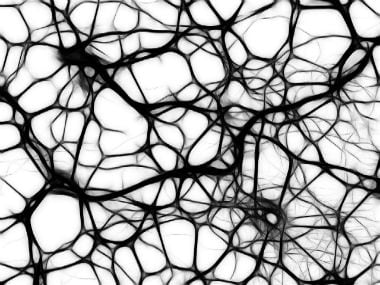
One of the most important things the human brain does is to tell the body what to do and how to feel. An essential amino acid — glutamate — helps the brain perform this vital role, by 'exciting' the neurons or brain cells, which then transmit messages between the brain and the body. A disturbance in this function — either because of excess glutamate or oversensitivity to it — can lead to 'excitotoxicity' or cell death.Brian S. Meldrum of the Department of Clinical Neurosciences, Institute of Psychiatry, London, explained this in the year 2000 in 'Glutamate as a Neurotransmitter in the Brain: Review of Physiology and Pathology', published in The Journal of Nutrition (Oxford University Press).[caption id="attachment_7270391" align="alignleft" width="380"]![Representative image. Image by Gerd Altmann from Pixabay]() Representative image. Image by Gerd Altmann from Pixabay[/caption]Excitotoxicity, he wrote, “may contribute to the brain damage occurring acutely after status epilepticus, cerebral ischemia or traumatic brain injury. It may also contribute to chronic neurodegeneration in such disorders as amyotrophic lateral sclerosis (ALS) and Huntington's chorea”.In short, brain damage after an epileptic seizure or seizures that last for five minutes, ALS, brain stroke and Huntington’s disease are associated with excitotoxity.What is Huntington’s disease?Huntington’s disease (HD) is a genetic neurological disorder in which the brain cells (neurons) get progressively damaged. People suffering from Huntington's gradually lose both their mental and physical abilities, and they usually die early. The prevalence of Huntington’s disease in India is lower than in Western countries but higher than in most Asian countries, with more cases reported in the southern states.Huntington’s disease occurs because of an autosomal dominant mutation - one’s risk for Huntington’s disease goes up by 50% if either parent has it. The gene for Huntington’s disease is present in everybody - it produces a protein known as Huntington that plays a role in the development of neurons. However, in those with Huntington’s disease, this gene is faulty and leads to impaired energy metabolism in brain cells and they produce much less energy than they need.Ironically, this metabolic defect makes the neurons kick so often and quickly that they start to 'fry'. In medical parlance, this phenomenon is known as excitotoxicity - a portmanteau of the words excited and toxicity.The disease manifests in the prime years of life - affecting people aged 30 to 50. So far, there’s no cure for the disease.In late August, scientists at the Salk Institute for Biological Studies in California said they had tested a more advanced system for gene editing than the famous CRISPR on mice. In the future, their gene-editing tool - "intercellular linearized Single homology Arm donor mediated intron-Targeting Integration" or SATI as it is known for short, could help to 'edit' or remove the genes that cause diseases like Huntington's and progeria. The research was published in Cell Research, a peer-reviewed journal.Understanding excitotoxicityOur brain perceives and interprets information in the form of electrical and chemical signals. For the body to function optimally, it is important that these signals are transmitted at just the right speed and time. This is facilitated by chemical messengers known as neurotransmitters. These compounds travel within synapses — the gap between nerve cells — to pass on information from one cell to another. These messengers could be excitatory (exciting a brain cell to pass on signals) or inhibitory (stopping the nerve cell from passing on the signal).Excitotoxicity happens when our brain cells somehow start to be more sensitive to an excitatory neurotransmitter - in this case, glutamate which is responsible for controlling learning and memory functions.Excess glutamate or greater sensitivity to it makes the brain cells overexcited. This triggers a cellular process that eventually damages the neuron from the inside. A major part of this damage occurs in the areas that control voluntary movements, thoughts, memory and emotions. As the disease progresses, cell damage spreads to other parts of the brain. For instance, the part that controls the hormones.Symptoms and treatment of Huntington’s diseaseThe symptoms of Huntington’s disease can be divided into three categories:
Representative image. Image by Gerd Altmann from Pixabay[/caption]Excitotoxicity, he wrote, “may contribute to the brain damage occurring acutely after status epilepticus, cerebral ischemia or traumatic brain injury. It may also contribute to chronic neurodegeneration in such disorders as amyotrophic lateral sclerosis (ALS) and Huntington's chorea”.In short, brain damage after an epileptic seizure or seizures that last for five minutes, ALS, brain stroke and Huntington’s disease are associated with excitotoxity.What is Huntington’s disease?Huntington’s disease (HD) is a genetic neurological disorder in which the brain cells (neurons) get progressively damaged. People suffering from Huntington's gradually lose both their mental and physical abilities, and they usually die early. The prevalence of Huntington’s disease in India is lower than in Western countries but higher than in most Asian countries, with more cases reported in the southern states.Huntington’s disease occurs because of an autosomal dominant mutation - one’s risk for Huntington’s disease goes up by 50% if either parent has it. The gene for Huntington’s disease is present in everybody - it produces a protein known as Huntington that plays a role in the development of neurons. However, in those with Huntington’s disease, this gene is faulty and leads to impaired energy metabolism in brain cells and they produce much less energy than they need.Ironically, this metabolic defect makes the neurons kick so often and quickly that they start to 'fry'. In medical parlance, this phenomenon is known as excitotoxicity - a portmanteau of the words excited and toxicity.The disease manifests in the prime years of life - affecting people aged 30 to 50. So far, there’s no cure for the disease.In late August, scientists at the Salk Institute for Biological Studies in California said they had tested a more advanced system for gene editing than the famous CRISPR on mice. In the future, their gene-editing tool - "intercellular linearized Single homology Arm donor mediated intron-Targeting Integration" or SATI as it is known for short, could help to 'edit' or remove the genes that cause diseases like Huntington's and progeria. The research was published in Cell Research, a peer-reviewed journal.Understanding excitotoxicityOur brain perceives and interprets information in the form of electrical and chemical signals. For the body to function optimally, it is important that these signals are transmitted at just the right speed and time. This is facilitated by chemical messengers known as neurotransmitters. These compounds travel within synapses — the gap between nerve cells — to pass on information from one cell to another. These messengers could be excitatory (exciting a brain cell to pass on signals) or inhibitory (stopping the nerve cell from passing on the signal).Excitotoxicity happens when our brain cells somehow start to be more sensitive to an excitatory neurotransmitter - in this case, glutamate which is responsible for controlling learning and memory functions.Excess glutamate or greater sensitivity to it makes the brain cells overexcited. This triggers a cellular process that eventually damages the neuron from the inside. A major part of this damage occurs in the areas that control voluntary movements, thoughts, memory and emotions. As the disease progresses, cell damage spreads to other parts of the brain. For instance, the part that controls the hormones.Symptoms and treatment of Huntington’s diseaseThe symptoms of Huntington’s disease can be divided into three categories:
 Representative image. Image by Gerd Altmann from Pixabay[/caption]Excitotoxicity, he wrote, “may contribute to the brain damage occurring acutely after status epilepticus, cerebral ischemia or traumatic brain injury. It may also contribute to chronic neurodegeneration in such disorders as amyotrophic lateral sclerosis (ALS) and Huntington's chorea”.In short, brain damage after an epileptic seizure or seizures that last for five minutes, ALS, brain stroke and Huntington’s disease are associated with excitotoxity.What is Huntington’s disease?Huntington’s disease (HD) is a genetic neurological disorder in which the brain cells (neurons) get progressively damaged. People suffering from Huntington's gradually lose both their mental and physical abilities, and they usually die early. The prevalence of Huntington’s disease in India is lower than in Western countries but higher than in most Asian countries, with more cases reported in the southern states.Huntington’s disease occurs because of an autosomal dominant mutation - one’s risk for Huntington’s disease goes up by 50% if either parent has it. The gene for Huntington’s disease is present in everybody - it produces a protein known as Huntington that plays a role in the development of neurons. However, in those with Huntington’s disease, this gene is faulty and leads to impaired energy metabolism in brain cells and they produce much less energy than they need.Ironically, this metabolic defect makes the neurons kick so often and quickly that they start to 'fry'. In medical parlance, this phenomenon is known as excitotoxicity - a portmanteau of the words excited and toxicity.The disease manifests in the prime years of life - affecting people aged 30 to 50. So far, there’s no cure for the disease.In late August, scientists at the Salk Institute for Biological Studies in California said they had tested a more advanced system for gene editing than the famous CRISPR on mice. In the future, their gene-editing tool - "intercellular linearized Single homology Arm donor mediated intron-Targeting Integration" or SATI as it is known for short, could help to 'edit' or remove the genes that cause diseases like Huntington's and progeria. The research was published in Cell Research, a peer-reviewed journal.Understanding excitotoxicityOur brain perceives and interprets information in the form of electrical and chemical signals. For the body to function optimally, it is important that these signals are transmitted at just the right speed and time. This is facilitated by chemical messengers known as neurotransmitters. These compounds travel within synapses — the gap between nerve cells — to pass on information from one cell to another. These messengers could be excitatory (exciting a brain cell to pass on signals) or inhibitory (stopping the nerve cell from passing on the signal).Excitotoxicity happens when our brain cells somehow start to be more sensitive to an excitatory neurotransmitter - in this case, glutamate which is responsible for controlling learning and memory functions.Excess glutamate or greater sensitivity to it makes the brain cells overexcited. This triggers a cellular process that eventually damages the neuron from the inside. A major part of this damage occurs in the areas that control voluntary movements, thoughts, memory and emotions. As the disease progresses, cell damage spreads to other parts of the brain. For instance, the part that controls the hormones.Symptoms and treatment of Huntington’s diseaseThe symptoms of Huntington’s disease can be divided into three categories:
- Physical: These include involuntary jerks, difficulty in walking, swallowing, eating and speaking
- Cognitive: Difficulty focusing, absorbing new information and taking decisions
- Behavioural: Irritability, depression, social withdrawal, suicidal tendencies
First Published:Sep 02, 2019, 16:03:37 IST
Advertisement
Advertisement

Stroke is rising among young adults. Doctor explains why it's happening and what you must do
Stroke is increasingly affecting adults in their 30s, 40s and 50s. Experts say unhealthy lifestyles, undiagnosed high blood pressure and delayed treatment are driving the rise in younger stroke cases
3 min read
Stroke in young adults, silent symptoms and late diagnosis: India's growing brain health challenge
Neurologists warn that stroke is increasingly affecting people in their 30s and 40s, while many brain disorders progress silently before symptoms appear. They say early diagnosis, timely referrals and healthier lifestyles are key to reducing India's growing neurological disease burden.
5 min read
Brain tumours aren't always fatal, but delayed diagnosis can be: Experts explain the key warning signs
Brain tumours are frequently mistaken for common headaches, stress or age-related cognitive changes. Doctors say recognising warning signs early and adopting a brain-healthy lifestyle can improve outcomes and reduce the risk of long-term neurological complications.
2 min read
Spices, health and the Indian plate: Why chilli can be good for you—but moderation is still key
From boosting metabolism to supporting heart health, chillies offer several surprising health benefits. But experts say the amount you eat matters, and too much spice can do more harm than good.
4 min read
Organ donation: 5 myths you need to stop believing, according to a transplant specialist
Organ donation has the power to transform and save lives, but this can happen only when myths are replaced with facts. Building awareness, having open conversations and understanding the process can help families make informed decisions.
2 min read
Advertisement
Advertisement