
Advertisement


Sections
Two cricketers suffer concussions in Indo-Bangladesh match: Here's why ICC has special concussion guidelines
A concussion is a traumatic brain injury caused by a blow to the head. Violent whiplash or shaking of the head can also cause a concussion.

The pink ball illuminated by floodlights was not the only thing of note in the recently concluded Indo-Bangladesh Test match. Two Bangladeshi players, Liton Das and Nayeem Hasan, retired hurt. The double-injury — both caused by Mohammed Shami bouncers — stole the limelight from the pink ball which was making its debut at a day/night Test in Kolkata’s famous Eden Garden.Das and Hasan ended up in the hospital with concussions, triggering the International Cricket Council’s (ICC’s) new Concussion Management Guidelines, which first came into play during the Ashes in August-September 2019.[caption id="attachment_7712281" align="alignleft" width="380"]![Representational image. Image source: Getty Images.]() Representational image. Image source: Getty Images.[/caption]Here’s a look at the guidelines, and why cricketers badly needed a separate protocol to address this type of brain injury:
Representational image. Image source: Getty Images.[/caption]Here’s a look at the guidelines, and why cricketers badly needed a separate protocol to address this type of brain injury:
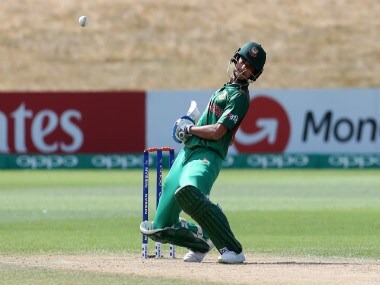 Representational image. Image source: Getty Images.[/caption]Here’s a look at the guidelines, and why cricketers badly needed a separate protocol to address this type of brain injury:
What is a concussion?
A concussion is a traumatic brain injury caused by a blow to the head. Violent whiplash or shaking of the head can also cause a concussion. The brain is encased by cerebrospinal fluid inside the skull. Sudden trauma causes the brain to strike the insides of the skull.Symptoms usually occur immediately; there is neurological impairment such as confusion, temporary amnesia, dizziness, slurred speech, headache or a feeling of pressure in the head. Loss of consciousness, seizures and ataxia are rare but can happen. In some cases, roughly 10% to 20%, symptoms may be delayed by a few hours or days after the incident so the person needs to be constantly monitored.What do ICC guidelines recommend?
The ICC Concussion Management Guidelines follow the procedure laid down by the 2016 Berlin Concussion Consensus. A player diagnosed with or exhibiting signs of a concussion must be removed from the field and sent for further testing. They can be deemed fit for play only after authorized medical clearance. Only a “like for like” substitution is allowed: a player with a similar skill set can replace the injured player so that the outcome of the game is more faithfully matched to the structure of the original squad. For example, Nayeem Hasan, a bowler, was replaced by Taijul Islam, another bowler. Mehidy Hasan took over for Das, who is a keeper: this meant that Mehidy Hasan, a spinner could not bowl during the game.How are on-field diagnoses made?
Team doctors or physios are called onto the field if a batsman is struck on the head. If the player has lost consciousness or a seizure, tonic posturing (sudden muscle stiffness), or amnesia is noted, a concussion is diagnosed right away. The medical staff ask the player how they are feeling. They also ask them a series of questions - called modified Maddock questions - to check for any cognitive impairment, memory loss or confusion. The questions can range from “Who is the bowler you were facing?” or “What is the target you are chasing?”, to review the mental state of the player.A video review can also be utilized, if available. Footage of the injury and the player’s state afterwards can indicate the condition that the player perhaps cannot.What happens after the initial diagnosis is made?
If a concussion is suspected, the player is immediately taken off.If a concussion is not initially suspected, the player can resume play. However, he/she will continue to be monitored and checked for symptoms every four to five hours. At the close of play, the player will be taken to a medical facility to get scans using the SCAT 5 protocol. If a concussion is detected then they will not be a part of the rest of the game and be kept under observation.In this match, both Das and Hasan decided to play on after getting hit. Das walked out after seven more deliveries and Hasan went on to strike some fours before getting bowled. Both had delayed onset concussions and did not participate in the rest of the game.A gradual return to the game
The ICC recommends a step-by-step or graded return, under the supervision of medical professionals. While there is no mandatory minimum time off, a week is considered standard. Typically, a graded return includes:- 24 hours relative rest
- Light aerobic exercise
- Light training
- Full training
- Cleared to compete
First Published:Nov 28, 2019, 14:30:19 IST
Advertisement
Advertisement

Stroke is rising among young adults. Doctor explains why it's happening and what you must do
Stroke is increasingly affecting adults in their 30s, 40s and 50s. Experts say unhealthy lifestyles, undiagnosed high blood pressure and delayed treatment are driving the rise in younger stroke cases
3 min read
Stroke in young adults, silent symptoms and late diagnosis: India's growing brain health challenge
Neurologists warn that stroke is increasingly affecting people in their 30s and 40s, while many brain disorders progress silently before symptoms appear. They say early diagnosis, timely referrals and healthier lifestyles are key to reducing India's growing neurological disease burden.
5 min read
Brain tumours aren't always fatal, but delayed diagnosis can be: Experts explain the key warning signs
Brain tumours are frequently mistaken for common headaches, stress or age-related cognitive changes. Doctors say recognising warning signs early and adopting a brain-healthy lifestyle can improve outcomes and reduce the risk of long-term neurological complications.
2 min read
Spices, health and the Indian plate: Why chilli can be good for you—but moderation is still key
From boosting metabolism to supporting heart health, chillies offer several surprising health benefits. But experts say the amount you eat matters, and too much spice can do more harm than good.
4 min read
Organ donation: 5 myths you need to stop believing, according to a transplant specialist
Organ donation has the power to transform and save lives, but this can happen only when myths are replaced with facts. Building awareness, having open conversations and understanding the process can help families make informed decisions.
2 min read
Advertisement
Advertisement