
Advertisement


Sections
The problem is not how Greta Thunberg looks, but how we view young women
Greta Thunberg came to our laptops, phones and TV screens without make up, without formal dressing-up, or hairstyling. She came with pain in her eyes, and anger, and words that seared. Was it enough? Apparently not, for many men who commented on her looks and 'plainness' | Manjima Bhattacharjya writes in 'Curious Fashion'

'Curious Fashion' is a monthly column by feminist researcher, writer and activist Manjima Bhattacharjya. Read more from the series here.***By now, you all know of the phenomenon that is 16-year-old Greta Thunberg. Greta is a climate activist from Sweden who has inspired and radicalised teenagers around the world to strike in protest of politicians’ inaction to address the climate emergency we are in. Last week, Twitter was ablaze with her fiery speech at the UN climate action summit in New York, but two important discussions got buried under the tweet-fest.One was the question of race: some asked why young non-white climate activists of native American, indigenous, African, Indian descent had not captured the imagination of the press like Greta, and some raised conspiracy theories of how her prominence was manufactured by a sophisticated climate justice machinery.But it’s the other discussion I want to talk about: that of how Greta looks.Greta came to our laptops, phones and TV screens without make up, without formal dressing-up, or hairstyling. She came with pain in her eyes, and anger, and words that seared. Was it enough? Apparently not, for many men on Twitter (and possibly elsewhere). Comments ranged from those about her plainness and “ugly crying” to surprise that she was 16 “because she looks 12”, to “look at her facial tics”, to laments about why she couldn’t be “sexier” because “no one wants to take advice from an ugly girl” to… I stopped reading the venom after a point. So much so that Greta herself put out a statement saying she had Asperger’s Syndrome, on the autistic spectrum. To explain how she looks.![The reactions to Greta Thunberg are a reminder that it's high time we stopped trading in the currency of pretty. Facebook/gretathunbergsweden]() The reactions to Greta Thunberg are a reminder that it's high time we stopped trading in the currency of pretty. Facebook/gretathunbergsweden[/caption]We’ve become used to women saying smart, important things in the media. But the Jameela Jamils, Emma Watsons or other young film stars who speak in the new liberal feminist voice are well-groomed, fashionably dressed, and within the boundaries of what is acceptably feminine or sexy. Even unconventional pop stars, like Cardi B or Nicki Minaj, who appear to be non-conforming, operate within a framework of sexy, consumer-driven capitalism, and are never without their “get-up”.Role models like Serena Williams or PV Sindhu challenge ideals of body types and influence the aspirations of girls, but they all dress up for the red carpet or when they get featured in fashion magazines — understandably so. Why wouldn’t they? We all would. We all do.I don’t want to suggest that this is an ‘either you’re with us or against us’ argument. I know that fashion and make up can be tools of self-expression, self-love and care for many — or just good fun. Sometimes it is a way of realising who you are or who you want to be.But the hate around Greta’s appearance has really burst my Sephora bubble, and made me more mindful of the impact of the fashion-beauty industrial complex: that beast of corporate branding, advertising and manufacturing that profit from these constructs and continue to create norms that set us up for ridicule if we don’t follow them. Women, for example, who won’t colour their hair to look younger, or thread their “moustache” or wax their legs to be easier on your eyes.Young women are special targets for this kind of pressure. And it isn’t as if teenage girls aren’t noticing. My 13-year-old daughter tells me about how differently Millie Bobby Brown (of the hit series Stranger Things) is styled or photographed, as compared to her male teenage co-stars of the same age. The boys will be wearing regular clothes or doing something silly, while she will be made to pose in overly styled adult-like cuts, as if she’s being made to grow up quickly.
The reactions to Greta Thunberg are a reminder that it's high time we stopped trading in the currency of pretty. Facebook/gretathunbergsweden[/caption]We’ve become used to women saying smart, important things in the media. But the Jameela Jamils, Emma Watsons or other young film stars who speak in the new liberal feminist voice are well-groomed, fashionably dressed, and within the boundaries of what is acceptably feminine or sexy. Even unconventional pop stars, like Cardi B or Nicki Minaj, who appear to be non-conforming, operate within a framework of sexy, consumer-driven capitalism, and are never without their “get-up”.Role models like Serena Williams or PV Sindhu challenge ideals of body types and influence the aspirations of girls, but they all dress up for the red carpet or when they get featured in fashion magazines — understandably so. Why wouldn’t they? We all would. We all do.I don’t want to suggest that this is an ‘either you’re with us or against us’ argument. I know that fashion and make up can be tools of self-expression, self-love and care for many — or just good fun. Sometimes it is a way of realising who you are or who you want to be.But the hate around Greta’s appearance has really burst my Sephora bubble, and made me more mindful of the impact of the fashion-beauty industrial complex: that beast of corporate branding, advertising and manufacturing that profit from these constructs and continue to create norms that set us up for ridicule if we don’t follow them. Women, for example, who won’t colour their hair to look younger, or thread their “moustache” or wax their legs to be easier on your eyes.Young women are special targets for this kind of pressure. And it isn’t as if teenage girls aren’t noticing. My 13-year-old daughter tells me about how differently Millie Bobby Brown (of the hit series Stranger Things) is styled or photographed, as compared to her male teenage co-stars of the same age. The boys will be wearing regular clothes or doing something silly, while she will be made to pose in overly styled adult-like cuts, as if she’s being made to grow up quickly.![StrangerThingsTV]() Which is why Greta’s case is an eye-opener. Men have been presented for the first time with a young woman who does not prescribe to sexy-ness. What do they then do? They call her ugly. What is it supposed to do to us when we are called ugly?It is intended to destroy us. It is meant to remind us that in the eyes of the world, a woman’s worth lies in how she looks. Because being charged with ugliness is like having failed in your duty as a woman, and being diminished as a human being.Ugliness has often been conflated with being a “lesser” human being through its association with disability since the late 19th century – just like in Greta’s case, 150 years later. There are serious implications of the cruel gaze towards people with disabilities, which is probably why we see so few persons with disabilities in public spaces. Academics Sara Rodrigues and Ela Przybylo write on the politics of ugliness, that it functions as “a social category that demarcates one’s rights and access to social, cultural and political spaces”. Laws in the West existed in the late 19th century that forbade “unsightly” bodies (usually, of the colonised other) from occupying public spaces, in the fear that they would pollute the public spaces because they were “dirty, disable, ‘deformed’, sickly, disgusting or unsightly”.Human bodies are of an astounding variety of shapes, colours, sizes, configurations. We look the way we do depending on our geographical and social locations, nutrition, genes, class, caste, the choices we make — so many factors. Not to mention that bodies change, and move in and out of being in our control. But fashion and beauty together can make us slaves to some kind of globalised ideal in which above all, being pretty, feminine or sexy is what gives young women their value-add in society.The reactions to Greta are a reminder that it's high time we stopped trading in the currency of pretty. It’s time to detach our value and self-esteem from the fashion-beauty industrial complex, and practice self-love without the fear of being called ugly.Manjima is the author of Mannequin: Working Women in India's Glamour Industry (Zubaan, 2018)
Which is why Greta’s case is an eye-opener. Men have been presented for the first time with a young woman who does not prescribe to sexy-ness. What do they then do? They call her ugly. What is it supposed to do to us when we are called ugly?It is intended to destroy us. It is meant to remind us that in the eyes of the world, a woman’s worth lies in how she looks. Because being charged with ugliness is like having failed in your duty as a woman, and being diminished as a human being.Ugliness has often been conflated with being a “lesser” human being through its association with disability since the late 19th century – just like in Greta’s case, 150 years later. There are serious implications of the cruel gaze towards people with disabilities, which is probably why we see so few persons with disabilities in public spaces. Academics Sara Rodrigues and Ela Przybylo write on the politics of ugliness, that it functions as “a social category that demarcates one’s rights and access to social, cultural and political spaces”. Laws in the West existed in the late 19th century that forbade “unsightly” bodies (usually, of the colonised other) from occupying public spaces, in the fear that they would pollute the public spaces because they were “dirty, disable, ‘deformed’, sickly, disgusting or unsightly”.Human bodies are of an astounding variety of shapes, colours, sizes, configurations. We look the way we do depending on our geographical and social locations, nutrition, genes, class, caste, the choices we make — so many factors. Not to mention that bodies change, and move in and out of being in our control. But fashion and beauty together can make us slaves to some kind of globalised ideal in which above all, being pretty, feminine or sexy is what gives young women their value-add in society.The reactions to Greta are a reminder that it's high time we stopped trading in the currency of pretty. It’s time to detach our value and self-esteem from the fashion-beauty industrial complex, and practice self-love without the fear of being called ugly.Manjima is the author of Mannequin: Working Women in India's Glamour Industry (Zubaan, 2018)
The problem is not how Greta looks, but how we look at women, young women and teenagers in particular.One tweet really made me step back and think: clearly, men have not seen young women being represented in the media in a non-sexualised way for a long time. It is an indication of how deeply sexualised popular cultures have become globally, in which the fashion and beauty industry are complicit.[caption id="attachment_8279721" align="alignnone" width="640"]
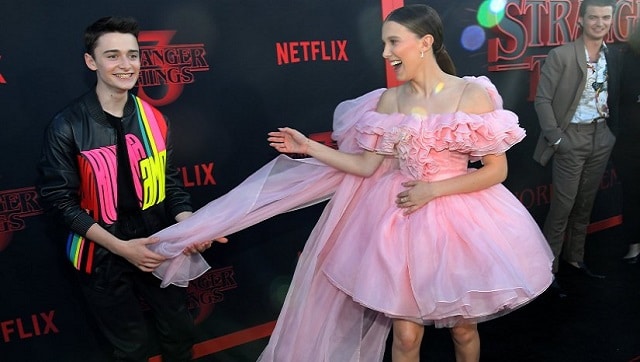
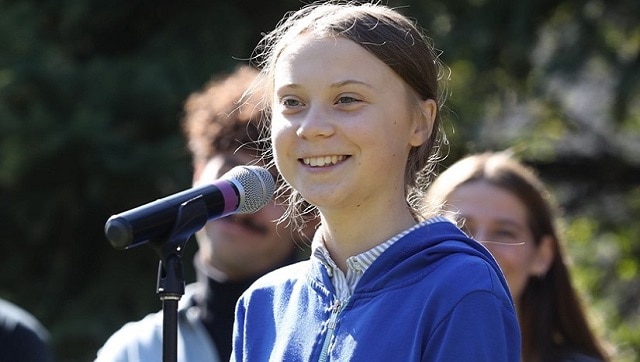 The reactions to Greta Thunberg are a reminder that it's high time we stopped trading in the currency of pretty. Facebook/gretathunbergsweden[/caption]We’ve become used to women saying smart, important things in the media. But the Jameela Jamils, Emma Watsons or other young film stars who speak in the new liberal feminist voice are well-groomed, fashionably dressed, and within the boundaries of what is acceptably feminine or sexy. Even unconventional pop stars, like Cardi B or Nicki Minaj, who appear to be non-conforming, operate within a framework of sexy, consumer-driven capitalism, and are never without their “get-up”.Role models like Serena Williams or PV Sindhu challenge ideals of body types and influence the aspirations of girls, but they all dress up for the red carpet or when they get featured in fashion magazines — understandably so. Why wouldn’t they? We all would. We all do.I don’t want to suggest that this is an ‘either you’re with us or against us’ argument. I know that fashion and make up can be tools of self-expression, self-love and care for many — or just good fun. Sometimes it is a way of realising who you are or who you want to be.But the hate around Greta’s appearance has really burst my Sephora bubble, and made me more mindful of the impact of the fashion-beauty industrial complex: that beast of corporate branding, advertising and manufacturing that profit from these constructs and continue to create norms that set us up for ridicule if we don’t follow them. Women, for example, who won’t colour their hair to look younger, or thread their “moustache” or wax their legs to be easier on your eyes.Young women are special targets for this kind of pressure. And it isn’t as if teenage girls aren’t noticing. My 13-year-old daughter tells me about how differently Millie Bobby Brown (of the hit series Stranger Things) is styled or photographed, as compared to her male teenage co-stars of the same age. The boys will be wearing regular clothes or doing something silly, while she will be made to pose in overly styled adult-like cuts, as if she’s being made to grow up quickly.
 Which is why Greta’s case is an eye-opener. Men have been presented for the first time with a young woman who does not prescribe to sexy-ness. What do they then do? They call her ugly. What is it supposed to do to us when we are called ugly?It is intended to destroy us. It is meant to remind us that in the eyes of the world, a woman’s worth lies in how she looks. Because being charged with ugliness is like having failed in your duty as a woman, and being diminished as a human being.Ugliness has often been conflated with being a “lesser” human being through its association with disability since the late 19th century – just like in Greta’s case, 150 years later. There are serious implications of the cruel gaze towards people with disabilities, which is probably why we see so few persons with disabilities in public spaces. Academics Sara Rodrigues and Ela Przybylo write on the politics of ugliness, that it functions as “a social category that demarcates one’s rights and access to social, cultural and political spaces”. Laws in the West existed in the late 19th century that forbade “unsightly” bodies (usually, of the colonised other) from occupying public spaces, in the fear that they would pollute the public spaces because they were “dirty, disable, ‘deformed’, sickly, disgusting or unsightly”.Human bodies are of an astounding variety of shapes, colours, sizes, configurations. We look the way we do depending on our geographical and social locations, nutrition, genes, class, caste, the choices we make — so many factors. Not to mention that bodies change, and move in and out of being in our control. But fashion and beauty together can make us slaves to some kind of globalised ideal in which above all, being pretty, feminine or sexy is what gives young women their value-add in society.The reactions to Greta are a reminder that it's high time we stopped trading in the currency of pretty. It’s time to detach our value and self-esteem from the fashion-beauty industrial complex, and practice self-love without the fear of being called ugly.Manjima is the author of Mannequin: Working Women in India's Glamour Industry (Zubaan, 2018)
First Published:Oct 01, 2019, 09:44:46 IST
Advertisement
Advertisement

Bedhead is the main character of Fall/Winter 2026
From Prada’s hasty ponytails to Simone Rocha’s frizzed-out lengths, Fall/Winter 2026 confirmed that bedhead has officially replaced "clean girl" hair.
2 min read
Of experimental embroidery and quiet sophistication: Kunal Rawal lays bare his vision for men's couture
'I want to mix threadwork with print, washes with embroideries, denim with embroideries. I like playing with things that don’t belong and making them belong,' says Kunal Rawal.
At Tokyo Olympics, a crystallisation of sexism and policing of women's appearance that persists across all levels of sport
Who dictates the physical appearance of female athletes? This debate, that seems frozen in the early 1900s when women first started competing in the Olympic Games, raged on at Tokyo 2020.
Clothing as a hymn to the planet: 11.11/eleven eleven on their sustainable practices, fostering respect for artisans
The DNA of the label is in tracing the journey of the garment: the product, the services and the foundation of the supply chain, all the way back to the land and the people at the site of manufacturing.
Explained: Criticisms against beauty pageants, despite their evolution and attempts to be inclusive
There have been many instances of titles being taken away from former beauty pageant winners when their actions did not fall in line with the beliefs of the organisation that felicitated them.
Advertisement
Advertisement